



SkyWest Airlines Ground Stop 2025: What Caused Flight Delays and What Travelers Should Know

Estimated reading time: 17 minutes
Thank you for reading this post, don't forget to subscribe!SkyWest Airlines Flights Grounded After Brief Technical Glitch (What Happened and What Travelers Need to Know)
SkyWest Airlines, the country’s biggest regional carrier, faced a rare hiccup on August 29, 2025. For just 21 minutes, every SkyWest flight in the US was grounded, all due to a technical glitch. The stop was a safety measure and was put in place quickly at the airline’s request, with coordination from the FAA. Most travelers experienced only brief delays, and regular schedules soon picked back up. As SkyWest operates flights for major brands like United, Delta, American, and Alaska, even a short pause touched passengers all across the states.
What Happened: Timeline of the Ground Stop
SkyWest Airlines’ quick-moving ground stop on August 29, 2025, grabbed headlines, but the steps from detection to resolution unfolded in a clear series of events. Here’s a detailed look at how the issue was detected, how fast action kept safety front and center, and what happened behind the scenes before flights were cleared for takeoff again.
Initial Technical Glitch
Late Friday night, SkyWest’s operations team discovered a systems fault that triggered internal safety alerts. While the airline did not release detailed technical specifics, it explained the issue as a “brief technology snag” that affected its ability to manage some operational systems. This kind of fault, though rare, can create real uncertainty until checked.
Key points about the incident:
- Detection: The problem popped up just before 01:49 GMT, catching SkyWest staff’s attention as part of their routine monitoring.
- Airline’s Response: SkyWest opted for caution, quickly labeling it as a technical issue and advising the FAA. They stressed publicly that the event was minor and didn’t involve the aircraft in the air.
For more on how similar issues can affect wide-scale air travel, Reuters covers the SkyWest grounding and industry-wide responses.
FAA Ground Stop Advisory
Once SkyWest spotted the problem, the airline requested a ground stop from the FAA. The Federal Aviation Administration’s role is to maintain safety and efficient air travel across all U.S. airspace. When an airline identifies a system concern, a ground stop puts a pause on departures and movements until the issue is verified as safe.
The advisory process works like this:
- Request Received: SkyWest formally asked the FAA to halt all its flights as a safety measure.
- Ground Stop Issued: At 01:49 GMT, the FAA broadcasted the advisory, alerting airports and controllers across the country of the temporary stop.
- Safety Review: Both SkyWest and the FAA monitored system recovery while ready crews waited for the all-clear.
This entire process lasted just 21 minutes. At 02:10 GMT, the advisory was canceled, indicating the issue had been resolved and it was safe to restart operations. Learn more about FAA ground stop protocols.
Resumption of Operations
Once given the green light, SkyWest moved quickly to get its network back up to speed. Flight crews and ground teams carried out thorough checks on aircraft and support systems to confirm everything met required safety standards. The airline’s operations team worked to reestablish connections with airports and update schedules.
Here’s how the recovery played out:
- Aircraft Readiness: Maintenance and flight crews completed rapid verification of critical systems before boarding any passengers.
- Passenger Communication: SkyWest used multiple channels—text alerts, gate announcements, and its mobile app—to keep travelers informed about flight status and expected wait times.
- Minimizing Delays: Teams prioritized departing flights with the most passengers and critical connections, aiming to limit total ripple effects on traveler itineraries.
Despite the large scale, most flight delays were short-lived. Regular operations returned before the day’s schedule picked up, thanks to the coordinated effort by both SkyWest and the FAA. For more coverage on the resolution, check the Gazette’s report on the ground stop being lifted.
Technical Issue and Safety Protocols
Air travel runs on both trust and technology, so when something hiccups behind the scenes, airlines move fast. Technical issues like the one that grounded SkyWest briefly might feel disruptive, but those quick pauses are all about putting safety at the front. It’s a system built on strict steps, cross-checks, and clear communication, keeping passengers and crews out of harm’s way. Here’s what happens during these moments, how aircraft are double-checked, and how schedules and customers get a helping hand to bounce back.
Safety First: Precautionary Ground Stops
When an airline spots a problem—whether a system on the ground or something flagged during checks—industry best practice calls for an immediate halt. That’s the “ground stop” you hear about. The FAA, at a carrier’s request, will halt all takeoffs and landings for that airline until experts have time to assess.
SkyWest’s ground stop, for instance, followed protocol perfectly:
- Immediate risk assessment: As soon as the technical alert popped up, SkyWest evaluated its scope and possible safety impact.
- Notification: The airline quickly informed the FAA and coordinated with air traffic controllers.
- Crew briefings: Pilots and ground crews were updated. Flight and maintenance crews received clear instructions to hold movement and check systems.
- Communication channels: Passengers were updated at gates, and digital alerts were triggered to keep everyone in the loop.
This “safety first, questions later” approach works as a universal air travel rule. For more on how these stops unfold, the Guardian outlines recent SkyWest protocols.
System Checks and Restoration
Before an aircraft goes back in the air, a checklist-driven safety process kicks in. Even for minor glitches, teams inspect everything that could be linked to the fault. Here’s a typical sequence airlines use:
- Avionics inspection: All electronic navigation and communication systems get a fresh checkup.
- Software diagnostics: Any technology flagged by the initial alert is rebooted or manually inspected. Engineers review logs for errors or warnings not caught before.
- Maintenance log review: Recent repairs and software updates are scrutinized, and logbooks are double-checked to spot patterns or missed steps.
- Physical walkaround: Tech crews perform a visual scan of the aircraft—wires, connectors, bay doors, and access panels.
- Test procedures: System resets or simulated power-ups can highlight hidden issues.
SkyWest’s process here follows what’s standard throughout aviation. These steps make sure hidden glitches don’t slip by. If you’re curious about what goes into these checks, Fly With Courage explains the multi-layered aircraft inspection process.
Impact on Flight Schedules
Even the smoothest ground stop can ripple out to affect departures, connections, and arrivals. On the night SkyWest hit pause, hundreds of flights felt the impact, right as travel picked up for Labor Day.
Let’s break down how the situation unfolded:
- Delay notifications: Passengers received immediate updates about delays or gate changes so they weren’t left guessing.
- Rebooking and backup: Customer service teams kicked off rebooking efforts for missed connections. SkyWest coordinated with its partner airlines to smooth transitions onto later flights.
- Rolling schedule effects: Although the main disruption lasted just 21 minutes, some flights left late and a handful arrived past schedule. Most delays ranged from a few minutes to just over an hour.
- Fast recovery: Once cleared, SkyWest prioritized getting the largest planes with the most passengers out first, followed by key connection routes.
If you want a full recap of SkyWest’s schedule impacts and recovery on this specific night, check out what happened in real time on Reuters’ coverage of the SkyWest ground stop.
In the end, while a ground stop can cause a temporary mess, the layers of safety built into each step are what keep travel safe, reliable, and worthy of the trust passengers place in the system every time they fly.
SkyWest Airlines: Size, Partnerships, and Reach
SkyWest Airlines quietly keeps the nation’s air network moving. While many travelers board flights branded as United Express, Delta Connection, American Eagle, or Alaska, behind the scenes, SkyWest’s crews, planes, and support teams are running the show. SkyWest serves as an engine for regional air travel, linking smaller cities to major hubs and letting travelers book more convenient and connected trips. If you’ve been on a regional jet or a crowded evening connection, odds are good you’ve flown SkyWest.
Fleet and Operations
The numbers behind SkyWest show just how much ground they cover every single day. As of 2024, SkyWest manages a fleet of 488 aircraft across its network. These planes are mostly regional jets, suited for quick hops and short-to-medium routes.
SkyWest’s main operation bases or hubs include:
- Chicago O’Hare (ORD)
- Denver (DEN)
- Detroit (DTW)
- Houston (IAH)
- Los Angeles (LAX)
- Minneapolis-St. Paul (MSP)
- Phoenix (PHX)
- Salt Lake City (SLC)
- San Francisco (SFO)
- Seattle (SEA)
- Dallas/Fort Worth (DFW)
- Portland (PDX)
- Atlanta (ATL)
- Los Angeles (LAX)
These hubs act as launch points, allowing SkyWest to serve 268 destinations throughout North America. The sheer scale is impressive for a brand many passengers never realize they’re flying with. More on SkyWest’s fleet and network stats is available in their fact sheet.
Major Carrier Partnerships
SkyWest’s true strength is its partnership structure. Rather than sell tickets under its own name, SkyWest operates flights for four major US airlines:
- United Airlines (as United Express)
- Delta Air Lines (as Delta Connection)
- American Airlines (as American Eagle)
- Alaska Airlines (as Alaska Airlines, regional)
This partnership system is built on a code-share model, which means you might buy a ticket on United, Delta, American, or Alaska, but a SkyWest crew is actually flying the plane. The airline’s schedules and aircraft paint jobs match the branding of whichever major carrier holds the contract for the route.
Why does this matter? SkyWest acts as the glue between big-city airports and hundreds of smaller markets that couldn’t support mainline flights. They move passengers seamlessly from places like Boise or Fresno to the hub cities, allowing travelers to book through itineraries with checked bags and tight connections—never even realizing a different airline is at the controls for part of the trip.
To see just how broad these partnerships are, visit the SkyWest About page.
Recent Performance Metrics
SkyWest is famous in aviation circles for operational discipline. Before the recent ground stop, the airline was known for keeping flights running on time, despite the tough logistics of regional routes. According to the airline’s latest annual statistics, over 42 million passengers were carried in 2024 across its network.
When it comes to performance:
- On-time performance for SkyWest has hovered near the 80% mark in recent years, which is competitive in the regional sector.
- Load factors (the percentage of seats turned into paying passengers) typically run high, reflecting both demand and SkyWest’s strategic scheduling.
The brief technical halt in August 2025 showed how a single technology slip could freeze a major piece of the US air system. Since SkyWest moves so many people and feeds so many large carrier schedules, even a brief pause can ripple, showing just how critical their role is across so many airports.
For more details on SkyWest’s performance, see the breakdown on their official fact sheet or the more detailed Wikipedia overview.
SkyWest’s size, partnerships, and operational reach make it much more than just a regional name on a ticket—it’s the quiet giant powering America’s short-haul air travel.
Regulatory Background and Recent Safety Audits
It’s tough to talk about SkyWest’s brief grounding without mentioning what’s been happening behind the scenes. In July 2025, the FAA’s audit put a spotlight on maintenance practices and ongoing safety risks at SkyWest, making the timing of the technical glitch feel even more alarming. The regulatory trail here is long, so let’s break down what the FAA found, how their oversight works, and how past problems might tie into this latest disruption.
July 2025 FAA Audit Highlights
This past summer, the FAA’s Office of Inspector General released a report detailing shortcomings in both SkyWest’s maintenance protocols and the FAA’s own oversight. The findings weren’t reassuring for anyone who flies often. Here’s what the audit flagged:
- Deferred Maintenance: SkyWest was found to inappropriately delay fixes on items listed under the Minimum Equipment List (MEL)—essentially flying planes with nonessential systems unaddressed longer than rules allow.
- MEL Issues: Planes sometimes went back into service before the airline fixed flagged MEL problems, leading to concerns about equipment reliability.
- Remote Return‑to‑Service: The audit revealed ongoing trouble with “remote maintenance,” where mechanics authorize aircraft for flight without being physically present. This practice had loopholes, and some repairs or checks were signed off improperly.
- Unresolved Items: Of 32 key findings, the FAA resolved only 26 by July 2025. That left six major issues open—most related to remote maintenance and delayed access to maintenance data. Inspectors reported waiting up to four months just to get needed records.
A recurring thread: the FAA’s own inspectors felt hamstrung by slow responses, lack of clear data, and internal guidance that didn’t always line up with established oversight standards. More details, including the complete report, can be found at the FAA’s July 2025 audit report.
FAA’s Ongoing Oversight
The FAA’s approach to airline oversight is supposed to be constant and adaptive. But SkyWest’s audit exposed gaps in that safety net—especially around new trends like remote maintenance. Here’s what the FAA is doing next:
- Advisory System: FAA uses a Safety Assurance System, but the audit revealed that the database and reporting tools weren’t always in sync with real oversight needs, so some compliance gaps slipped by.
- Corrective Actions: In light of the audit, the FAA accepted six out of seven recommendations to strengthen oversight, focusing on:
- Better tracking and resolution of open safety issues.
- Faster access to SkyWest’s digital maintenance records.
- Improved checks when “remote return-to-service” methods are used.
- Mandatory follow-ups to make sure fixes aren’t just promised but actually completed.
These changes are rolling out with a planned completion by July 2026, but the FAA’s reputation took a hit. Industry analysts suggested that, if unchecked, these issues could ripple across the entire regional airline network. For more background on the unresolved oversight challenges, see the OIG’s summary of persistent issues with SkyWest.
Implications for the Recent Ground Stop
So, does SkyWest’s latest technical glitch connect to the findings from July’s audit? The timing is hard to ignore. The FAA audit pointed to lapses in maintenance tracking, delays in data access, and open safety questions about remote system checks. These are the kinds of gaps that can let a small systems glitch slip through unnoticed until it grows into a bigger operational stop.
While the airline insists the glitch was a one-off, outside observers note that long-standing issues—such as improperly deferred maintenance or insufficient follow-up on repairs—raise red flags. Even when technical problems pop up briefly, if maintenance and oversight practices aren’t rock-solid, recovery becomes riskier and slower.
The aviation world is watching. Any link between this ground stop and the prior audit’s open concerns would make a strong case for speeding up reforms. As SkyWest continues to recover and rebuild trust, regulatory scrutiny is likely only to intensify. The Reuters breakdown of persistent maintenance problems has the full story on what’s being watched as corrective measures roll out across 2025 and 2026.
What Passengers Should Know
A sudden ground stop can throw even seasoned travelers off balance, leaving everyone with questions and uncertainty. After SkyWest’s brief 21-minute pause on August 29, 2025, most passengers found themselves dealing with only short delays, but those moments in the terminal or at the gate can feel much longer. If you ever find yourself in this spot again, here’s how to keep control, get answers, and know your options.
Checking Real‑Time Flight Updates
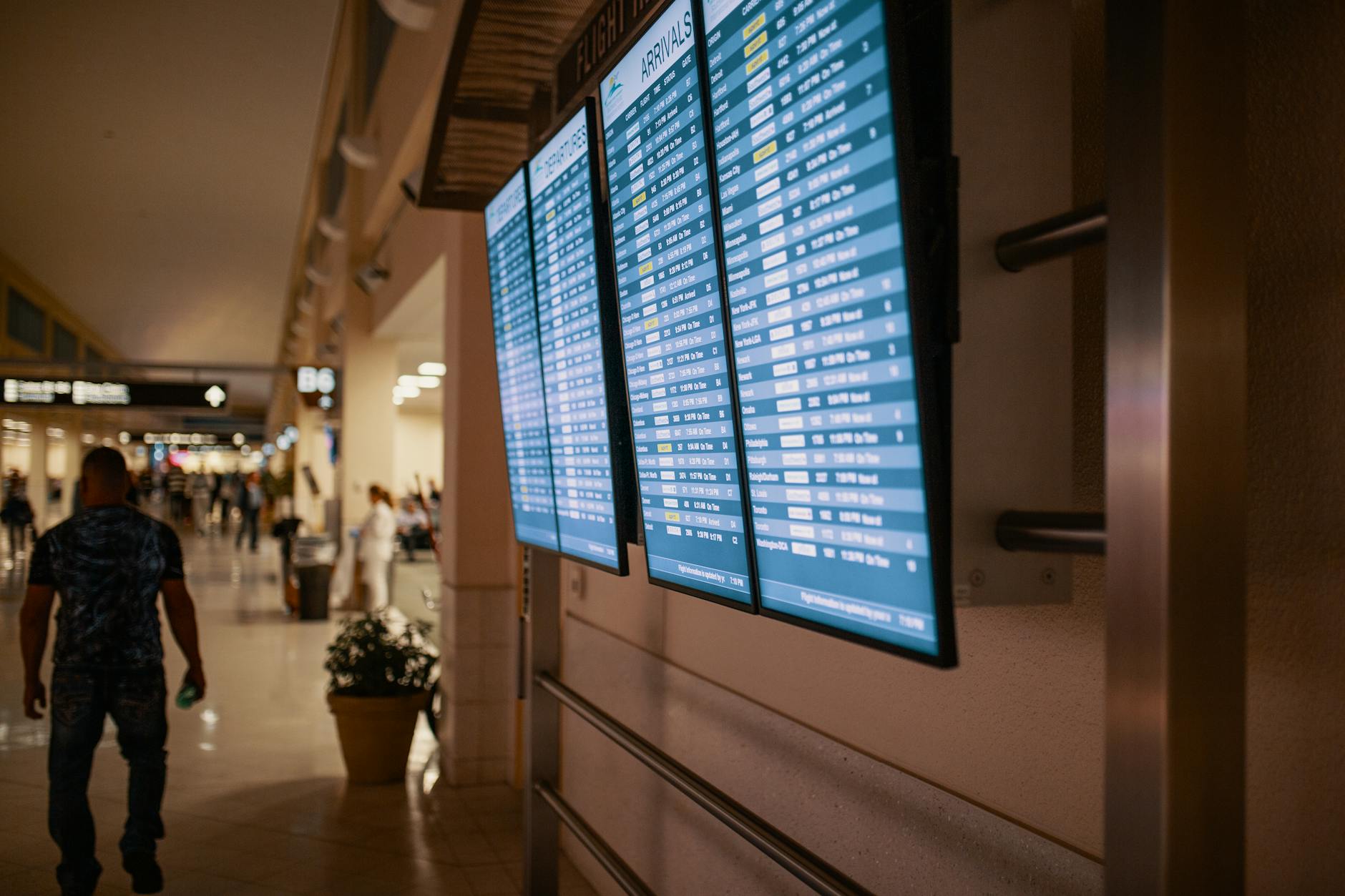
Photo by Josh Sorenson
In the middle of a disruption, the best tool is accurate, up-to-date information. Airlines and airports know this, so they push updates fast through several channels:
- SkyWest and partner airline apps: Most passengers flying SkyWest are ticketed through bigger carriers like United, Delta, American, or Alaska, so their apps and websites are where you’ll see real-time flight changes or rebooking options.
- FAA advisories: For large-scale disruptions or technical stops, the FAA posts notices on their National Airspace System Status page, which airports and airlines watch closely.
- Airport information desks and screens: When in doubt, check the electronic boards for your flight or ask directly at the nearest service counter. Staff are briefed as each update comes in and can offer the latest details in person.
Regularly check for texts, emails, or app notifications. Information stops confusion from spreading and helps you plan your next steps sooner.
Rebooking and Refund Options
When the system halts, airlines automatically map out ways for you to reach your destination with the least headache. Here’s what you can expect after a brief ground stop:
- Automatic rebooking: Most major airlines will move you to the next available flight—often at no extra cost. You should get a message or notification telling you your new flight time.
- Vouchers: If your delay is longer or causes a missed connection, many carriers will provide meal or hotel vouchers, especially if overnight stays become necessary.
- Refunds: If no good options exist and you no longer wish to travel, you might qualify for a refund or travel credit, depending on the ticket type and carrier policy.
SkyWest and its partner carriers have clear customer service rules shaped by Department of Transportation standards. For more details on handling airline disruptions, see the Travel and Tour World resource on the SkyWest ground stop.
Future Confidence in SkyWest
A short technical glitch might rattle nerves, especially alongside recent FAA audits and wider questions about regional carriers. But the fastest way back to trust is transparency and action.
SkyWest’s ground stop lasted just 21 minutes thanks to fast teamwork between the airline and the FAA. Their policy is still safety above speed, which puts passengers first even when something stalls. Ongoing FAA oversight means processes will keep improving.
You can book with SkyWest and its partner airlines knowing that:
- Safety is watched by multiple eyes: FAA auditors, in-house engineers, and external inspectors all review processes.
- Communication gets faster every year: Airlines now update by app, text, and email within minutes of a change.
- Past performance predicts quick recoveries: The airline returned to normal soon after, confirming its discipline in getting people moving again.
For more on SkyWest’s response and the FAA’s role, check The Guardian’s report on the ground stop event: SkyWest flights grounded at airline’s request, US FAA says.
If affected by flight disruptions, stay calm, use your resources, and trust the network of safety checks designed to keep you secure and on the move.
Conclusion
SkyWest’s fast action during the recent ground stop showed how well safety protocols can work when minutes matter. By coordinating quickly with the FAA, the airline put safety first and restored normal service in less than half an hour. Passengers saw short delays, but the clear response built confidence at a time when recent safety audits and technical problems were fresh in memory.
This event highlights the value of swift decisions and open communication in air travel. As SkyWest and the FAA keep working together, travelers can expect more transparency and quicker recoveries. The story isn’t over—ongoing oversight and continued improvements will help keep trust strong every time you fly.
Thanks for reading and sharing your thoughts on safe, reliable travel.