




India White-Collar Job Market 2025: Non-IT and AI-ML Jobs Fuel 3% August Growth
 India White-Collar Job Market 2025: Non-IT and AI-ML Jobs Fuel 3% August Growth
Estimated reading time: 13 minutes
Thank you for reading this post, don't forget to subscribe!India’s White-Collar Job Market to Grow 3% in August 2025 (Non-IT Sectors and AI-ML Jobs Lead the Way)
India’s white-collar job market is showing new momentum. In August 2025, hiring rose by 3% year-on-year, lifting the JobSpeak Index to 2,664. What’s turning heads is the boost coming from non-IT sectors while IT hiring slipped.
From insurance to hospitality, these fields are picking up the pace and reshaping where the real opportunities are. With AI and machine learning roles seeing explosive demand, the market is shifting fast. Let’s look at the data and trends that are shaping who gets hired and where India’s white-collar workforce is headed next.
Watch a breakdown of the latest hiring trends:
Non‑IT Sectors as the Main Growth Engine
Non‑IT sectors are stepping into the spotlight and driving the overall growth in India’s white-collar job market. While tech hiring pulled back, insurance, hospitality, real estate, and other fields picked up the slack. These industries have become the backbone of recent hiring surges, each showing specific strengths by region and job type. Let’s look at the detailed figures and what they mean for job seekers and employers across the country.
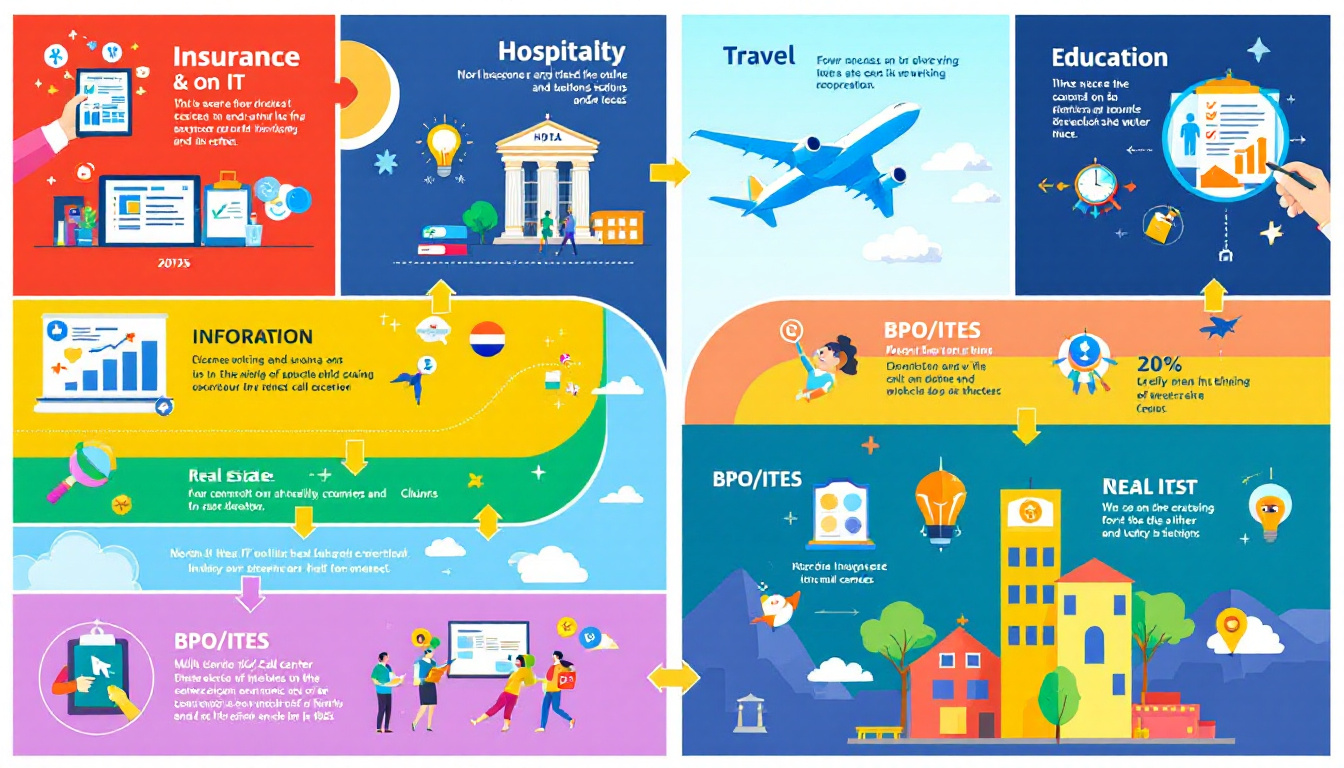
Insurance Sector Surge: Hiring Up 24% Year-on-Year
The insurance sector is recording historic hiring numbers. According to recent data, there’s been a sharp 24% year-on-year jump, with Kolkata seeing a remarkable 36% surge and the Delhi-NCR region close behind at 30%. The need for insurance and personal protection is growing fast as people seek more security and companies expand their customer bases.
Roles currently in high demand include:
- Underwriters: Assessing risk and making decisions that shape policies
- Claims Analysts: Managing and reviewing claims to streamline settlements
- Sales Professionals: Building client relationships for individual and corporate cover
This rise isn’t limited to metros. Growing insurance awareness means businesses are also hiring across tier-2 and tier-3 cities, fuelling steady job creation. For more detail, check out this recent report on non-IT sector hiring trends.
Hospitality and Travel Momentum: 22% Growth Ignites New Opportunities
The hospitality and travel sector’s 22% leap has made it one of the most dynamic job creators this year. With travel back on the rise, both domestic and international tourism are driving new openings, especially in top metro areas and emerging tourism hubs.
Key job roles fueling this uptick include:
- Hotel Management: Overseeing daily operations in a people-focused environment
- Travel Consultants: Crafting travel solutions for individuals and corporate clients
Cities like Mumbai and Bangalore are leading in hospitality hiring as new hotels and service properties open up, but the trend is clearly visible in heritage and coastal destinations too.
Additional Non‑IT Contributors
Other sectors also played a strong hand in supporting overall job growth. Here’s a quick view of the key contributors and the kinds of roles on offer:
| Sector | Year-on-Year Growth | Example Roles |
|---|---|---|
| BPO/ITES | 17% | Customer support, Process managers |
| Education | 16% | Academic counsellors, Subject teachers |
| Real Estate | 18% | Property consultants, Project coordinators |
- BPO/ITES: As many companies outsource business functions, there’s robust demand for customer support and back-office professionals.
- Education: With growing enrolment in both online and offline courses, counsellors and teachers are in high demand.
- Real Estate: Urban expansion is driving property-related hiring, from sales specialists to site managers.
Recent articles from reputable publications, such as the Economic Times, outline the wave of hiring across these diverse industries.
These trends show that non‑IT industries are not only filling the gap left by tech but are steering the direction of growth for white-collar professionals across India.
IT Sector: Decline Overall but Start‑ups Thrive
India’s IT sector is seeing a shift. Traditional tech hiring is down, yet vibrant start‑ups and unicorns are driving growth in new directions. This balance of cooling in legacy IT jobs and fresh momentum among smaller, innovative companies is reshaping where opportunity lies, especially in rising hubs like Hyderabad.
Overall IT Hiring Downturn: A 6% Drop and What’s Behind It
The numbers paint a clear picture. IT hiring dipped 6% year-on-year, marking a considerable change. What’s causing this slowdown? Several factors are working together.
- Maturity: Many top IT companies have reached a steady phase, focusing on stability over expansion. Rather than hiring in large numbers, they’re honing existing teams.
- Off-shoring: Some technology roles are moving to lower-cost destinations outside India, so positions homegrown here aren’t growing as quickly.
- Automation: With more routine tech tasks managed by automation and AI tools, companies need fewer entry-level workers.
- Economic moderation: Slowdowns in tech spending globally also play a part.
What does this mean for new graduates? Entry-level opportunities, once reliable in IT, are shrinking. Those seeking IT roles now need to look at newer fields or target emerging companies for real chances.
Start‑up and Unicorn Hiring Growth: Hyderabad’s Surge
The story for start‑ups tells a different tale. In Hyderabad, start-up hiring jumped a massive 30% and unicorn recruitment spiked by 45%. This city is becoming a launchpad for ambitious new tech ventures, drawing investors, talent, and fresh ideas.
Why is Hyderabad thriving?
- Access to skilled talent from nearby top educational institutes.
- Favourable business climate for young companies, from funding to infrastructure.
- Active government backing with tech parks and incentives for start-ups.
Unicorns—private companies valued over $1 billion—are especially drawn to Hyderabad’s fast-growing ecosystem. They are creating a strong pull for software engineers, data scientists, AI specialists, and growth managers.
You can read more about Hyderabad’s booming role in this recent report on India’s startup job story.
Regional Focus – Hyderabad as a Hub
Hyderabad’s job market saw a standout 10% overall increase, outpacing most Indian cities. Key reasons behind this momentum include a vibrant local tech community, robust support for entrepreneurs, and a reputation for innovative thinking.

Here’s what makes Hyderabad the place to watch:
- Affordable living and excellent infrastructure help both talent and companies thrive.
- Proximity to research institutions fuels collaboration and keeps innovation fresh.
- Growing startup community means more networking, sharing, and quick scaling.
Hiring surges aren’t limited to IT. AI, machine learning, and non-IT start-ups are all powering Hyderabad’s 10% job market growth. As detailed by NDTV Education, tech and business roles are both in high demand.
For jobseekers, Hyderabad is offering more choice and better roles than ever before. This balance of traditional tech companies maturing and start-ups lifting off is making the city a true tech magnet.
AI and Machine Learning Jobs Explode
The demand for specialised talent in artificial intelligence and machine learning (AI‑ML) has soared, turning these roles into a central force behind India’s latest white-collar job boom. In August 2025 alone, hiring for AI‑ML jobs jumped a massive 54 percent year-on-year, with select metro cities seeing even sharper spikes. This dramatic rise is rewriting the rules for jobseekers and changing what companies expect from new talent.
Rapid Growth in AI‑ML Roles

Image created with AI
AI‑ML roles aren’t limited to big tech firms. They are spreading rapidly into banking, healthcare, logistics, and even retail. Employers are not just replacing lost IT jobs; they are creating new, future-oriented careers such as:
- Data Scientists: Use statistics, algorithms and coding to find patterns in heaps of company data, often unlocking money-saving or sales-boosting insights.
- Machine Learning Engineers: Build, test and tweak computer systems that learn from large data sets, powering everything from chatbots to fraud detection.
- AI Product Managers: Steer teams building intelligent tools for business, blending tech know-how with real-world problem-solving.
The reason for the surge? Companies need stronger data tools to compete, cut costs and speed up processes. They need smarter automation. Hiring is especially brisk for those who can blend real coding ability with domain knowledge. As reported by The Economic Times, AI‑ML jobs are fuelling white-collar growth at a rate outpacing nearly every other segment this year.
City‑wise Performance

Image generated by AI
The growth in AI‑ML hiring isn’t spread evenly. Four metros stood out:
| City | YoY Growth in AI-ML Roles |
|---|---|
| Kolkata | 101% |
| Hyderabad | 80% |
| Delhi-NCR | 72% |
| Chennai | 67% |
Kolkata leads with a stunning 101 percent rise, fuelled by increased university output and a new focus from global companies setting up research offices in the city. Talent retention programs and growing tech academic centres are playing their part.
Hyderabad, already a favourite for start-ups and unicorns, flipped the switch this year with an 80 percent spike. This jump comes from strong investment, more AI research labs, and ample funding for innovative projects.
Delhi-NCR has seen a 72 percent jump, supported by its ecosystem of universities, government tech initiatives, and easy access to venture capital. The area attracts global consultancies and data-driven start-ups alike.
Chennai is no slouch, either, clocking up a 67 percent rise thanks to a steady supply of engineering graduates and automotive AI research thanks to its established manufacturing sector.
Nationwide, employers want people with both technical depth and the ability to work with cross-functional teams. This trend is turning leading metros into magnets for AI‑ML professionals. For an overview of the numbers and trends, the Staffing Industry report covers the metro breakdown in detail.
Implications for Skill Development
AI‑ML hiring is transforming what it means to be job-ready in India’s new economy. Jobseekers eager to tap into these opportunities must double down on learning—skills alone will set people apart.
Here’s what aspiring professionals can do:
- Take industry-respected courses. Programmes in Python, deep learning, data engineering, and natural language processing carry real weight with employers.
- Earn certifications. MCA, BTech, or post-graduate certification in AI‑ML helps get the foot in the door; certifications from platforms like Coursera, Google, and Microsoft matter.
- Build practical experience. Real-world projects, open-source contributions, or internships stand out far more than theory-only knowledge.
- Stay connected. Join AI forums, take part in hackathons, and follow research groups. This builds a network and keeps knowledge fresh.
For many, making a shift to AI‑ML starts with upskilling in high-demand areas like machine learning algorithms, data visualisation, or cloud-based analytics. According to Livemint’s recent report, ongoing training and recognised certifications have become a non-negotiable for top jobs.
Hiring managers want people who can hit the ground running with both foundational and applied AI‑ML skills. The ones who blend technical expertise with adaptability will have the widest choice of roles and the best salary offers.

Image created with AI
Demand Across Experience Levels
India’s white-collar job market is powering ahead, but not all experience groups are seeing the same type of growth. Companies are recalibrating their hiring, creating more value at every bracket—whether you’ve just finished university or can bring a decade of wisdom. Let’s get into how demand looks for mid-level, entry-level, and senior talent.
Mid‑Level Professionals in High Demand

If you have 4 to 7 years of experience under your belt, this could be your golden period. Hiring for mid-level professionals jumped a noticeable 34% compared to last year—easily outpacing other experience groups. Employers want people who balance everyday problem-solving with a solid track record.
Roles most sought-after include:
- Project managers driving key business goals.
- Operations leads coordinating teams and timelines.
- Marketing and sales specialists with measurable impact.
- Subject matter experts who can mentor juniors.
Non-IT sectors such as insurance, real estate, and BPO/ITES are especially active, banking on these professionals to bridge junior talent with upper management. Project management and specialist positions are a linchpin, often leading new launches or service upgrades.
A recent Economic Times report confirms this upward swing, particularly as companies roll out new products and look to experienced hands for execution.
Opportunities for Fresh Graduates
It’s a good time to be starting out. Hiring for freshers (0–3 years) grew by 25% over the past year, powered by sectors eager to train and mould new talent in their own workflows.
Key industries tapping into fresh graduate energy include:
- Hospitality and travel—quickly recovering and needing staff who can adapt to new service standards.
- Education and ed-tech—rapid expansion means more need for junior teachers, tutors, and educational counsellors.
- BPO/ITES—offering entry routes through customer success and analyst roles.
Internships and structured graduate programmes are acting as springboards, closing the gap between what’s learned in school and what works on the job. Companies now rely on these pathways not just to fill seats, but to build a pipeline of future specialists and leaders. Being proactive with internships gives freshers an edge, setting them apart when new positions open up.
If you’re mapping your first steps, check the trends flagged in the Staffing Industry report which shows how companies are investing in junior talent as a long-term growth plan.
Senior Talent and Leadership Roles

Senior professionals (8–12 years’ experience and above) are seeing a steady but more modest 16% growth in hiring. These roles may be fewer, but each comes with wide responsibility and impact. Companies in non-IT segments like real estate, education, and even manufacturing are actively seeking strategic thinkers and department heads.
AI and machine learning aren’t just for young engineers either—many AI-ML projects now seek experienced leaders who can set long-term direction and build teams that succeed. The climb isn’t as steep as in mid-level hiring, but the influence of these roles can reshape company fortunes.
Senior appointments often focus on:
- Managing cross-functional teams through growth or change.
- Steering major transformation projects, especially around digital and automation goals.
- Building company culture and mentoring the next generation of managers.
With many sectors undergoing changes, the need for steady hands guiding non-IT and future technology paths remains clear. Read more on this steady trend in the Financial Express coverage highlighting leadership’s role in market recovery.
Higher demand across all experience levels is making India’s job market more layered, and that’s good news for people at every career step. Each bracket now offers unique routes for progress and growth.
Conclusion
India’s white-collar job market is moving forward at a steady pace. Non-IT fields and fast-growing roles in AI and machine learning are creating real momentum, even as traditional IT hiring slows down. Hyderabad has proven itself as a standout city, especially for those chasing start-up or AI‑focused careers.
For job seekers, the message is clear: look beyond old favourites. Focus on sectors where growth is happening now, like insurance, hospitality, or data-driven tech roles. Building the right skills matters more than ever. Whether you’re starting out or aiming higher, learning fresh tools and staying open to change will open more doors.
Thanks for reading. Share your thoughts or your own experience with these new job trends below.