

Rahveer Yojana 2025: Uttar Pradesh Accident Help Reward Scheme Explained (₹25,000 Guide)
Estimated reading time: 13 minutes
Thank you for reading this post, don't forget to subscribe!Rahveer Yojana Explained: Uttar Pradesh’s Reward Scheme for Helping Road Accident Victims (Rs 25,000 Update)
If you’ve ever hesitated to help a road accident victim because of worries about police trouble or paperwork, things have now changed in Uttar Pradesh. The Nek Insaan Yojana, once a lesser-known scheme, has been relaunched as the Rahveer Yojana with a clearer message and bigger rewards. Now, anyone who helps an accident victim reach hospital quickly gets ₹25,000, and the fear of police questioning is gone.
This step makes it much easier for everyday people to step up during emergencies. By removing old barriers and recognising Good Samaritans, the scheme is building a stronger sense of community while making roads safer for everyone. Whether you’re a driver, a pedestrian, or just someone passing by, the Rahveer Yojana gives you both a reason and the confidence to make a real difference when it matters most.
Watch an explainer on Rahveer Yojana: https://www.youtube.com/watch?v=YxoyZoGiAeo
What is the Rahveer Yojana?
The Rahveer Yojana is a government initiative in Uttar Pradesh that recognises and rewards people who help road accident victims get timely medical treatment. The aim is simple: encourage quick action during accidents and tackle the huge problem of road deaths by removing old fears and hassles. If you help rush an injured person to hospital, you can now receive a ₹25,000 cash reward and official recognition. This scheme, introduced state-wide in May 2025, is already saving lives and making a real difference on busy Indian roads.
How Rahveer Yojana Replaced Nek Insaan Yojana
Rahveer Yojana is the updated version of the earlier Nek Insaan Yojana. While Nek Insaan Yojana had a good motive, it struggled with low awareness and a reward amount that felt too small to drive bigger change. With Rahveer Yojana, the reward has jumped from ₹5,000 to ₹25,000, making a clear statement about the value of acting fast in emergencies. Officials also redesigned the process so that helpers are protected from police questioning and legal trouble—a big reason many people previously stayed away.
- Before: Nek Insaan Yojana, lower reward, limited reach, many people unaware
- Now: Rahveer Yojana, higher reward, state-wide campaigns, strong message of trust and respect
You can read the full government scheme guidelines directly from the Ministry of Road Transport and Highways.
Main Objectives of Rahveer Yojana
The government’s goals with this scheme are focused and people-first:
- Immediate medical help: Get every accident victim to hospital quickly, ideally within the crucial “Golden Hour” (the first hour after a road accident)
- Protect Good Samaritans: Remove barriers, like police harassment, that stopped people from helping strangers on the road
- Build public trust: Recognise with both cash awards and a formal Rahveer Certificate for every eligible helper
- Reduce fatalities: Lower the number of deaths due to delayed treatment or bystanders being afraid to get involved
Key Features of Rahveer Yojana
Here’s what stands out about the scheme:
| Feature | Details |
|---|---|
| Reward | ₹25,000 cash for rushing an accident victim to hospital |
| Eligibility | Any non-relative who helps (not family or close kin of the injured) |
| Recognition | Receives official Rahveer Certificate with the cash reward |
| Limit per helper | Maximum 5 rewards per individual per year |
| Protection | No police questioning or legal harassment for the helper |
Cash rewards aren’t the only benefit. Helpers are treated as community heroes, recognised at the district level, giving strong social support for good deeds.
For more official details and updates, you can refer to the Good Samaritan Scheme page on MyScheme, or see the latest government guidelines.
Why the Change? Building a Better Safety Net
There was a clear reason for relaunching the old Nek Insaan Yojana as Rahveer Yojana. The state wanted to:
- Give a bigger push for bystander help during crashes and emergencies
- Remove the red tape and fears that made people avoid accident scenes
- Show consistent, visible gratitude through awards and public honours
- Address the rising number of accident notifications and calls for help
- Ensure no one dies on the road because help arrived too late
The transition from Nek Insaan to Rahveer isn’t just about cash. It’s about reinforcing a culture of kindness, courage, and togetherness on Uttar Pradesh’s roads.
If you want to see how these changes look in real action, check the explanation from the Times of India, and see recent government updates as this scheme makes headlines across the country.
How the Scheme Works: Eligibility, Procedure, and Police Exemptions
Understanding how the Rahveer Yojana functions in practice can make it easier for you to step in and save lives without worrying about legal hassles. The scheme is designed to protect and reward those who help road accident victims without expecting personal gain.
Eligibility Criteria
Not just anyone can claim rewards under Rahveer Yojana—it’s targeted at genuine Good Samaritans who act quickly and responsibly. Here’s who qualifies:
- Any citizen of Uttar Pradesh who is not related to the victim by blood or marriage.
- Helpers must have actively assisted in transporting the victim to a nearby hospital for immediate medical care.
- Helpers cannot be those who caused or contributed to the accident.
- You can receive the reward up to 5 times a year, encouraging multiple acts of kindness without abuse of the system.
This eligibility ensures that the scheme rewards community members stepping forward to help strangers in distress, reflecting a true spirit of neighbourliness.
Step-by-Step Procedure to Claim the Reward
Claiming the ₹25,000 reward is straightforward but requires adherence to a clear process. Typically, this involves:
- Informing local police immediately after assisting the victim at an accident site. The Good Samaritan can either inform police at the scene or within a reasonable time after reaching the hospital.
- Police will issue a certificate verifying the helper’s assistance. This document is crucial and must clearly state the help given and timings.
- Submitting a simple application form along with the certificate to the district administration or relevant department.
- The case goes through a quick verification process, after which the reward is sanctioned and disbursed directly to the helper’s bank account.
The government guidelines emphasise fast action so that helpers do not have to wait long for recognition or payment. In some districts, local hospitals or police stations even assist in initiating the claim to simplify the process.
Police Exemptions for Good Samaritans
One of the biggest hurdles for Good Samaritans in the past has been fear of police questioning or legal hassle. The Rahveer Yojana has clear instructions to prevent this:
- Police cannot force the helper to reveal identity beyond what is necessary for the certificate.
- No time-consuming interrogation or harassment is allowed unless the Good Samaritan voluntarily offers more information.
- Police will collect accident details and investigate using other official sources like eyewitnesses and CCTV footage, so helpers stay protected.
- The helper’s personal details are kept confidential unless they choose otherwise.
This police exemption encourages more people to act by removing the fear of being tied up in legal processes or blamed for unintended consequences.
By following these clear eligibility rules, simple procedures, and police safeguards, the Rahveer Yojana is creating an environment where helping others during emergencies is easy, safe, and rewarding. If you want the official scheme details, the government has published the full guidelines which you can read here. This transparency builds trust and motivates more people to become lifesavers on the road.
The Importance of the Golden Hour in Road Accidents
When it comes to road accidents, the moments immediately following a crash are the most critical. This period, often called the Golden Hour, refers to the first 60 minutes after an injury occurs. Medical experts agree that getting injured victims to proper care within this window can often mean the difference between life and death.
In India, where thousands lose their lives on roads every day, acting quickly during this Golden Hour can save countless lives. Yet, reports show that only about 20% of accident victims manage to reach hospitals within this crucial timeframe. Delays caused by lack of transport, fear of legal hassles, or unawareness reduce the chances of survival drastically.
What Happens During the Golden Hour?
Think of the Golden Hour like catching a train; if you miss it, your journey faces complications. Emergency treatment during this period gives the body its best chance to stabilise before complications set in. Bleeding control, basic life support, and early surgery—these interventions reduce fatalities and long-term disabilities.
Some key points on why this hour matters:
- Severe injuries like traumatic brain damage respond far better to early treatment.
- Time-sensitive medical procedures can prevent shock or organ failure.
- Each minute counts: studies link quicker hospital admission to higher survival rates.
A study from the Indian Journal of Critical Care Medicine highlights that patients arriving within 60 minutes after accidents have better outcomes than those delayed beyond this period. The difference can be staggering when every second counts.
How Rahveer Yojana Supports Golden Hour Response
Government schemes such as the Rahveer Yojana directly encourage getting accident victims to hospital fast. By rewarding people who help victims reach medical care quickly (with ₹25,000 as per the latest updates), this policy removes hesitation born from fear of police or paperwork.
Some ways Rahveer Yojana boosts Golden Hour effectiveness:
- Motivates bystanders and passersby to act without delay.
- Eases legal worries, so helpers focus on saving lives, not paperwork.
- Builds public awareness about the importance of quick hospital admissions.
In a country where ambulance response times and hospital distances often cause long delays, encouraging citizens to step up fills a vital gap. Similar studies also confirm how bystander help in the Golden Hour improves chances of survival dramatically.
Survival Stats and Real Impact
To put it into perspective, India faces about 1,263 road crashes every day, resulting in nearly 461 deaths daily. Research underlines that about 50% of these fatalities happen due to delayed medical care after the accident.
| Factor | Impact on Survival |
|---|---|
| Arrival within Golden Hour | Survival chances increase by 20-40% |
| Delay beyond Golden Hour | Risk of death or severe disability doubles or more |
| Immediate medical support | Reduces complications from internal bleeding, shock |
This table is a simplified snapshot but points clearly towards why faster hospital admissions matter deeply.
The Rahveer Yojana, by providing recognition and cash incentives, can play a key role in closing this gap. When more people know they will be supported rather than questioned, the community’s readiness to help improves — making Uttar Pradesh’s roads safer.
For a detailed study on Golden Hour benefits in Indian road traffic injuries, you can explore this research article on “Golden Hour” in Road Traffic Accident Victims.
Best Practices and Safety Tips at the Accident Scene
Every second counts when you come across a road accident, so knowing how to act safely and effectively is crucial. The Rahveer Yojana encourages you to help victims without fear, but it’s equally important to protect yourself and the injured person while doing so. Here’s what you need to keep in mind to make sure your help is both safe and life-saving.
Prioritise Your Own Safety First
Before rushing to aid, ensure the accident scene is safe for you and others. Dangerous traffic, fire, or unstable vehicles can turn rescuers into victims. Quick but cautious actions help prevent another tragedy.
- Stop your vehicle at a safe distance
- Turn on hazard lights to alert other drivers
- Use warning triangles or ask passersby to help guide traffic away
- Avoid rushing into the road without checking for oncoming vehicles
Your safety allows you to keep assisting without adding risk.
How to Provide First Aid Without Causing More Harm
Helping accident victims can be tricky. Sometimes well-intended moves can worsen injuries, especially if neck or spine injury is suspected. Follow these simple key points for safe first aid:
- Keep the victim still. Do not move someone unless there’s a life-threatening risk like fire or drowning.
- Stabilise the head and neck if you must move them; gently hold the head to prevent twisting.
- Check responsiveness and breathing but avoid turning a victim on their side unless they vomit and you need to prevent choking.
- Do not remove objects pierced into the body; these can be stopping bleeding.
- Control bleeding by applying firm but gentle pressure with a clean cloth.
- Cover the victim with a blanket or clothing to keep them warm and prevent shock.
- Reassure and keep them calm. Your words and presence can reduce panic and keep them from moving unnecessarily.
Avoid giving food or drink in case surgery is needed.
Safe Ways to Move an Accident Victim
Moving injured people should only be done if absolutely necessary—like if the area is unsafe or you need to get them to medical help quickly.
- Try to keep their body alignment straight: head, neck, back in line
- Use help: If more than one person is available, coordinate lifting to avoid twisting or dropping
- Avoid bending the neck or back
- Carry on a firm surface: a door, board, or vehicle door can act as an improvised stretcher
- If there’s suspected spinal injury, support the neck with hands or a folded cloth while moving
- Don’t drag by limbs or shoulders
There is always some risk in moving accident victims, but staying conscious of these tips can reduce harm while you speed them to hospital.
Road Safety Habits That Protect Everyone
Prevention is better than cure. Everyone on the road has a role in avoiding accidents:
- For motorists: Follow speed limits, avoid distractions like phone use, maintain your vehicle regularly.
- For two-wheeler riders: Always wear helmets, use indicators, and follow traffic rules strictly.
- For pedestrians: Use zebra crossings, avoid crossing between vehicles, stay alert, especially near busy roads.
- Respect traffic signals and markings. Stop when red lights flash.
- Don’t drink and drive: Alcohol reduces reaction time and awareness severely.
By practising these habits responsibly, accidents can be reduced and roads made safer for all.
If you want to read the detailed official guidelines on how the Rahveer Yojana ensures the safety and legal protection of Good Samaritans when helping accident victims, you can find the document here from the Ministry of Road Transport and Highways.
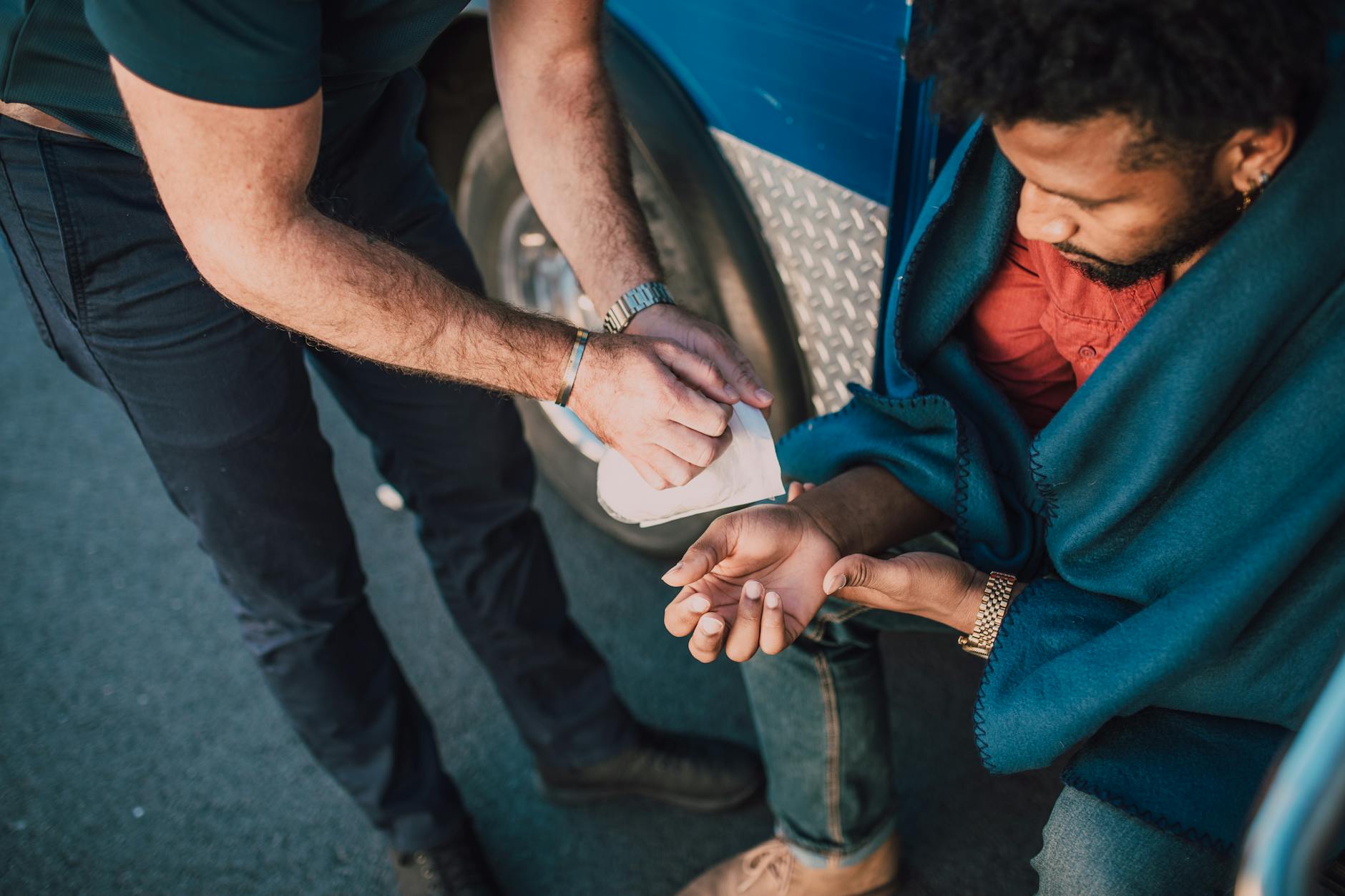
Photo by RDNE Stock project
Conclusion
The Rahveer Yojana is transforming how people respond to road accidents in Uttar Pradesh by removing fears around police harassment and offering a substantial ₹25,000 reward for helping victims. This clear financial incentive and legal protection encourage more people to act quickly, improving the chances that injured victims reach hospital within the crucial Golden Hour.
By supporting Good Samaritans, the scheme builds a stronger, safer community where helping others in distress is recognised and valued. Combined with responsible driving habits and greater public awareness, these efforts have real potential to reduce road fatalities across the state.
Taking action in an emergency is now easier and more rewarding than ever. With every person who steps up, the roads of Uttar Pradesh become a little safer for all.