



How Bad Weather Disrupts UK Flights in 2025: Air Travel Tips & Rights for Travellers
 How Bad Weather Disrupts UK Flights in 2025: Air Travel Tips & Rights for Travellers
Estimated reading time: 13 minutes
Thank you for reading this post, don't forget to subscribe!How Bad Weather Affects UK Flights in 2025 (Tips for Travellers)
In 2025, bad weather continues to disrupt flight schedules across the UK more often and with greater intensity. Rising global temperatures have led to more frequent storms, heavy rainfall, fog, and heatwaves, all of which force tighter safety measures in airports. This means delays, cancellations, and cancellations impacting travellers every day. Understanding these challenges is key, especially for UK travellers who need solid tips on how to deal with unexpected changes without stress. This post covers the latest on weather-related disruptions and offers practical advice to keep your journey smoother amid these conditions.
The Impact of Bad Weather on UK Flight Schedules in 2025
Bad weather remains one of the biggest headaches for UK airports and travellers in 2025. Despite advances in technology and aircraft design, weather conditions like snow, fog, storms, heavy rain, and low visibility still have a massive effect on flight schedules. These weather events don’t just delay one or two flights; they reduce an entire airport’s capacity to handle air traffic safely, leading to delays, cancellations, and diversions. For busy hubs like London Heathrow and Gatwick, even a minor weather disturbance can cascade into hours of disruption.
How Weather Cuts Airport Capacity
UK airports operate close to maximum capacity on most days. When bad weather hits, air traffic controllers must space out landings and take-offs much more than usual. For example, during heavy fog or storms, London Heathrow’s capacity can drop from about one plane every 45 seconds to just one every 80 seconds or more. This slowdown happens because safety protocols require longer gaps between flights to avoid accidents under poor visibility or turbulent conditions.
As a result, many flights are delayed or pushed back on the tarmac while waiting for their turn. Some might get diverted to other airports, causing a ripple effect across the network. This is especially true during snow or heavy rainfall, when runway conditions become slippery or visibility drops dramatically.
The Role of Climate Change
The UK has seen an increase in the frequency and intensity of severe weather events due to climate change. Storms are pack a stronger punch, heatwaves bring unexpected challenges like rising runway temperatures, and fog incidents at major airports seem to last longer. This shift puts extra pressure on airlines and airports to maintain schedules, even though aircraft themselves are built to handle rough weather.
No plane usually refuses a flight because of rain or wind, but the real challenge is managing the traffic on the ground. Ground operations, staff availability, and air traffic control become bottlenecks, resulting in delays despite technological advances in planes.
Recent Disruptions at UK Airports
In 2025, Heathrow and Gatwick have already experienced multiple high-profile weather-related disruptions:
- In January, thick fog led to delayed and canceled flights at Gatwick for several consecutive days, forcing passengers to rearrange their plans.
- July saw a storm-driven air traffic control radar fault impacting Heathrow, grounding dozens of flights and creating widespread travel chaos across the London area.
- Snow and freezing conditions in early winter 2024 hurt capacity at multiple UK airports, with Heathrow issuing temporary bans on night-time landings to deal with icy runways.
These examples highlight how unpredictable weather throws a wrench into even the most carefully planned operations.
For UK travellers, the key takeaway is to expect delays and have backup plans in case your flight is affected. The unpredictability of weather means flexibility is your best travel companion in 2025.
You can stay updated on current weather-related delays through resources such as the UK Met Office and flight tracking services to adjust your journey as needed.
Why does Britain face flight chaos during bad weather? – BBC, Jan 2025
Heathrow Airport Flight Disruptions Due to Severe Weather – Travel and Tour World
UK Flight Punctuality and Passenger Trends in 2025
As the UK aviation scene navigates through 2025, maintaining on-time flight performance has been a real challenge amid frequent weather disruptions and increasing passenger numbers. Yet, recent statistics from the Civil Aviation Authority (CAA) reveal an encouraging picture. Across UK airports, about 75% of flights operated on time during the first half of 2025. That’s a solid improvement compared to previous years, showing the industry’s efforts to adapt to tougher weather and operational conditions.
April 2025 marked a standout month with 82% of flights running on schedule. This boost came despite ongoing weather challenges, thanks to better coordination between airlines, airports, and air traffic control teams. Alongside punctuality gains, passenger numbers continue to rise steadily. In the first six months of 2025, UK airports handled approximately 141 million passengers, up about 3% from the same period in 2024. This increase signals growing demand and the pressures that come with it.

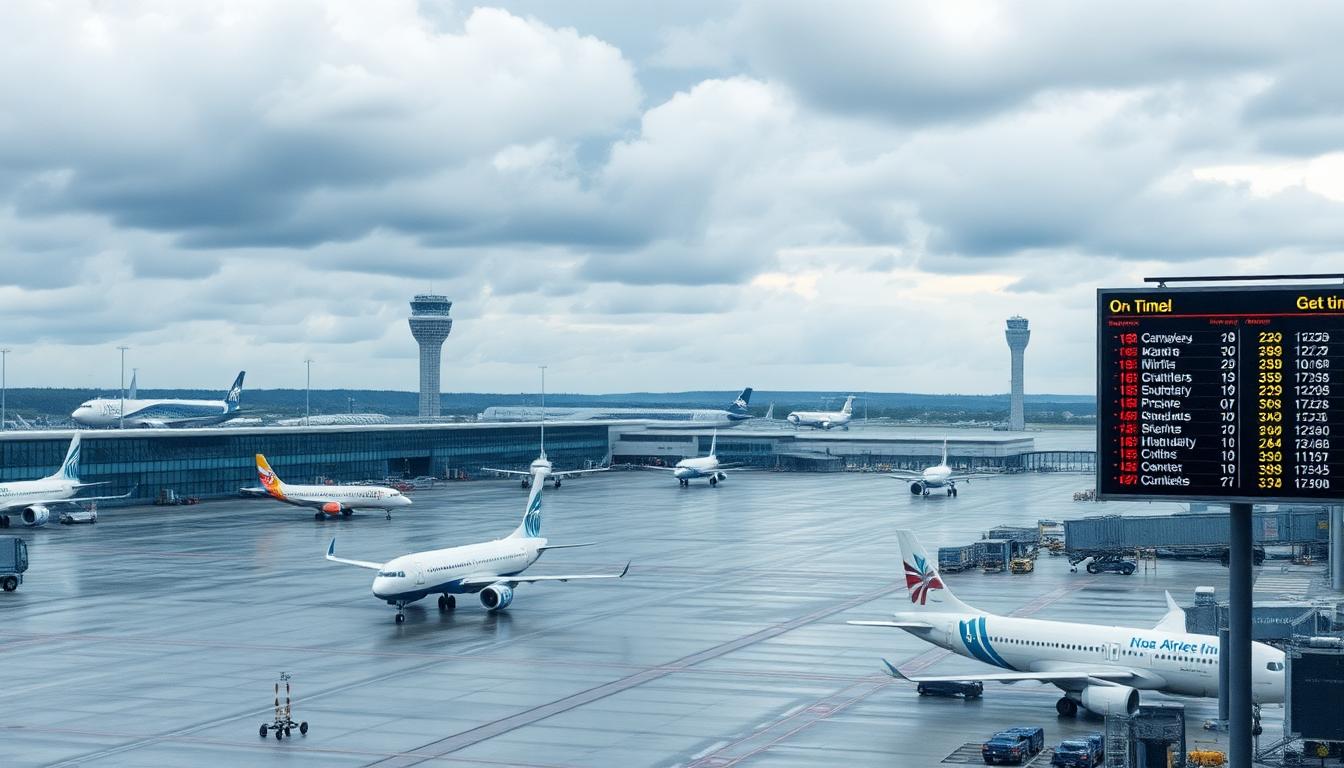
Photo created with AI
Regional and Airline Punctuality Trends
Flight punctuality varies quite a bit across UK airports and airlines. Major hubs like London Heathrow and Gatwick typically face the most delays because of their tight schedules and high traffic volumes. However, Heathrow has shown some punctuality improvement this year, partly due to upgraded runway and terminal operations accommodating weather disruptions more efficiently.
On the other hand, airports serving regional flights, such as Manchester and Birmingham, usually report better on-time records. These airports often have more flexible slots and less congestion, making it easier to handle weather or operational delays without mass disruptions.
Among airlines, budget carriers tend to be more susceptible to delays during bad weather or air traffic control (ATC) bottlenecks, while legacy airlines like British Airways exhibit slightly better punctuality thanks to more resources and experienced operations management.
Beyond Weather: Other Causes of Disruptions
While bad weather steals most of the headlines when flights run late, it’s not the only factor at play in 2025. Operational challenges such as:
- Air traffic control delays due to radar faults or staffing issues
- Crew scheduling complications
- Aircraft maintenance and turnaround inefficiencies
all add to delays and cancellations.
For example, the storm-induced radar fault at Heathrow in July temporarily grounded dozens of flights, illustrating how technical and staffing issues can amplify the impact of weather. At the same time, airlines juggling increased passenger loads sometimes struggle to maintain smooth on-ground processes, further pushing back departure times.
What This Means for You as a Traveller
Punctuality improvements show that UK airports and airlines are working hard to keep flights on schedule, but 25% of flights still face delays. With ongoing extreme weather and complex operations, being prepared is key.
Keep these points in mind when flying:
- Check punctuality trends at your departure airport. Smaller regional airports often have fewer delays.
- Monitor airline on-time stats; some carriers manage weather disruptions better.
- Stay alert for ATC announcements and technical issues during your trip.
For the latest information, resources such as the Civil Aviation Authority news updates offer reliable, up-to-date data on flight performance and passenger trends.
This knowledge helps you plan with more confidence, whether you’re flying for work or leisure this year.
Links for further reading:
- UK Aviation Growth Continues with Record Passenger Numbers (CAA, 2025)
- UK Airports Show Significant Growth and Better Punctuality (AeroTime, 2025)
Understanding Your Rights as a UK Traveller During Weather Disruptions
When bad weather throws your flight plans into chaos, knowing your rights as a traveller can make a huge difference. Weather delays and cancellations are frustrating, but the UK has clear rules to protect you, even when conditions are beyond the airline’s control. These laws focus on care, assistance, and compensation, helping you manage the unexpected.

Image created with AI
Your Airline’s Duty of Care During Delays and Cancellations
When a flight is delayed or cancelled in the UK, your airline has a duty of care to look after you while you wait, regardless of the cause — including bad weather. This care typically includes:
- Food and drinks: Reasonable refreshments if the wait extends beyond a couple of hours.
- Communication: Access to phone calls, emails, or messages so you can inform family or make alternative bookings.
- Accommodation and transport: If an overnight stay is necessary, the airline will arrange a hotel and transport to and from the airport.
These services kick in depending on flight distance and delay time. To be specific:
| Flight Type | Delay Threshold to Trigger Duty of Care |
|---|---|
| Short-haul (under 1,500 km) | 2 hours or more |
| Medium-haul (1,500–3,500 km) | 3 hours or more |
| Long-haul (over 3,500 km) | 4 hours or more |
This means if your short-haul flight is delayed by at least two hours, your airline should start providing these supports. Longer flights have slightly longer wait thresholds before care is required.
Compensation: What Weather Delays Mean for You
Unlike delays due to airline faults or operational issues, compensation for weather-related delays or cancellations is usually not payable. Weather disruptions fall under “extraordinary circumstances,” a legal term meaning the airline isn’t responsible and doesn’t have to pay you extra money.
That said, the airline must still provide you with the duty of care services listed above. If they fail to do this, and you incur reasonable extra costs (like buying meals yourself or paying for a taxi), keep your receipts. You can claim those costs back later.
How to Document and Claim Your Expenses
It’s smart to take clear notes and collect evidence during any disruption:
- Keep boarding passes and booking confirmations.
- Save all receipts for food, transport, accommodation, or communication expenses.
- Record conversations with airline staff or customer service, noting times and names if possible.
If the airline doesn’t provide care, send a detailed claim with your evidence afterward. Airlines often handle these claims directly, but if necessary, you can escalate complaints to the UK Civil Aviation Authority (CAA) or use alternative dispute resolution services for support.
Choices Available if Your Flight Is Cancelled
If the weather causes a cancellation, you get to choose either:
- A full refund of your ticket, usually paid within seven days.
- Re-routing under comparable conditions at the earliest opportunity.
While compensation money may not be awarded for weather issues, the airline should again provide care and assistance during your wait for the rerouted flight.
Travel rights also apply if you’re denied boarding (like overbooking) or miss a connecting flight due to a weather-related delay on a previous leg of your trip. In these cases, airlines must accommodate you, provide care, and consider compensation where appropriate.
For full, up-to-date details straight from the source, the UK Civil Aviation Authority’s page on delays and cancellations is a highly trusted resource.
Understanding your rights keeps you in control when weather hits. Expect care from your airline, save your receipts, and don’t hesitate to claim what you are entitled to. This knowledge turns frustration into action and helps you plan smarter travels in 2025.
Practical Tips for UK Travellers to Manage Weather-Related Flight Disruptions in 2025
Bad weather delays or cancels flights more often now, but you don’t have to feel powerless when it happens. Simple strategies can help you reduce stress and keep your travel plans on track. Planning ahead and staying informed put you in control, helping you dodge the worst of those weather-driven headaches.

Choose Your Flight Time and Airport Wisely
The time and place you fly make a big difference in how likely your flight is to face weather delays.
- Pick early morning or late-night flights. Airports often operate more smoothly outside peak hours, reducing delays caused by weather disruption.
- Avoid peak travel dates and busy seasons, especially late June or around holidays. Traffic and weather combo can quickly cause ripple effects.
- Consider smaller or regional airports nearby. Less crowded airports like Manchester, Birmingham, or Bristol can offer more flexibility and fewer weather-related delays than Heathrow or Gatwick.
Stay Updated with Flight Tracking Tools
Real-time information is key. Flight tracking apps give you quick updates about your flight status, gate changes, or delays.
- Popular options include FlightAware and FlightRadar24, which provide live tracking and alerts.
- Follow your airline’s social media accounts and sign up for their notifications to get instant updates.
- Use official airport websites or trusted travel platforms to check weather and operational status at your departure and arrival airports.
Make Flexible Booking Choices
Booking flexible tickets may cost a bit more but pays off when weather strikes.
- Choose tickets that allow easy changes or free cancellations so you can adjust plans without extra fees.
- Consider booking direct with airlines that have clearer rebooking policies in bad weather.
- Check if your package holiday has ATOL protection, which safeguards your booking if flights or holidays get cancelled.
- Travel insurance is a smart extra layer. Look for policies covering weather delays and cancellations to minimize unexpected costs.
Organize Your Documents and Essentials Accessibly
When delays happen, the last thing you want is to scramble for your travel documents.
- Keep your passport, boarding pass (digital or paper), travel insurance, and contact numbers within quick reach.
- Store needed apps on your phone and keep a charger handy; power outages or long waits at the airport are common.
- Having snacks, a refillable water bottle, and basic comfort items in your hand luggage helps you stay comfortable during long waits.
Use Travel Management Platforms if Flying for Business
If you’re travelling for work, travel management tools can send real-time alerts about flight disruptions.
- These platforms can automatically propose alternative flights.
- They help manage bookings quickly, keeping meetings on schedule or reducing downtime.
Stay Calm and Be Proactive During Disruptions
Good attitude goes a long way. Weather delays throw everyone off, but staying calm helps you make better choices.
- Approach airline staff politely. They want to help but face many passengers at once.
- If waiting at the airport, look for airline help desks or dedicated rebooking counters early.
- Reach out to customer service on apps or social media while you wait in line.
- If your flight is cancelled or delayed, ask about alternative flights, connections, or possible hotel arrangements.
- Keep receipts for any extra costs (meals, taxis, accommodation). You can claim these expenses later.
When you work with the situation rather than against it, you often find more options and less frustration.
By planning smart, staying informed, and keeping your cool, you can reduce the impact of weather delays on your UK flights in 2025. For more detailed advice on handling flight disruptions, check out this 11 Best Tips to Handle Flight Delays and Cancellations. If you want to understand your rights when facing air traffic control disruption, this Guardian article explains passenger protections clearly.
Conclusion
Bad weather remains a major factor disrupting UK flight schedules in 2025, amplified by the growing effects of climate change. These disruptions often stretch airport capacity and require travellers to expect delays or cancellations. Understanding your rights and preparing practical strategies can ease the frustration.
Planning ahead, choosing less busy travel times, tracking your flight in real time, and booking flexible tickets provide more control amid uncertainty. Staying organised and informed helps you adapt quickly when weather affects your plans. The right preparation transforms travel disruption into manageable inconvenience, allowing for a smoother journey even when the skies turn rough.