



How AC Motors Changed the World: Science, Technology, and Everyday Impact.
 How AC Motors Changed the World: Science, Technology, and Everyday Impact.
Estimated reading time: 7 minutes
Thank you for reading this post, don't forget to subscribe!How AC Motors Changed Our World Forever: The Science, Impact, and Legacy
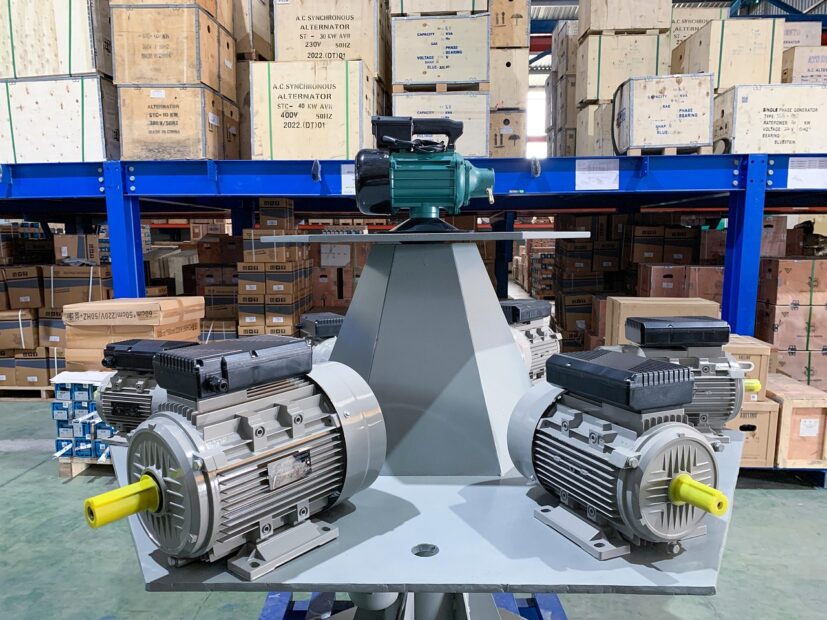
AC motors are at the heart of modern technology. They take the invisible force of electricity and convert it into the familiar motion that powers so much of our world. Whether it’s the spinning drum of a washing machine or the massive conveyor belts in factories, AC motors keep things moving. This article breaks down how these motors work, why they matter, and how they’ve shaped daily life, industry, and the future.
How AC Motors Work: The Basics Explained
Understanding AC (alternating current) motors is easier than most people think. While the inside of an AC motor may look complex, the basic idea is simple. It’s all about using the power of magnetic fields and electricity to produce movement.
Inside every AC motor, two main parts play critical roles: the stator (stationary coils) and the rotor (a rotating magnet or coil in the center). Alternating current flows through the stator, creating changing magnetic fields. These fields interact with the rotor, causing it to turn. This movement is what turns electrical energy into mechanical energy, making fans spin, pumps run, and machines operate.
To help you visualize, imagine placing a spinning top in the middle of a circle of magnets. If you could switch the magnets on and off in just the right sequence, the top would start to spin on its own, always trying to align itself with the strongest magnet. That’s nearly what’s happening inside an AC motor, but far faster than the eye can see.
Understanding Polarity and Magnetic Fields in Motors
The secret to the AC motor’s motion lies in polarity and the creation of a rotating magnetic field. Polarity simply means every magnet or coil has two ends, north and south. When the magnetic field “rotates” around the motor, it constantly shifts which part is north and which part is south. The rotor always tries to catch up and align with the field, so it spins.
Alternating current changes direction rapidly. This changing current in the stator coils means the magnetic field can move or “rotate” even though the coils themselves are fixed in place. As this rotating field sweeps around, it “drags” the rotor along with it. With every flip of the current, the rotor keeps moving, turning electric power into mechanical motion.
For a more detailed visual explanation, check out the helpful illustrations and explanations on AC Motor Fundamentals.
The Role of AC Phases: From Two-Phase to Three-Phase Systems
AC motors rely on the way current arrives at the stator. In simple terms, an “AC phase” is a separate stream of current, each peaking at a different time. The earliest AC motors used two-phase systems, where two currents would drive sets of stator coils, each shifting (or “out of phase”) by 90 degrees.
Here’s how it works:
- Two-phase AC motors: Imagine two sine waves, each starting at a different time. This timing shift makes sure the magnetic field is always rotating smoothly, never pausing or jerking.
- Three-phase AC motors: Common today, using three currents each shifted by 120 degrees. This setup keeps the rotation even smoother and delivers more consistent power.
Here’s a handy table to quickly compare two-phase vs. three-phase AC motors:
| Feature | Two-Phase Motor | Three-Phase Motor |
|---|---|---|
| Number of phases | 2 | 3 |
| Phase separation | 90 degrees | 120 degrees |
| Smoothness of rotation | Good | Excellent |
| Typical use today | Rare | Most common |
Three-phase motors are now standard in industry, thanks to their smooth power output and efficiency. They keep heavy machinery running with less vibration, more reliability, and greater power. To learn about three-phase operation in detail, see How a 3 Phase AC Induction Motor Works.
The Revolution: How AC Motors Transformed Daily Life and Industry
The introduction of AC motors unleashed more than just smoother machine movement. They gave rise to automated factories, reliable public transport, and the appliances that fill our homes today. Before AC motors, many tasks had to be done by hand, or required cumbersome and dangerous steam engines.
Let’s break down where AC motors make the biggest difference.
Industries Powered by AC Motors
Manufacturing became faster and safer once AC motors drove conveyor belts, assembly lines, and robotic arms. Instead of relying on people to lift and move parts all day, motors did the heavy lifting, boosting productivity and reducing injuries. Factories could now run 24/7, leading to mass production and more affordable goods.
Transportation changed forever as well. Electric trains and trams, powered by AC motors, provided cities with quieter, cleaner, and more reliable means to move millions of people every day. Subways and metro systems in big cities rely on the steady power and simple maintenance of AC motors to keep trains on time.
Agriculture benefited, too. Water pumps, grain mills, and milking machines all improved with the consistent, controllable power of AC motors. This allowed farmers to manage larger fields and herds, increasing food production and quality.
Everyday Uses: AC Motors at Home and in Devices
Most people interact with dozens of AC motors every day, often without noticing. They hide behind walls, inside gadgets, and under kitchen sinks, quietly powering our routines.
Common examples include:
- Ceiling and table fans: Blow cool air using a spinning rotor.
- Refrigerators and air conditioners: Compressors depend on AC motors.
- Washing machines: Spin and agitate clothes with controlled motor cycles.
- Blenders and mixers: Grind, blend, and mix with high-speed rotation.
- Vacuum cleaners: Suction is created by a fast-spinning motor fan.
- Pumps: Move water through pipes in homes and apartments.
Thanks to AC motors, daily chores are quicker and less strenuous. Instead of spending hours scrubbing, churning, or fanning by hand, these devices handle the workload at the push of a button. If you want to see more examples and understand the mechanical side better, visit How Electric Motors Work.
The Lasting Legacy: Innovation, Efficiency, and the Future
AC motors have done more than just improve factories and homes. Their reliable design continues to spark new ideas and technologies.
Efficiency has always mattered. Modern AC motors are now optimized to use less electricity for the same work, which saves money and reduces pollution. Many governments and companies focus on upgrading older motors for energy savings on a huge scale.
Innovation thrives wherever AC motors are used:
- Electric vehicles: Nearly all modern EVs use advanced AC motors for smooth, fast, and efficient motion.
- Renewable energy: Wind turbines and hydroelectric plants use AC motors and generators to move from energy generation to community power grids.
- Automation and robotics: Precise, reliable motors enable complex movements in robots on assembly lines, delivery robots, and even home robots.
To see a technical explanation, diagrams, and even more uses, check the resource AC Motor Fundamentals.
Conclusion
AC motors may not receive as much spotlight as smartphones or computers, but they quietly power our lives. From factory floors to public transport and the heart of so many home appliances, AC motors have truly changed the world—bringing more comfort, safety, and efficiency into daily life. The next time you turn on a fan or ride an escalator, take a second to appreciate the clever technology working silently behind the scenes.
Curious about what else AC motors power or how they keep evolving? Start looking at the devices around your home, office, or city—the magic of electrical energy turning into motion is everywhere. If you want to explore, visit AC Motor Guide for in-depth info and tips on spotting AC motors in daily life.