
RJD-VIP Seat Sharing Sealed: 18 Seats, NDA Dissent | Bihar Elections 2025
 bihar-rjd-vip-seat-sharing
Estimated reading time: 7 minutes
Thank you for reading this post, don't forget to subscribe!RJD-VIP Seal Seat-Sharing Deal As NDA Faces Dissent: Bihar Polls Heat Up
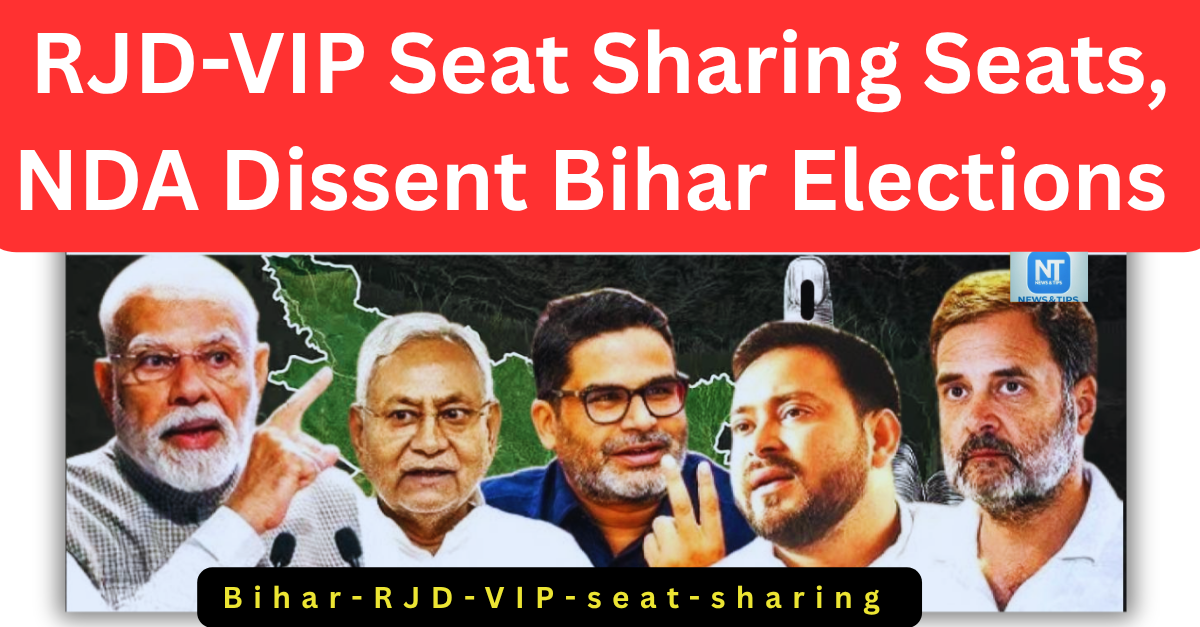
A long night of talks ended with one clear headline for Bihar politics. The RJD and Mukesh Sahani’s VIP reached a consensus on seats. The smaller party gets 18. It is a compact number, yet it carries weight in a tight contest. As Bihar races toward the nomination deadline, the other alliance is wrestling with dissent. Upendra Kushwaha is upset over seats and candidates. He is headed to Delhi to meet Amit Shah. The next few days could reset both strategies. If you follow the Bihar elections, this is the moment to watch. It is all about seat sharing and timing.
News India Today
The Big Takeaway: 18 Seats For VIP In Mahagathbandhan
After days of friction, RJD and VIP settled their fight over numbers. According to on-ground reporting shared on air, Tejashwi Yadav and Mukesh Sahani agreed to 18 seats for VIP in the Mahagathbandhan. This is meant to end a deadlock that had stretched across multiple rounds of talks.
- The consensus came after late night meetings.
- A formal announcement is expected soon.
- Candidate lists and the final seat-sharing split are likely to follow quickly.
Local reports mirror this development. Coverage has flagged that the RJD-VIP talks were tense, but now a deal is set with VIP getting 18 seats, as seen in Aaj Tak’s report on the RJD-VIP deal. Similar details are reflected in News18’s update on the Tejashwi-Sahani seat-sharing agreement, which notes the near-final status of talks within the alliance.
Why This Deal Matters
Elections in Bihar hinge on coalition math. A small party with a focused vote base can tip tight seats. VIP’s 18-seat share signals trust and a tactical compromise within the opposition fold.
- It helps the Mahagathbandhan avoid public infighting.
- It lets VIP plan candidate placement instead of negotiating till the deadline.
- It keeps the alliance’s message focused on campaigning, not bargaining.
Another local report suggests how the 18 seats might be sourced inside the alliance, though formal confirmation is awaited. For context, you can see this angle in LiveHindustan’s breakdown of the RJD-VIP understanding.
The Clock Is Ticking: October 17 Nomination Deadline
The nomination window for the first phase closes on October 17. That date shapes every move right now. Parties cannot afford to drag talks any longer. Candidates need time to file papers, hit the trail, and build momentum.
- Expect a swift rollout of lists in the Mahagathbandhan.
- Expect rallies and roadshows to ramp up immediately after.
When deadlines are close, alliances that settle early gain an edge in ground organization. The RJD-VIP deal, if announced in time, lets the opposition step into campaign mode while others are still ironing out differences.
NDA’s Unease: Kushwaha’s Discontent And A Delhi Visit
While the Mahagathbandhan tries to close ranks, the NDA faces a headache. Upendra Kushwaha is unhappy with seat allocation, and also the distribution of specific seats among BJP, JDU, and LJP. Senior BJP leaders, including Nityanand Rai and Samrat Choudhary, met him late at night to calm tensions. This did not end the matter.
The next step is high-level. Kushwaha is traveling to Delhi to meet Home Minister Amit Shah. The aim is to settle the dispute before nominations close. The message is clear. The NDA wants to avoid last-minute rifts becoming public spats.
What’s Behind The NDA Tension
Seat-sharing is never just about numbers. It is about which seat goes to whom, local equations, and who gets to field their preferred face. That is where the frictions usually flare up.
- Some seats earmarked for allies can upset other leaders.
- Candidate choice becomes a sticking point if local leaders feel sidelined.
- Pulling in one ally can mean another ally feels squeezed.
When leaders head to Delhi for talks, it often signals that state-level negotiation has hit a wall. The central leadership then steps in to strike a balance. It is a familiar pattern in coalition politics.
JDU’s Calendar: Lists And Campaign
On the NDA side, JDU is signaling readiness. The party says it will release its first candidate list by this afternoon. From tomorrow, Nitish Kumar is expected to begin campaigning. If that timeline holds, JDU will try to project order and momentum, even as other NDA partners continue to talk.
A quick launch of campaign events helps fill the news cycle with rallies and speeches, not rifts. It also gives candidates time to work the booth networks and set a local rhythm before polling phases begin.
Snapshot: What Each Camp Is Doing
Here is a concise view of where things stand based on current reporting.
| Alliance | Key Parties Mentioned | Status Update | Next Steps |
|---|---|---|---|
| Mahagathbandhan | RJD, VIP | Deal reached, VIP to get 18 seats | Formal announcement of seat-sharing and candidate lists |
| NDA | BJP, JDU, LJP, Upendra Kushwaha | Internal disagreements over seat-sharing and candidate choices | Kushwaha to meet Amit Shah, possible adjustments to calm dissent |
| JDU | JDU | First list expected by today afternoon | Nitish Kumar to start campaigning from tomorrow |
| Election Timeline | All parties | Nomination deadline for phase one is October 17 | File nominations, finalize candidates, intensify campaign |
Reading The Signals: What This Means For Voters
This phase tells voters a lot about each formation.
- The opposition is trying to show unity and speed by closing the RJD-VIP deal.
- The ruling alliance is managing internal negotiations, which may lead to late tweaks.
- Leadership visibility will rise as campaign trails start.
Voters often look for discipline and clarity. Clear seat-sharing and early candidate announcements send that signal. Turbulence inside alliances can unsettle local workers and confuse booth-level efforts. The next 48 to 72 hours carry outsized weight.
The Role Of Smaller Parties
VIP’s 18-seat share is a reminder. Smaller parties can be decisive if they bring a loyal base in select regions. In close fights, even a handful of seats can swing the final numbers. This is why both alliances court niche parties and leaders with strong micro-level appeal.
- They add community connect in targeted pockets.
- They help mobilize local networks, not just state-wide narratives.
- They often demand specific seats where their influence is strongest.
For larger allies, the trade-off is real. Giving up winnable seats is hard. But without partners, the alliance may lose those very seats.
What To Watch For Next
Several milestones are on the horizon.
- Official announcement of the Mahagathbandhan’s seat-sharing arrangement.
- Candidate lists from both alliances, especially in seats tied to VIP and Kushwaha’s areas of interest.
- Any NDA recalibration after the Delhi meeting.
- Start of high-energy campaign events, including Nitish Kumar’s schedule.
This is the period when alliances test internal bonds. If seat-sharing holds and candidates fall into line, ground-level work can begin in earnest. If not, expect more late-night huddles and hurried fixes.
Why The Timing Is Everything
The nomination deadline creates a hard stop. Every hour counts. A well-organized alliance uses this crunch to focus, pick candidates, and kick off outreach. A distracted alliance runs from fire to fire, trying to keep everyone on board. The difference shows up in campaign vigor and voter contact.
Consider it like a relay race. Handovers need to be clean. The baton, in this case the ticket and the seat, must pass without stumbles. The team that avoids missteps gains a clear track ahead.
Ground Realities And The Media Lens
Televised updates and live reporting have become part of the election story. Viewers got a clear picture of these overnight developments from India Today’s coverage, including inputs by Piyush Mishra. This helps set expectations. It also puts pressure on parties to back claims with quick action, like releasing lists and addressing dissent publicly.
Additional local reporting has reinforced the key facts about the RJD-VIP agreement. For deeper context, see Aaj Tak’s coverage of the finalized RJD-VIP arrangement, News18 Hindi’s update on the Tejashwi-Sahani talks, and LiveHindustan’s explainer on the seat-sharing contours.
Conclusion
Bihar’s political chessboard just moved. The RJD-VIP pact on 18 seats reduces friction in the opposition, while the NDA works to calm unrest in its ranks. As the October 17 nomination deadline looms, every decision and announcement has extra weight. The coming days will reveal whether these alliances project unity or keep patching over cracks. Stay tuned, because in this race, seat sharing is not just a number, it is the story.