



Assam Student Movement 1979-1985: Causes, Origins, Nellie Massacre, NRC & Assam Accord 2025
Estimated reading time: 12 minutes
Thank you for reading this post, don't forget to subscribe!Origins and Causes of the Assam Student Movement
The roots of the Assam Movement lie in real fears about identity and belonging. Local anxieties steadily grew after decades of migration. By the end of the 1970s, these worries combined with political events and electoral rolls controversies, lighting a fuse under student groups ready to protect Assamese identity. Let’s break down how waves of migration and a single by-election became the spark for statewide protests.
Immigration History and its Impact on Assamese Identity
Assam’s story is deeply shaped by who came, who stayed, and who felt left out. During British colonial rule, Assam’s vast tea gardens drew labor from central India, Bengal, and Nepal. Colonial policies often encouraged migrants to boost agriculture and fill jobs, turning the region into a diverse, sometimes unsettled mix of communities.
After India’s independence, the flow didn’t slow. Partition brought refugees. Political changes in East Bengal (later East Pakistan, and then Bangladesh) drove more into Assam, hoping for work or safety. By the 1970s, the numbers were hard to ignore—demographic shifts changed not just villages, but also languages spoken in schools and who won local elections. The Census showed a steady rise in the number of Bengali-speaking Muslims and Hindus, ratcheting up unease among locals who felt their voice shrinking in public life. For a broader historical overview, see the Britannica profile on Assam.
The pressure was not just about numbers. It was about fair access to resources, jobs, land, and political power. Many Assamese saw their identity—built on language, culture, and shared past—under threat. These social frictions built up resentment, with some seeing migration as a quiet invasion stripping them of their future. Public services felt the strain, and Assamese groups started to press the government to take clear steps to identify outsiders and define citizenship.
All this set the stage for student unions and civil society to make “protecting Assamese identity” the core of their cause, demanding formal action well before things boiled over in the late seventies.
Electoral Roll Controversies and Political Mobilization
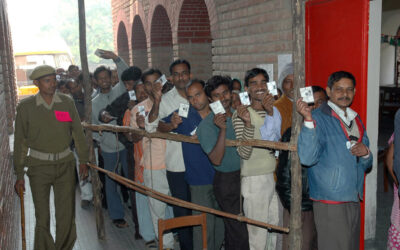
The controversy around the Mangaldoi Lok Sabha by-election in 1978 brought years of silent tension out in the open. When one of the sitting MPs died, electoral rolls were updated, revealing thousands of new names—many believed to be illegal immigrants. The Frontline report explains how Mangaldoi became a flashpoint. People asked: Who gets to vote? Should newcomers have the same voice as locals?
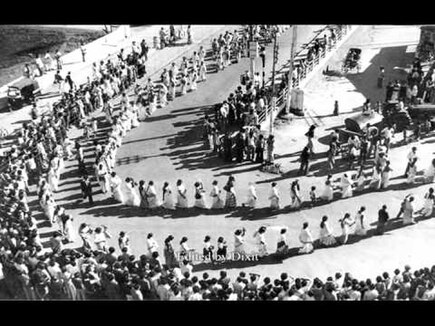
Student leaders from the All Assam Students’ Union (AASU) and the All Assam Gana Sangram Parishad (AAGSP) saw this as the last straw. They argued that letting non-citizens decide elections was unfair and would leave the Assamese people powerless in their own state. With electoral integrity in question, these groups rallied towns, villages, and campuses for a statewide shutdown. The movement quickly spread, with protest marches, sit-ins, and rallies drawing attention to alleged manipulation of the voting lists.
Here’s how the agitation built momentum:
- Student and community groups coordinated state-wide strikes, blocking highways and key government offices.
- Leaders called for boycotts of all elections until the government agreed to update and verify the electoral rolls.
- Demands crystallized around the detection, disenfranchisement, and deportation of illegal immigrants.
Their organized actions turned a technical problem (proof of citizenship) into a mass movement. By the 1980s, teachers, lawyers, writers, and even small traders joined students, making it a people’s struggle rather than just a campus cause. As the Wikipedia summary of the Assam Movement shows, these efforts forced the state and central governments to finally act, setting the stage for the Assam Accord.
The heart of the agitation? The idea that without clear and updated electoral rolls, Assamese people risked losing their home—politically, culturally, and economically. This clear and urgent rallying point held communities together during six years of protests, and shaped political action for decades to come.
The Nellie Massacre: A Tragic Chapter
The Assam agitation was a deeply emotional and turbulent time, and its darkest moment came on February 18, 1983. On this day, ethnic violence erupted in Nellie, a remote area in the Nagaon district. What followed was one of the worst massacres in India’s post-independence history. Over a span of just six hours, more than 2,000 people—mostly Bengali Muslims—lost their lives. This tragic episode left a long scar on Assam’s social fabric and communal relations.

What Led to the Violence in Nellie
During the Assam Movement, the issue of immigration became a flashpoint. The state was preparing for elections in 1983, which most Assamese groups, led by student activists, opposed due to fears of illegal immigrants influencing the voter base. Tensions ran high, inflamed by years of demographic changes and political agitation. On that day in Nellie, groups from various ethnic communities attacked the Bengali Muslim population.
The violence was not a spontaneous outburst but a tragic outcome of simmering mistrust. It was rooted in the belief that certain groups had settled illegally and threatened the identity and political power of native Assamese people. Yet, the scale and brutality of the massacre revealed how quickly fear and anger could spiral into horrific violence.
The Human Toll and Aftermath
The official death toll estimates range between 2,000 and 3,000 lives lost, though exact numbers remain uncertain. Entire families were wiped out, villages razed, and survivors were left traumatized and displaced. The massacre unfolded despite the presence of police and paramilitary forces, revealing the limited protection available to vulnerable communities.
The Nellie massacre shook Assam and the entire nation to its core, becoming a grim reminder of how ethnic strife can escalate when political frustrations meet social divisions. Its aftermath saw increased bitterness between communities and a cautious approach to handling ethnic and immigration issues. This tragedy still haunts Assam’s collective memory, underscoring the costs of unresolved identity conflicts.
The event is documented carefully in public records and reports such as the detailed Wikipedia entry on the Nellie massacre and the BBC’s reflective history podcast, which shed light on the scale and implications of this tragedy.
This chapter remains key in understanding the Assam student movement and its broader impact, serving as a warning about the consequences when agitation turns violent.
The Assam Accord of 1985
The Assam Accord, signed on August 15, 1985, marked a significant turn in Assam’s socio-political history. It was the outcome of intense negotiations between the Indian government and leaders of the Assam Movement, mainly the All Assam Students’ Union (AASU) and the All Assam Gana Sangram Parishad (AAGSP). The agreement attempted to address the immigration issues that had fueled years of unrest.
This Accord laid down clear rules for identifying citizenship based on immigration cut-off dates, promised constitutional and legislative safeguards, and also gave birth to a new political force in Assam. But putting these promises into action brought challenges that continue to influence the state’s politics.
Key Provisions and Their Implications
The Accord’s backbone was its detailed classification of immigrants into three groups based on arrival dates:
- Before January 1, 1966: These immigrants were to be granted full citizenship rights without any restriction, acknowledging their established presence in Assam.
- Between January 1, 1966, and March 24, 1971: People who came during this period would face electoral disqualification for ten years, reflecting a temporary limitation on their political rights while still recognizing them as residents.
- After March 24, 1971: Immigrants arriving on or after this date were declared illegal and were to be detected, deleted from electoral rolls, and deported as per the law.
This graduated approach was designed to balance humanitarian concerns with the political demand to preserve Assam’s demographic composition.
Additionally, the Accord promised constitutional, legislative, and administrative safeguards to protect Assamese language, culture, and identity. It talked about economic development and the improvement of infrastructure and educational institutions to benefit the state’s indigenous population.
One of the major political outcomes of the Assam Movement was the formation of the Asom Gana Parishad (AGP) in 1985. This party was created by leaders of the student movement who transitioned into mainstream politics to give a political voice to Assam’s aspirations flagged during the movement.

Image generated by AI illustrating the Assam Accord signing ceremony
For more details about the official provisions, the Government of Assam’s resource on the Assam Accord provides the formal clauses and background.
Challenges in Implementation
While the Assam Accord set clear goals, its execution has been complicated. One of the toughest issues has been enforcing the detection and deportation of illegal immigrants, particularly those who entered after the 1971 cut-off.
The Illegal Migrants (Determination by Tribunals) Act, 1983, initially designed to help identify foreigners, became controversial. Many believed it made deporting illegal immigrants difficult and thus weakened the Accord’s intent. In 2005, the Supreme Court struck down this Act, stirring more political debates on how to implement the Accord effectively.
The process of identifying illegal immigrants has been fraught with political sensitivity and social tension. Detecting and deporting immigrants touches upon issues of human rights, local politics, and ethnic relations, making it a very delicate task. These complexities have slowed progress, and mass protests and legal battles have surfaced periodically as the state struggles to balance enforcement with social harmony.
The updated National Register of Citizens (NRC), first published in 2019 following later agreements that built on the Assam Accord, attempts to address these challenges. It remains a live issue, with ongoing government efforts and judicial oversight to finalize and implement citizen verification.

Image created with AI showcasing the 1980s Assam government meeting on immigration and border security
Further reading on these developments can be found at Frontline’s coverage of Assam’s citizenship challenges, offering insights into the ongoing political and legal complexities.
The Assam Accord remains a landmark pact that tried to heal decades of unrest but has also shown how complicated resolving identity and migration issues can be in a diverse society like Assam.
The National Register of Citizens (NRC) and Continuing Debates
The National Register of Citizens (NRC) in Assam has become one of the state’s most talked-about and controversial issues in recent years. Originally created as a tool to identify legal citizens and weed out illegal immigrants, the NRC carries deep emotional and political weight for many Assamese people. It links back directly to the longstanding concerns raised during the Assam Student Movement about who belongs and who does not.
Understanding the NRC means looking at its history, the process of updating it, and the intense debates and challenges that continue today.
Purpose and Development of the NRC
The NRC’s goal is straightforward: create an official list of Indian citizens living in Assam, separating them from those who entered without legal permission. The first official NRC in Assam was prepared in 1951 after the census, but it wasn’t updated for decades. This long gap allowed conflicting claims and worries about immigrant populations to grow.
The demand to update the NRC gained momentum after the Assam Movement in the 1980s and was mandated by the Supreme Court of India in 2013. For years, Assam officials worked on verifying identities, checking documents, and holding hearings. The final updated NRC was published in August 2019, covering 33 million people.
This process excluded about 1.9 million people who were considered “stateless” because they failed to prove their citizenship with the required documents or timelines. These numbers shocked the nation and stirred fears about the future of those left out.
Challenges in Proving Citizenship
Successfully proving citizenship during the NRC update required applicants to provide supporting papers dating back decades. For many, especially poor and rural residents, this was nearly impossible. Birth certificates, land records, or even school certificates were often missing or incomplete.
The complex bureaucracy and strict documentation rules created a situation where innocent people could be excluded simply because of lost or inaccessible paperwork. This has caused worry and confusion in many communities, leading to protests and legal battles.
This “document trap” disproportionately affected marginalized groups, including indigenous communities and Bengali-speaking Muslims frequently labeled as “outsiders.” The process has been described as a “punitive gap” where the strict rules caused hardship beyond just enforcement of law.
Controversies and Political Debates
The NRC’s final list raised many questions and fierce political debates. Some see it as a necessary step to protect Assam’s cultural identity and stop illegal immigration. Others view it as divisive and discriminatory, especially since many excluded people face uncertain futures.
The Citizenship Amendment Act (CAA), passed in 2019, further intensified the controversy. The law offers fast-track citizenship to certain religious minorities from neighboring countries but excludes Muslims. Critics argue this combination with the NRC could marginalize many people and break India’s constitutional promise of equality.
Public protests, legal challenges, and discussions about human rights are ongoing. The Supreme Court continues to oversee the NRC’s proper implementation and examine the CAA’s legality. Meanwhile, the central government is yet to finalize a nationwide NRC, adding more uncertainty.

For a detailed timeline and background on the NRC’s evolution and impact, you can review the National Register of Citizens for Assam Wikipedia page. The BBC explainer on Assam NRC offers clear insights into what the 2019 process meant for nearly two million people.
The NRC remains a live issue in Assam and across India, shaping debates about citizenship, identity, and belonging. It carries memories of Assam’s student-led struggles while pointing to the challenges that modern governance faces in balancing law, humanity, and politics.
Conclusion
The Assam Student Movement left a significant mark on the state’s political and social fabric. It brought to the forefront deep concerns about immigration, identity, and the protection of indigenous rights. The movement’s efforts culminated in the Assam Accord of 1985, setting clear guidelines on citizenship and immigration, while promising safeguards for Assamese culture.
However, the tragic Nellie massacre exposed the severe consequences of rising ethnic tensions, reminding us of the human cost behind these conflicts. Though the Assam Accord laid a foundation for peace, the challenges of fully implementing its terms have persisted, especially around identifying and deporting illegal immigrants.
The updated National Register of Citizens (NRC) in 2019 was a major step but also stirred fears and controversies that continue to shape Assam’s political debates and community relations today. These ongoing struggles highlight that questions of belonging and identity remain as relevant now as they were during the movement, requiring balanced and humane solutions to ensure long-term harmony in Assam.