Charlie Kirk Shot Dead at Utah Valley University: Shocking Campus Attack Stuns Nation
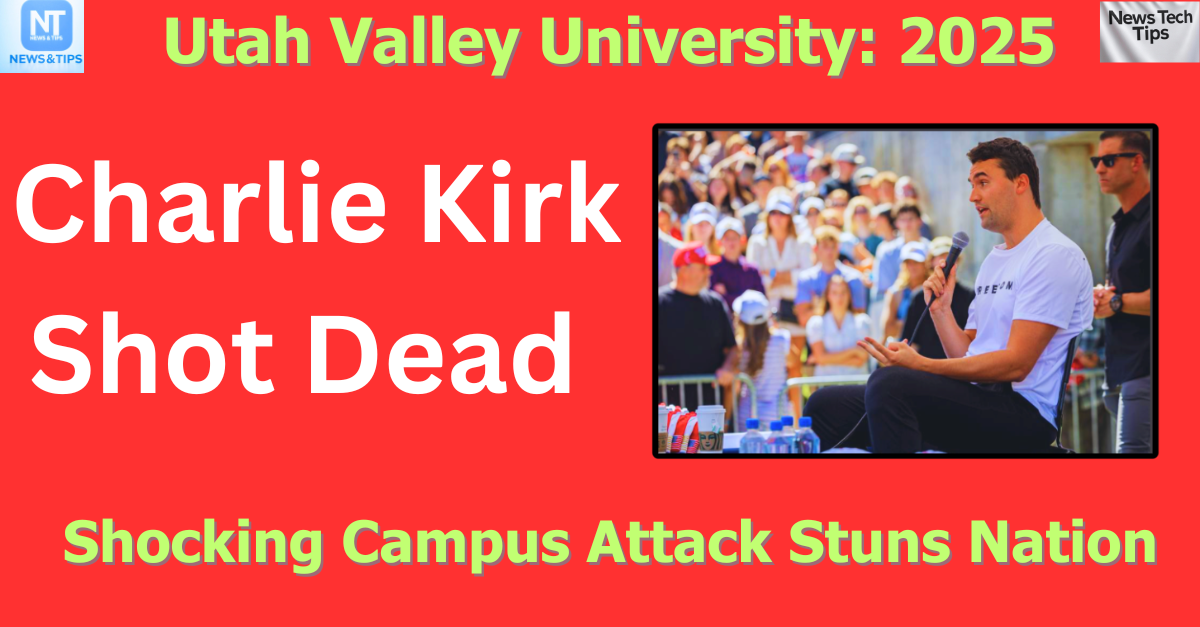 Charlie Kirk Shot Dead at Utah Valley University: Shocking Campus Attack Stuns Nation
Estimated reading time: 16 minutes
Thank you for reading this post, don't forget to subscribe!Charlie Kirk Shot and Killed on Campus (Trump Ally’s Death Sends Shock waves Through Utah Valley University)
The sky above Utah Valley University glowed bright, drawing a crowd of more than 3,000 students and supporters eager for the bold energy of Turning Point USA’s “American Comeback Tour.” Charlie Kirk—sharp-suited, outspoken, and a familiar face in conservative circles—owned the stage. His connection to former President Trump and his strategies for firing up young voters had made Kirk a prominent voice and a controversial one too.
On September 10, 2025, what began as a vibrant afternoon of political theater spiraled into chaos. A single, sharp crack ripped the air. In moments, safety shattered. The crowd lurched from excited debate to confusion and fear as Kirk fell. Screams carried across the courtyard, and students scrambled for cover.
This story traces the shocking events that unfolded, revealing how Kirk’s influence amplified both loyalty and outrage. We’ll walk through what happened at UVU, the history and meaning behind Kirk’s political rise, reactions pouring in from across America, and what his sudden, violent death now means for a nation already splintered by political tension.
Watch eyewitness coverage here:
The Day of the Shooting: What Happened at Utah Valley University
The sun lit up Utah Valley University as thousands arrived on campus for Charlie Kirk’s noon event. Kirk’s “Prove Me Wrong” sessions drew big crowds, and this day was no different. With the campus brimming with energy, a sense of routine wrapped around the outdoor plaza—until the unexpected cut through all of it. What unfolded in under a minute changed everything. Here’s a look at what happened, right down to the second.
The Setting: Kirk’s Prove Me Wrong Table
By midday, Kirk had taken his spot at the iconic table in front of UVU’s Losee Center. The air buzzed with debate and youth voices. Security kept a watchful eye, but most people felt safe under the open sky. Laughter, phone cameras, signs, and steady chatter filled the space as Kirk rallied his audience while engaging supporters and critics. It was his stage, and the country was listening.
The Shot: A Split Second of Chaos
At 12:20 p.m., everything changed in a single heartbeat. A sharp crack echoed from the Losee Center rooftop, nearly 200 yards from Kirk’s table. The New York Times visual timeline confirms that one bullet flew through the crowd and struck Kirk in the neck. He slumped over his notes as shock rippled through the audience.
With shouts and screams, panic replaced order. People froze for a blink, then the instinct to survive took over. Students dropped to the ground or bolted in every direction, some leaving shoes or bags behind. Staff tried to herd those closest to shelter. Phone calls flooded 911.
The Crowd and Security Response
As panic swept the quad, Kirk’s security team jumped into action. Two agents pulled him away from the table as another waved for cover. Eyewitnesses later said they saw security race Kirk to a black SUV that sped from the scene, its door swinging wide open and tires screeching.
Campus police converged, weapons drawn. Shouting for the crowd to “get down” and “run,” officers worked to steer the panicked rush away from exposed areas. In some corners, students stayed huddled and shaking, hiding behind benches or bushes, eyes searching for more danger.
Immediate Lockdown and Campus Closure
Within minutes, the university activated its emergency system. Sirens and alerts on every phone ordered a lockdown. Messages repeated across overhead speakers: “Seek shelter, this is not a drill.” The crowd slowly thinned as officers secured buildings and blocked campus exits.
UVU officials acted fast, canceling all classes and events. School administrators confirmed closures would last for days, aiming to protect everyone while police swept buildings and searched for the shooter. The local school district added five neighboring schools to a security protocol as a precaution.
Timeline of Key Events
Here is a concise breakdown of the day’s events, as confirmed by multiple sources including ABC4 Utah News:
| Time | Event |
|---|---|
| 11:30 a.m. | Attendees arrive for “Prove Me Wrong” event at UVU |
| 12:10 p.m. | Charlie Kirk takes the table; crowd grows to over 3,000 |
| 12:20 p.m. | Shot rings out from Losee Center roof; Kirk is hit |
| 12:22 p.m. | Security rushes Kirk to a waiting SUV; crowd flees |
| 12:23 p.m. | Campus police arrive, emergency lockdown alerts sent |
| 12:25 p.m. | University closes all buildings, events canceled; classes suspended |
| 12:40 p.m. | Neighboring schools enter security protocol |
| 1:15 p.m. | Police and SWAT sweep campus; shooter search underway |
A City and Campus Shaken
As the minutes ticked by, shock enveloped Utah Valley. Helicopters circled above while sirens flared on the ground. Local and state police set up a command post on campus, working with the FBI to cordon off the area.
Students and faculty texted loved ones, checking in from hiding spots or evacuation zones. For many families, those first messages brought both heartbreak and relief.
By late afternoon, Utah Valley University’s green lawns stood empty and silent, the sense of safety shattered by the events of a single, tragic midday hour.
This raw day—captured by live news feeds, student videos, and national headlines—would blur into the coming days of grief, searching, and unpredictability.
Charlie Kirk: From Campus Organizer to Conservative Powerhouse
Charlie Kirk’s story is tightly woven into the fabric of today’s conservative youth movement. His rise from an energetic teenager with a passion for politics to a prominent national voice shows what is possible with relentless drive and keen instinct. Kirk built a platform that bridged classrooms, social media, and Capitol Hill, making him a lightning rod in every debate about free speech and campus culture.
The Turning Point USA Revolution
Kirk co-founded Turning Point USA in 2012 at just 18. With a clear logo and even clearer message, Turning Point aimed to stir up bold conversations about freedom and individual rights on American campuses. What started as one small operation grew fast.
By 2025, Turning Point USA had:
- Thousands of campus chapters from coast to coast
- A packed schedule of rallies, debates, and conferences
- Massive outreach through viral videos and social media posts
Kirk’s knack for connecting with students powered this growth. His presence drew crowds, and his touring college campuses sparked fresh conversations about issues like capitalism, socialism, and American values.
Building a Massive Online and Real-World Following
Kirk knew the power of a digital stage. He reached millions with daily social media posts, and his hashtag-laden messages turned followers into activists. He built a community ready to argue their beliefs, both online and off. Some followed out of loyalty, others for the thrill of debate.
Turning Point’s events filled rooms, but the movement stretched well beyond four walls. Chapters organized campus “free speech walls,” brought in big-name speakers, and recorded every fiery debate for YouTube and TikTok.
A quick look at the numbers:
| Year | Campus Chapters | Social Media Followers (Millions) |
|---|---|---|
| 2014 | 50 | 0.2 |
| 2018 | 1,000 | 1.2 |
| 2025 | 3,000+ | 7.5+ |
A Confidant to Trump and a Conservative Star
Charlie Kirk’s influence wasn’t limited to students. He built a personal relationship with President Donald Trump, advising on youth outreach and appearing at campaign events. Kirk became a regular in the highest circles of conservative politics, praised for mobilizing Generation Z for Republican causes. Even critics noted his rare mix of charisma and strategy.
As the New York Times reported in their coverage of the tragic Utah university shooting, Kirk was “a close ally of President Trump,” his opinions echoing in both grassroots circles and the national party.
Sparking Debate: Free Speech and Culture Wars
Nobody accused Kirk of shying from a fight—he relished debate, especially when it came to hot-button issues. Turning Point USA’s “Prove Me Wrong” tables on campus captured viral moments, with Kirk inviting anyone to challenge him on everything from gun rights to gender politics.
He became a familiar face on TV, radio, and podcasts, arguing that conservative voices deserved equal footing in academia. These discussions were rarely dull. Supporters saw him as a champion for their rights, while detractors said he created tension on purpose. Either way, Kirk’s approach kept free speech at the center of campus politics.
Author, Broadcaster, and Leader
In addition to street-level activism, Kirk wrote multiple best-selling books. His message echoed through podcasts and the Charlie Kirk Show, reaching an even wider audience. He shared bold views on freedom and faith, threading personal story into political argument.
Even after heated debates and constant controversy, Kirk stayed at the forefront. His life’s work made him a target for critics and a hero for conservatives. The organization he built, and his fearless style, left a powerful stamp on American politics, one that will shape conversations for years to come.
For a full biography and timeline of Kirk’s activism, you can review his Wikipedia profile.
Aftermath: Investigation, Campus Response, and Ongoing Manhunt
The hours after Charlie Kirk’s shocking murder felt heavy on Utah Valley University’s campus. As crowds emptied out, flashing lights painted the university’s modern buildings in red and blue. Police, FBI agents, and reporters turned the once-bustling courtyard into a maze of tape and gear. The hunt for answers—who pulled the trigger and how—began immediately, revealing security gaps, fast-moving suspicion, and raw grief.
Law Enforcement Response: Lockdown and the Rush for Clues
Police shut down every entrance as word of the shooting spread. Local officers rushed in first, clearing students from open spaces and sweeping through nearby buildings. FBI agents joined minutes later, turning the quad into a working crime scene. Officers moved fast, interviewing dozens of witnesses who clung to each detail—what they heard, saw, and remembered in those seconds of chaos.
Investigators blanketed the area searching for ballistics evidence, footprints, and stray bullet casings. Police helicopters traced slow loops overhead, and SWAT teams searched rooftops. Within the first hour, officers detained two people described as running from campus. By sunset, both were questioned and released, their connections ruled out as confusion rather than malice.
Key moments in the investigation so far:
| Time | Event |
|---|---|
| 12:25 p.m. | Police establish full lockdown and secure key exits |
| 1:00 p.m. | FBI arrives; evidence swept from Losee Center rooftop |
| 2:15 p.m. | Interviews with over 30 witnesses and campus staff |
| 4:00 p.m. | Two early suspects released, no charges filed |
Reports from NBC News and PBS NewsHour tracked this quick-moving timeline as it unfolded.
Gaps in Security: How Did This Happen?
Questions grew about basic security. The event drew thousands, including political VIPs, but the university offered no metal detectors or bag checks at entrances. Several students shared they walked through with large backpacks, water bottles, and umbrellas, never stopped or scanned. The shooter was able to access a campus rooftop with a long-range firearm without being seen.
Some security experts later pointed out that many campuses relax protocols for open-air gatherings, treating them like student fairs or concerts rather than high-risk targets. After the shooting, both the university and law enforcement admitted the need for tighter controls at large public events.
What was missing on the day:
- No metal detector screening at event entry points
- No bag searches or ID checks
- Unsecured rooftop access in adjacent buildings
- Minimal visible police until the shot was fired
The Ongoing Manhunt: All Eyes on a Shadow
As the sun set, the manhunt for the shooter picked up speed. Police released a description: the suspect was seen in dark, loose clothing, possibly wearing a hood, carrying a duffel bag. Surveillance footage showed one figure moving up a stairwell minutes before the attack but blurred details left much uncertain.
FBI and campus police set up a 24-hour command post and issued renewed calls for public tips. Agents confirmed they were reviewing cell phone videos and campus security footage, hoping for a clear shot of the suspect’s face. The FBI’s official tip form remained open to anyone with information, and outdoor billboards across Utah quickly broadcasted contact details.
According to Al Jazeera’s timeline, police also coordinated with federal agencies to monitor nearby airports and transit stations, searching for any sign the suspect left the area.
Campus Response: Emergency Protocols, Counseling, and Support
UVU’s administration suspended all classes and closed campus buildings while the investigation ran. Robotic voice alerts and push notifications repeated urgent instructions to shelter or leave safely. Officials scrambled to set up a crisis hotline within hours. Counseling centers received reinforcements, bringing in teams of mental health professionals equipped to help students and staff process the trauma.
Support included:
- Drop-in counseling for students and faculty
- Small group debriefs in local churches and community centers
- Online information portals for parents and families seeking updates
- Emergency shuttles for stranded students
The university promised an independent safety review and began working with law enforcement to increase campus patrols. Many students described a campus that felt changed forever, gripped by unease but united in hope for answers.
National Reactions and the Conversation on Political Violence
The nation hardly had time to catch its breath after the news broke about Charlie Kirk’s killing. His death at Utah Valley University made headlines, led broadcasts, and set social media alight. Voices from every corner of the political spectrum spoke up. Within hours, grief blended with outrage and deep national worry. In a country where political arguments now seem louder and sharper with each year, this shocking moment put a hard spotlight on the dangers faced on American campuses and beyond.

President Trump’s Statement and Strong Rhetoric
Donald Trump lost no time in addressing the tragedy. Within hours, his post called Kirk a “martyr for truth and freedom,” painting him as a fearless defender of conservative values, cut down for daring to speak his mind. Trump’s words echoed through TV interviews and social feeds:
“Charlie stood up for America—he paid the ultimate price. The radical left’s hateful rhetoric is fueling chaos.”
Many of Trump’s supporters shared such views, arguing that heated language and threats on social media had gone too far. His statement set the tone for partisan grief, but also stoked anger and calls for toughness. While his message found approval in his base, others argued that this was a time for calm and unity, not more political blame.
Bipartisan Condemnation: A Call for Unity
The reaction from Congress showed both sides finding rare agreement on something essential. Republican leaders in the Senate and House condemned the violence in clear terms, describing it as “an attack on free speech and democracy.” On the other side, Democrats like Senate Majority Leader Chuck Schumer and Representative Alexandria Ocasio-Cortez also joined calls to cool tempers and stand against political violence.
Some of the strongest moments came when high-profile figures dropped party lines:
- Speaker Mark Johnson (R): “We cannot let our differences lead to bloodshed. This is not who we are.”
- House Democratic Leader Linda Tran: “All Americans must reject violence as a tool. Today we mourn Charlie Kirk. Tomorrow, we work for peace.”
Newsrooms like NPR tracked how quickly statements moved from shock to actual calls for national unity, even if the background noise of blame and fear remained.
Vigils, Mourning, and Public Calls for Peace
The response in the streets and on campuses was more personal. In Utah and across the country, students and supporters gathered for candlelight vigils. Shared moments of silence took over college quads and church halls. At many of these gatherings, signs asked for peace and mutual respect—simple, powerful words at a time of pain.
Photos and videos showed people across age groups and backgrounds, holding candles or praying. In Salt Lake City, a line stretched for blocks outside a university chapel. Speakers led prayers and called for an end to hate, no matter who it targets.
What many found remarkable was how these events also drew opponents of Kirk’s views, showing up to denounce the violence and show support for the right to speak safely.
The Debate Over Political Violence in America
Kirk’s murder did not happen in a vacuum. Even before this tragedy, political violence was rising as a national worry. According to Pew Research Center, the number of threats and attacks tied to politics has grown. College campuses feel this tension even more—sometimes as a stage for debate, sometimes as a target.
Here is a quick look at recent trends:
| Year | Reported Campus Political Attacks | National Political Violence Incidents |
|---|---|---|
| 2018 | 7 | 42 |
| 2020 | 15 | 68 |
| 2024 | 22 | 95 |
Many groups, including the Anti-Defamation League, have warned about this shift. They stress that “heated disagreement must never lead to deadly action.” After Kirk’s death, these warnings felt urgent—not just for conservatives, but for anyone worried about free, safe speech.
Political Tension on Campus and the National Stage
In recent years, campus events often turn tense even before they start. Speakers get shouted down, protestors and supporters clash, and security grows tighter with every visit from a high-profile guest. Kirk’s death exposed just how thin the line has become between debate and danger.
Many students and faculty now say they feel less safe talking about politics. Even before the shooting, some professors canceled in-person debates and switched to online forums out of caution.
At a wider level, the national conversation is shifting from “free speech” arguments to hard questions about safety and the cost of unchecked anger. As signs at the vigils put it: “Words matter. Lives matter.”

Conclusion
Charlie Kirk’s death left deep marks on both American politics and the hearts of those gathered on that campus. One violent instant brought long-standing questions to the front: How do we keep public spaces safe? What does it mean to have true free speech when passions run high?
Kirk’s story became personal for thousands who watched or mourned, and for millions now talking about what comes next. The shock from Utah Valley University should remind all of us that behind every headline are real people with families, hopes, and lives worth respecting.
Let this be a turning point for empathy. Share your thoughts with one another, even when you disagree. Now is a time to reject anger and call for peace, so the cost of these losses does not grow any higher. Thank you for reading, and may understanding light the way forward.