

Gujarat Cabinet Expansion: Charan Boro Sworn In on Oct 17, 2025
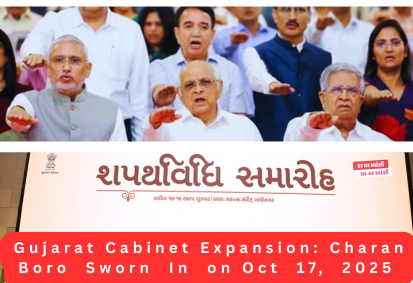 Gujarat Cabinet Expansion: Charan Boro Sworn In on Oct 17, 2025
Estimated reading time: 8 minutes
Thank you for reading this post, don't forget to subscribe!Cabinet Expansion in Gujarat: Charan Boro to Be Sworn In as Minister (What to Expect)
Gujarat gets a refreshed cabinet today. Charan Boro will be sworn in as a minister on October 17, 2025, at 11:30 AM at Mahatma Mandir in Gandhinagar. BJP national president JP Nadda is set to attend, and around 25 ministers are taking the oath. For voters and the state, this signals fresh leadership, broader social and regional inclusion, and momentum before the 2026 local body polls and the 2027 Assembly elections. Stick around for clear takeaways on Boro’s likely priorities and how the new cabinet could shape delivery on the ground.
Who is Charan Boro, and why was he picked now?
Charan Boro enters the Gujarat council of ministers as part of a large cabinet expansion under Chief Minister Bhupendra Patel. His inclusion aligns with the ruling party’s push to deepen representation and strengthen regional balance across districts. The government has stressed performance, outreach, and delivery as reasons to refresh the team, and new faces like Boro fit that message.
What can voters expect from him? A minister who can translate local demands into action, listen to field feedback, and support faster decisions in coordination with the Chief Minister’s Office. Boro’s public profile centers on connection to community needs and readiness to work on the ground, qualities that tend to matter when departments need to unblock projects and improve access to schemes.
Takeaway: his induction signals fresh energy and outreach to more voter groups.
Role in the party and standing in his region
Inside the party, Boro’s rise adds a steady hand for organization building in his area. Leaders with local roots often mobilize turnout and keep issue-based engagement active between elections. Elevating such leaders can help the party convert program delivery into durable voter support. It also improves feedback loops from blocks and districts to the state capital, which helps fix small but stubborn gaps that stall works.
What his selection signals about representation
Boro’s entry fits a wider pattern in this expansion. The new team brings in leaders from OBC, Patidar, SC, and ST communities to reflect Gujarat’s social mix. This is not only about identity. It is about who can improve last-mile delivery of schemes, align local priorities with state programs, and give every region a voice at the table.
Gujarat cabinet expansion on October 17, 2025: key facts and why it matters
The state has a new council of ministers. Here is the snapshot you can skim.
| Detail | Info |
|---|---|
| Date | October 17, 2025 |
| Time | 11:30 AM |
| Venue | Mahatma Mandir, Gandhinagar |
| Senior presence | BJP national president JP Nadda |
| Ministers sworn in | Around 25 |
| Aim | Social and regional balance, stronger delivery, election readiness |
Independent reports confirm a major expansion with many fresh faces. For a quick read on the size and shape, see India Today’s report on 25 ministers joining the cabinet. An official snapshot from the state also highlights the new Deputy Chief Minister and the broader refresh under CM Bhupendra Patel, which you can scan on the Gujarat CMO’s site.
The goal is clear. Balance representation, refresh the team, and prepare for the 2026 local body elections and the 2027 Assembly polls. The council is larger than earlier ones, and it is built to be more inclusive and regionally balanced. That usually means faster execution and more hands on key files.
Who attended and how the ceremony was set up
The oath ceremony took place at Mahatma Mandir in Gandhinagar at 11:30 AM. JP Nadda’s presence underscores the event’s importance for the national leadership and its interest in Gujarat’s administrative momentum. Coverage also notes the formal setup and breadth of new entrants, which you can cross-check with reporting by The Hindu on the new Gujarat cabinet.
How many ministers and which groups got space
Around 25 ministers took the oath. The mix spans OBCs, Patidars, SCs, and STs, reflecting the state’s social map. This spread is meant to improve representation and delivery across districts, not only in major cities but also in semi-urban and rural belts.
Why now: the political and governance calculus
Timing matters. Leaders want to prepare early for the 2026 local body polls and the 2027 Assembly elections. They also want to keep governance moving, especially where projects and services need speed. You can expect a push for quicker decisions, tighter reviews, and better outreach. These are the results leaders say they are targeting.
How this cabinet differs from earlier ones
This team is larger, more inclusive, and designed for wider regional coverage. For citizens, that can translate to quicker project execution and more attention to local needs. If departments coordinate well, approvals should move faster and service gaps should shrink.
What portfolio could Charan Boro get, and what will be his first tasks?
The specific portfolio for Charan Boro was not announced at the time of writing. Portfolios usually come after the oath through an official notification. Assignment depends on experience, regional inputs, and current priorities.
Possible focus areas tie to what voters care about: rural development, roads and infrastructure, education and skills, health systems, farmer support, livelihoods, and tribal development where relevant. These are not titles, they are themes he could contribute to from day one.
A practical early checklist applies to any new minister:
- Review key schemes and projects already in the pipeline.
- Identify bottlenecks in files, tenders, and clearances.
- Set measurable 30, 60, and 100 day targets.
- Publish a short progress update so citizens can track outcomes.
For an official sense of portfolio timing, watch state notifications. Media often covers those hours after the oath. For a recent example of how this gets communicated, check the update on post-expansion portfolio announcements.
How portfolio assignments work and when to expect clarity
The normal process is simple. The oath happens first. The General Administration Department then issues the notifications that list department allocations. Expect clarity shortly after the ceremony. Keep an eye on official handles and the state website for the final list.
Priority areas voters care about right now
Here are the themes that come up in most district rounds:
- Jobs and skills
- Roads, water, and urban services
- Health facilities and staffing
- School quality and access
- Farmer support and agri markets
- Timely delivery of welfare schemes
A new minister can influence these early through reviews, inter-department coordination, and field visits. Quick wins set the tone.
First 100 days: a simple action plan
- 15-day review of the top 10 projects in the assigned department.
- Clear old files and speed up tenders with stronger transparency.
- Weekly field visits to two districts for on-ground checks.
- Publish a short monthly progress note for citizens.
What this means for you: impact on services, business, and elections
A bigger, more balanced cabinet can change how fast the state works. When teams are set and communication is tight, the ripple effects reach citizens, businesses, and local politics.
For citizens, that means better access to schemes, smoother approvals, and faster local works. For businesses, a stable team can improve timelines and predictability. For politics, fresh energy helps booth outreach and strengthens the bench before 2026 and 2027.
There are risks to watch. New ministers face learning curves. Departments must coordinate or files slow down. Delivery gaps may need quick fixes to keep momentum going.
For citizens and local projects
A refreshed team can speed up roads, water supply, housing, and health upgrades. Use official dashboards and your local offices to check the status of pending works. Many departments now post updates online. Media summaries can also help you track progress, like this overview from The Hindu on the swearing-in and new faces.
For businesses and investors
Watch for approvals and tenders that move once departments settle. Infrastructure timelines often stabilize when teams are complete. Policy continuity matters, so track official circulars and the notifications that follow a reshuffle. The Gujarat CMO’s briefing on the new cabinet is a useful reference point.
For upcoming elections in 2026 and 2027
Governance performance shapes voter mood. Broader representation can energize local cadres and improve outreach. If delivery improves and benefits are visible, that momentum can carry into the 2026 local body polls and the 2027 Assembly elections.
Conclusion
Charan Boro is being sworn in as a minister during the October 17, 2025 cabinet expansion at Mahatma Mandir in Gandhinagar, with around 25 ministers and JP Nadda present. The next steps are the final portfolio announcements and quick movement on early priorities. Expect a visible push in the first 100 days if coordination stays tight. Follow official state updates for department allocations, and watch for tangible changes in services and local projects near you.