


India’s Space Missions 2025: Impact on Global Science, Cooperation, and Open Data
 India’s Space Missions 2025: Impact on Global Science, Cooperation, and Open Data
Estimated reading time: 15 minutes
Thank you for reading this post, don't forget to subscribe!What India’s Space Missions Mean for Science Around the World
India’s journey into space has transformed from humble beginnings into a robust programme that bridges scientific discovery with practical innovation. ISRO’s missions—like Chandrayaan’s exploration of the Moon, Mangalyaan’s pioneering journey to Mars, and the ongoing Aditya-L1 mission studying the Sun—combine frugality with ambition, producing valuable data at a fraction of typical costs. These efforts extend beyond national achievements; India actively shares mission data globally, allowing scientists worldwide to unlock new knowledge about our solar system.
By opening up datasets and collaborating internationally, India enhances research into lunar geology, Mars’ atmosphere, and solar phenomena. These missions improve our understanding of space weather and planetary science, informing technologies that impact fields such as communications, climate science, and navigation. With a strong focus on cost-effective innovation and teamwork, India’s space missions are becoming integral to the global scientific community’s efforts to explore and understand space.
Watch a detailed overview of India’s space missions here.
Breakthrough Lunar Exploration: Chandrayaan Missions and Their Global Scientific Contributions
India’s Chandrayaan missions have reshaped the way we explore the Moon, not just marking national milestones but enriching global scientific knowledge. The focus on the Moon’s south pole, where no other country has softly landed yet, has opened a new chapter in lunar research. The data gathered by Chandrayaan-3 pioneers a closer look at the Moon’s geology, seismic activity, and mineral wealth. ISRO’s commitment to open-data sharing invites the global research community to join the journey of discovery.
Chandrayaan-3’s South Pole Landing: Opening New Lunar Windows
Landing near the Moon’s south pole holds immense significance for science. This region experiences constant shadows, housing water ice in permanently shadowed craters which could be vital for future lunar habitats. Chandrayaan-3 touched down here with precision, overcoming the region’s rugged terrain and communication challenges.
The mission’s lander carried a MEMS seismometer (ILSA), the first of its kind on the Moon, recording seismic tremors with a high sampling rate of 200 samples per second. These readings provide insights into the lunar crust’s structure and offer the first-ever seismic records from this unexplored region. It helps scientists understand moonquakes, meteorite impacts, and the Moon’s internal processes.
Equally impressive, the Laser Induced Breakdown Spectroscope (LIBS) on the rover analysed the soil and rocks directly. Using laser pulses to create plasma on the lunar surface, LIBS identified a range of elements, including confirming sulphur’s presence, an element once uncertain in this location. Alongside, the Alpha Particle X-Ray Spectrometer (APXS) detected elemental abundances — a crucial step in piecing together the Moon’s geological past.
This data sheds light on the Moon’s mineral composition and seismic behaviour, opening new windows for research that were simply not possible before. The Chandrayaan-3 mission details by ISRO offer in-depth technical insights and mission highlights.
Empowering Global Science Through Open Lunar Data
What makes India’s lunar missions even more remarkable is their open approach to data. ISRO has launched the PRADAN portal, where Chandrayaan-3 datasets are openly available for scientists worldwide to access. This includes data from the lander and rover, inspected and validated by experts, ready for analysis.
Recently, ISRO issued an Announcement of Opportunity inviting researchers to explore this treasure trove of information. This initiative fosters collaboration among Indian and international scientists. The availability of Chandrayaan-3 data alongside datasets from Chandrayaan-1 and Chandrayaan-2 enables comprehensive studies on lunar geology, seismic activity, and surface properties.
The open data includes seismic records, elemental maps, temperature readings, and much more, encouraging projects designed to further unlock the Moon’s mysteries. Selected proposals may receive funding and support, establishing India as a hub for lunar science while nurturing a global network of exploration.
ISRO’s Announcement of Opportunity and related details provide guidelines on accessing this data and submitting research proposals, highlighting the value of collaborative scientific growth.
This open-data model brings to mind the spirit of sharing maps during the Age of Exploration, where each discovery invited others to learn and build on it. Now, Chandrayaan’s data acts as a detailed lunar atlas for scientists worldwide, accelerating our grasp of the Moon’s secrets.
By opening the lunar frontier not just physically but intellectually, Chandrayaan missions stitch India into the fabric of global scientific advancement and ensure everyone steps forward together in lunar discovery.
For those interested, visit the PRADAN Chandrayaan-3 Data Portal to explore the datasets first-hand.
Aditya-L1: India’s Solar Mission Enhancing Our Understanding of the Sun-Earth Connection
India’s first solar observatory, Aditya-L1, orbits a calm point 1.5 million kilometres from Earth. Here, the Sun never sets, and solar storms are always on the horizon. Aditya-L1’s eyes open wide to catch the dance of charged particles and storms from our star. This mission marks a fresh chapter for India, bringing the Sun and its restless moods closer to scientists everywhere. The craft’s real power is not just in watching the Sun, but in sharing what it sees.
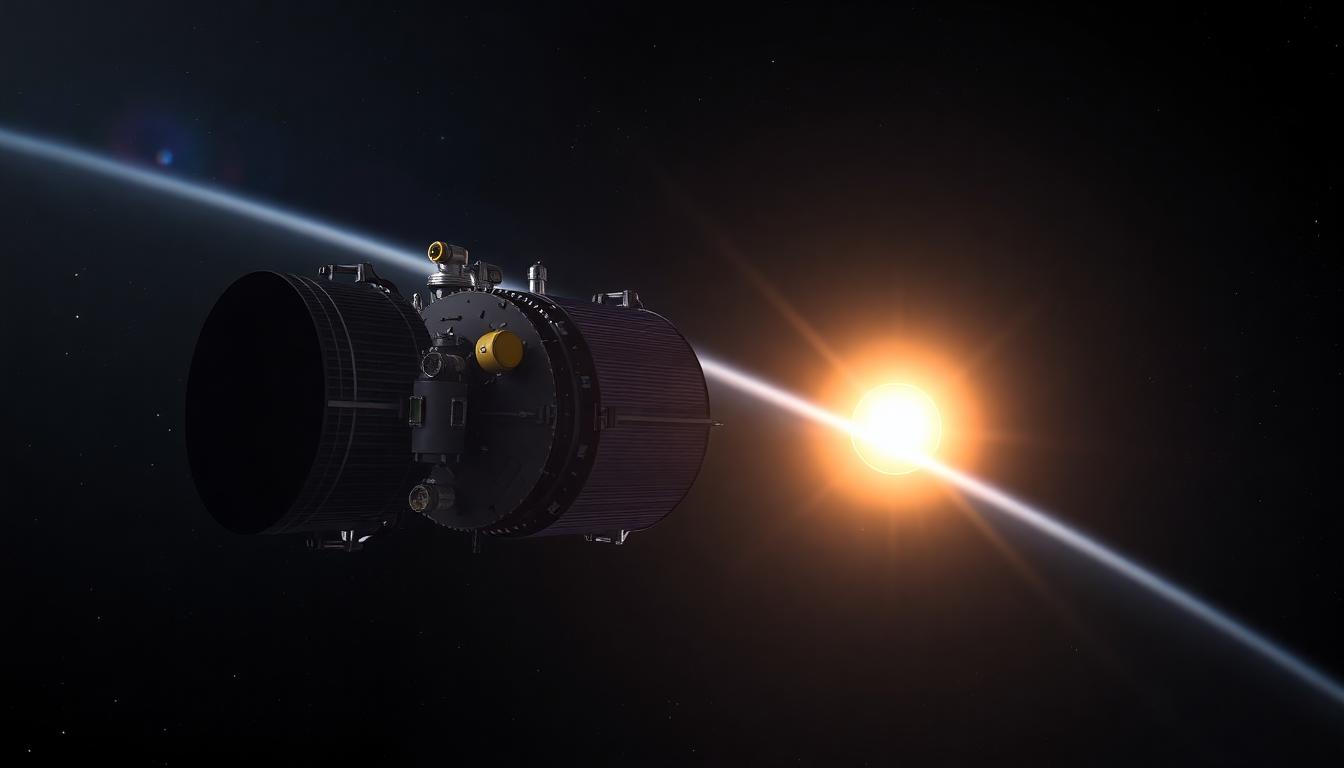
Image created with AI
Aditya-L1’s Scientific Payloads: Peering into Solar Mysteries
Aditya-L1 carries seven instruments designed to capture how the Sun changes and to uncover secrets hidden in its light. Each instrument focuses on a unique part of the Sun’s atmosphere or the space between Sun and Earth. Two standouts are the Visible Emission Line Coronagraph (VELC) and the Solar Ultraviolet Imaging Telescope (SUIT):
- Visible Emission Line Coronagraph (VELC):
Works like a virtual eclipse, blocking out the Sun’s brilliant disc so scientists can study its outer atmosphere, the corona. This is key for watching coronal mass ejections (CMEs), which send clouds of charged particles speeding towards Earth and can disrupt satellites and power grids. VELC helps us see what usually stays hidden, making it possible to explore why the Sun’s corona is much hotter than its surface. - Solar Ultraviolet Imaging Telescope (SUIT):
Captures the Sun in ultraviolet, giving a sharp view of its surface and lower atmosphere. SUIT tracks solar flares and maps how magnetic storms start and spread. The telescope’s images reveal how the Sun’s energy – in the form of ultraviolet light – heats up our atmosphere and changes conditions for satellites. - Other key instruments on Aditya-L1 measure X-rays from solar flares, the speed and makeup of solar wind, and magnetic fields. These support a full view of what happens when the Sun is active.
What does all this mean for science?
- In late 2023, SUIT captured an X-class flare and CME in near-UV – the first time a solar flare was seen in this part of the spectrum from space.
- In July 2024, VELC caught a dramatic CME and flare, giving researchers a close-up look at how solar storms begin.
- Ongoing observations help us understand how solar activity heats the corona and impacts Earth’s ionosphere. This knowledge can help protect the satellites and systems we rely on every day.
For science fans and educators keen on the technical details of these instruments, the official Aditya-L1 mission page at ISRO outlines the goals, payloads, and latest updates.
Sharing Solar Insights: Aditya-L1 Data for Worldwide Research
A mission’s real worth comes from the knowledge it shares, not just the discoveries it makes. ISRO’s open-data policy for Aditya-L1 puts India on the world map as a team player in solar science. The mission’s datasets are released for free use by researchers everywhere, making sure new ideas have all the building blocks they need.
ISRO’s first set of Aditya-L1 science data became public in January 2025, on the first anniversary of its steady watch at L1. The second release arrived in February. These collections include observations from all seven payloads: images, solar wind data, and magnetic field measurements. Everything is protected with clear documentation and user guides, so even students can start exploring.
To make it easier, the data is hosted on the PRADAN ISSDC Aditya-L1 Data Portal and the main Aditya-L1 ISSDC portal, where users can search, browse, preview, and download what they need.
Here’s why this approach matters:
- Global teamwork: Scientists can cross-check Aditya-L1 data with that from NASA and ESA solar missions, building a fuller picture of how the Sun shapes our world.
- Space weather benefits: Faster data sharing means better forecasts for storms that could disrupt navigation, power, or even daily internet connections.
- Open science for all: Students and educators get a front-row seat to real data, inspiring the next generation of solar physicists.
Whether it’s space weather predictions or exploring why the corona burns so hot, Aditya-L1’s steady gaze and open doors invite the world to join in. By tying India’s solar research to global efforts, every new discovery feels like a win for everyone.
Curious to see the Sun through India’s eyes? Dive into the Aditya-L1 open data here, or read about the latest releases and science milestones at ISRO’s news page.
India’s Evolving Space Ecosystem: Private Sector Growth and International Collaborations
India’s space sector no longer belongs solely to government agencies. Over recent years, it has blossomed into a vibrant ecosystem where private companies and international partners play increasingly vital roles. This transformation is shaping India’s contributions to global space science, with fresh energy coming from startups, strategic collaborations, and bold policy reforms. The blend of public initiative with private innovation is unlocking new possibilities—not just for science but for technology and industry as well.
Public-Private Partnerships: Catalysing Space Technology and Scientific Research
Until recently, ISRO was the sole driver of India’s space missions. Now, the picture has changed considerably. The establishment of institutions like IN-SPACe, an autonomous body created by the government, acts as a bridge encouraging private sector participation. This move fuels a surge of Indian space startups developing satellite technology, launch services, and space applications tailored to scientific and commercial needs.
The growth of these companies complements ISRO’s missions rather than competing with them. Smaller firms focus on agile satellite manufacturing, advanced sensors, and innovative propulsion systems. These efforts help reduce costs, increase launch frequency, and improve payload capabilities, benefiting scientific research through more responsive space technology.
Take a look at this: over 300 startups have emerged in India’s space domain, from Bangalore to Hyderabad, creating new jobs and mastering niche technologies. Their work supports not only Earth observation and communication but also planetary science, astrobiology experiments, and environmental monitoring.
This rise in private innovation is backed by an expanding national space budget that nearly tripled in over a decade, reflecting government confidence and ambition. Private contributions accelerate development cycles and diversify expertise, providing more tools for scientists worldwide.
For more on India’s private space growth and policy changes, refer to the Indian Space Policy 2023 and the detailed overview at Invest India’s Space Sector.
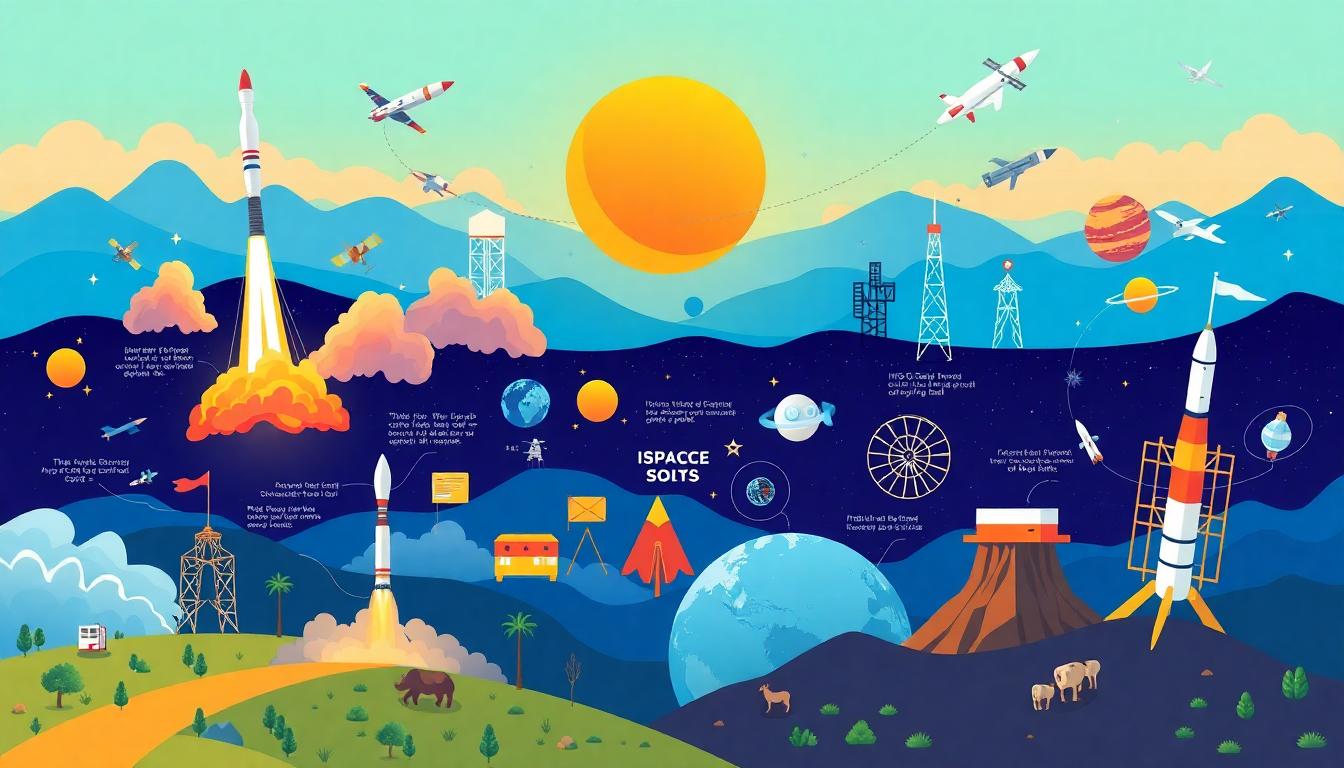
Building Bridges: India’s Role in International Space Science Cooperation
India’s ambitions stretch beyond its borders. International collaborations are a vital thread in the country’s space tapestry, connecting it with the USA, Japan, and other spacefaring nations. These partnerships allow access to advanced technology, shared knowledge, and joint missions that multiply discovery potential.
One flagship project is the NASA-ISRO Synthetic Aperture Radar (NISAR) mission, set for launch in 2025. NISAR uses dual radar bands to map Earth’s surface with unprecedented detail. It will track environmental changes, monitor natural disasters, and extend scientific understanding of land and ice dynamics. This vast cooperation demonstrates trust and mutual scientific benefit.
India’s commitment extends to lunar exploration with the Indo-Japanese LUPEX mission, which will study water ice on the Moon and contribute valuable data to future human missions. Additionally, India’s signing of the Artemis Accords in 2023 marked a clear step in joining a global framework promoting peaceful space exploration. This enables India to partner with NASA on lunar Gateway projects and supports the country’s path to human space missions.
These international ties balance scientific progress with strategic alliances. India carefully navigates geopolitical waters, enhancing prestige while expanding technical expertise and scientific outreach. This approach ensures that space cooperation does not just serve diplomacy but genuinely moves science forward.
Understand more about India’s international cooperation in space at the Centre for Strategic and International Studies and on NASA’s page welcoming India as the 27th signatory of the Artemis Accords.
Scientific and Societal Impact: How India’s Space Missions Influence World Science
India’s space missions ripple far beyond their geographic launch sites, shaping global science in tangible and lasting ways. These missions push the boundaries of planetary science, solar physics, and Earth observation while setting a model for affordable, reliable space exploration. Their outcomes feed scientific communities worldwide, open new avenues for technology development, and inspire global collaboration.
Revolutionising Planetary Science Through Open Exploration
India’s lunar and interplanetary ventures are rewriting textbooks on planetary science. The Chandrayaan missions have collected detailed data on the Moon’s geology and seismic activity, particularly at the unexplored south pole. The availability of this data through the PRADAN portal has been embraced by researchers worldwide.
By openly sharing datasets from Chandrayaan-1 to Chandrayaan-3, ISRO sets a democratic tone: breakthroughs aren’t for a single nation but for humanity. Scientists can analyse seismic activity on the Moon or map elemental distributions with the precision Indian instruments offer. This openness accelerates discovery and enables joint projects across continents.
Similarly, the Mangalyaan mission to Mars provided new planetary atmospheric insights at a fraction of traditional costs. Its success has prompted other countries with smaller budgets to dream bigger. India’s approach acts like a lighthouse, guiding nations toward space science that is inclusive and inventive, not limited by expense.
Advancing Solar Science and Protecting Earth
The Aditya-L1 mission marks India’s leap into solar physics, studying the Sun’s outer atmosphere and its influence on Earth. Its instruments capture solar flares, coronal mass ejections, and solar wind in stunning detail. By sharing this data openly, ISRO empowers researchers globally to improve space weather forecasting.
Why does this matter? Solar storms can disrupt satellites, power grids, and communications—forecasting them accurately protects infrastructure worldwide. Aditya-L1’s collaboration fosters a comprehensive view when combined with NASA and ESA data, weaving a safety net from multiple vantage points.
This shared solar watch is a prime example of how India’s missions contribute not only knowledge but also practical benefits for society everywhere. It fuels a global safety network while training the next generation of scientists in real-world data.
Earth Observation: A Global Benefit for the Environment
India’s growing role in Earth observation satellites, especially through joint projects like NASA-ISRO’s NISAR mission, adds new dimensions to studying climate and natural disasters. NISAR’s synthetic aperture radar technology will create detailed maps of Earth’s land and ice, delivering insights vital for tracking changes caused by climate shifts and geological events.
The data from NISAR will be freely available to researchers and disaster management agencies worldwide, improving early warning systems for floods, earthquakes, and glacier changes. This makes India’s efforts a direct contribution not just to science but to the resilience of vulnerable communities.
A Template for Cost-Effective Space Science
What sets India apart is not just what it studies but how it does so. The country’s space missions emphasise cost efficiency and reliable technology. This framework serves as a clear example for emerging space nations, demonstrating that scientific success does not require vast spending but smart design, innovation, and collaboration.
India’s experience inspires other countries to pursue space science tailored to their means without compromising quality. This shift echoes a powerful message: space exploration is an open field, welcoming many players who bring unique strengths.
Fostering International Partnerships and Shared Progress
India’s space programme is increasingly a global partner. The NASA-ISRO partnership on NISAR and engagements around the LUPEX lunar mission join forces on knowledge and resources. Signing onto the Artemis Accords places India firmly in the community focused on peaceful, cooperative space exploration.
This global teamwork expands the reach and impact of India’s data and experiments, integrating its strengths with others’. The exchange sharpens techniques, unites diverse expertise, and creates shared objectives benefitting scientists and societies across borders.
By inviting the world to use its data freely and engaging in joint missions, India stokes a sense of shared curiosity and progress. Its space missions stand as an example of science flourishing not behind closed doors but in open skies accessible to all.
For readers curious about exploring these data themselves, ISRO’s Announcement of Opportunity for Chandrayaan-3 data utilisation is a gateway to engaging with real scientific material. Similarly, the ongoing partnership with NASA on the NISAR mission highlights India’s commitment to open, impactful science (NASA-ISRO NISAR Partnership).
In connecting pragmatic mission design with open data access and international partnerships, India’s space programme is not just reaching for the stars but helping the world understand them.
Conclusion
India’s space missions stand as a vivid example of how innovation, collaboration, and openness can enrich global science. Through steadfast commitment to sharing data openly, missions like Chandrayaan, Aditya-L1, and NISAR have expanded research possibilities far beyond national borders. This open approach not only accelerates discovery but also invites scientists worldwide to build on India’s cost-effective yet sophisticated technology and insights.
The growing network of international partnerships and private sector involvement demonstrates India’s expanding role at the heart of global space science. These missions do not just explore distant worlds; they deepen our understanding of the Sun, the Moon, Mars, and Earth itself, shedding light on practical challenges here at home.
As India continues to push boundaries with new missions and shared knowledge, it shapes a future where space science is truly a collective effort. Its success is a clear invitation to the global community: in space exploration, progress is best achieved when knowledge flows freely and cooperation guides the way.