

Voter Reactions to Opposition Alliances in India: Trends, Concerns, and Election Impact.
 Voter Reactions to Opposition Alliances in India: Trends, Concerns, and Election Impact.
Estimated reading time: 8 minutes
Thank you for reading this post, don't forget to subscribe!Voters’ Reactions and What Lies Ahead
The rise of opposition alliances in Indian state elections is not just a political reshuffling but a catalyst for shifting voter moods and expectations. Voters today are looking beyond individual parties—they’re watching coalitions as a new way to reshape governance and challenge established powers. This section explores how ordinary voters perceive these alliances and what this means for upcoming elections.
How Voters See Opposition Alliances
Many voters treat these alliances like a double-edged sword. On one side, there is hope that working together will bring stronger, more responsive governments. A February 2025 Mood of the Nation survey found that 65% of respondents want the INDIA bloc to continue as a united front. This indicates a clear appetite for opposition collaboration as a way to counterbalance the ruling party’s dominance. Rahul Gandhi remains a widely recognized figure leading this opposition alliance, backed by a significant share of public support.
On the other side, voters express some skepticism. There are worries that alliances might be unstable, full of internal conflicts, or lacking a concrete, unified agenda. This reflects in local elections where alliances sometimes crumble due to personal rivalries or unclear seat-sharing deals, confusing voters. Some feel alliances are a tactical convenience for parties rather than a genuine commitment to voters’ needs.
Still, many voters appreciate alliances as pragmatic responses to complex electoral realities. When alliances work—offering clear alternatives, focused campaigns, and ground-level unity—voters take notice and may shift their support accordingly.
Voter Priorities and Concerns
Voters weigh the performance and promises of alliances against their immediate concerns. Economic hardships remain at the forefront:
- More than 60% report difficulties managing household budgets.
- Inflation and unemployment top the list of voter worries.
- Many feel national welfare schemes offer some relief but remain cautious of big business benefiting disproportionately.
This means opposition alliances need to address these practical issues with clarity, not just put up a united front. They must convince voters they can deliver tangible change, not just counter the ruling party.
Impact on Voter Turnout and Engagement
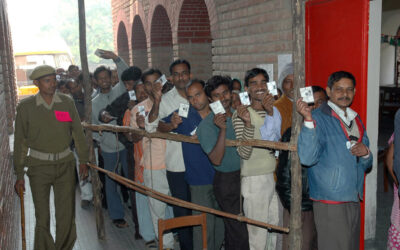
State elections have seen steady voter engagement, with turnout rates reflecting public interest in the alliances’ offerings. For example, the 2025 Delhi Assembly elections maintained a strong turnout close to previous elections. This shows that alliances alone do not alienate voters; instead, they can boost enthusiasm if voters believe the election will have real consequences.
Yet, voter loyalty remains fluid. The alliances’ ability to maintain trust will depend on consistent messaging and avoiding splits. Cross-voting and abstentions in recent Vice-Presidential polls showed cracks in unity that voters watch closely.
What Lies Ahead: Possibilities and Challenges
With state elections approaching, opposition alliances face these tests:
- Sustaining unity amid leadership clashes. The coalition’s survival will hinge on settling internal disputes quietly and focusing on common voter goals.
- Crafting issue-based campaigns. Voters want alliances to talk about jobs, healthcare, and education, not just political rivalries.
- Adapting to regional variations. Alliances must balance broad appeal with sensitivity to local identities and concerns.
- Responding to ruling party strategies. The strong organizational machine of the BJP and NDA challenges alliances to refine their grassroots connections.
If alliances succeed in these areas, they have the potential to disrupt state-level power structures significantly. If not, voter faith may wane, and alliances could lose momentum.
This balancing act will define how Indian voters shape their states’ political future and whether opposition alliances become fixtures in elections or fleeting experiments.

Indian voters in a town hall absorbing alliance information and election data, depicting diverse public engagement and opinions.
For more context on voter turnout and alliance impact in recent state elections, India Today’s analysis of the 2025 Delhi polls offers valuable insights.
What to Watch in Upcoming State Elections
As we approach the crucial state elections in 2025 and 2026, a fresh chapter in Indian politics is taking shape. Opposition alliances, once fragmented and tentative, have now emerged as serious contenders aiming to reshape power balances. Watching these state contests offers a glimpse into the future direction of national politics, reflecting shifting voter loyalties, regional aspirations, and strategic partnerships.
These elections will test whether opposition coalitions can translate their collective energy into cohesive victories, or if internal complexities and regional divides will stymie their efforts. The following sections highlight key states where these alliances will play a crucial role, the issues defining campaigns, and the potential ripple effects on India’s larger political scene.
Key States and Contenders to Watch
The electoral calendar focuses heavily on a handful of states where opposition alliances face off against entrenched ruling parties. The state-level battles vary widely in context but share the common thread of opposition parties joining forces to challenge dominant players.
- Delhi (February 2025):
The Aam Aadmi Party (AAP) will defend its incumbency against the BJP and a slowly regrouping Indian National Congress. The opposition’s ability to form a strong alliance here could shift the narrative in urban and politically aware electorates. Voter focus is sharp on governance, public services, and corruption. - Bihar (October-November 2025):
This state presents one of the highest-stakes contests. The ruling National Democratic Alliance (NDA), led by the BJP and JD(U), faces the Mahagathbandhan (Grand Alliance), including RJD and Congress, among others. The entry of new players like the Jan Suraaj Party adds complexity. Issues like unemployment, agricultural distress, and caste-based politics dominate. - Assam, West Bengal, Tamil Nadu, Kerala, Puducherry (2026):
These states each have unique political climates and alignments. The BJP is strong in Assam, while West Bengal’s fierce contest largely pits the Trinamool Congress against the BJP. In Tamil Nadu, the rivalry between DMK and AIADMK continues, with smaller alliances shaping the margins. Kerala’s political mood will revolve around the Left Democratic Front and the United Democratic Front, with religious and economic factors at play. Puducherry remains a smaller yet strategically interesting arena with local party alignments.
These states encapsulate a mosaic of political challenges where opposition alliances must adapt their strategies to regional realities while maintaining a united front against dominant forces.
Main Issues Defining the Campaigns
Voters in these elections want answers to immediate problems—not just grand political promises. The alliances and ruling parties alike are investing their efforts in connected themes:
- Economic distress: Inflation, job creation, farmers’ issues, and housing remain front and center.
- Governance: Transparency, corruption, and effective delivery of public schemes are under voter scrutiny.
- Social justice and identity: Caste, religion, and regional identity play significant roles, especially in Bihar, West Bengal, and Assam.
- Urban-rural divide: The issues differ sharply between cities and villages, mandating nuanced alliance messaging.
- Youth engagement: With a large young voter base, policies around education, employment, and digital access are vital.
How parties address these concerns in their alliances and campaigns will strongly influence voter turnout and attitudes.
Strategic Moves and Seat-Sharing Negotiations
Opposition alliances face the challenging task of seat sharing, often the most delicate part of alliance formation. Negotiations involve balancing the ambitions of regional heavyweights, smaller parties, and national players.
- Some alliances are adopting flexible, region-specific arrangements. In Delhi, the Congress contests alone but maintains understanding with AAP, while in Bihar the Grand Alliance has a complex seat-sharing pact including Rashtriya Janata Dal (RJD), Congress, and others.
- Campaign messaging aims for unity but also preserves distinct party identities, which can be a tightrope walk.
- Ground-level coordination—volunteers, rallies, social media campaigns—will be decisive, especially in states with fragmented opposition.
The ability to overcome internal competition and hold a united front will be crucial for electoral success.
Broader Impact on Indian Politics
The outcomes of these state elections will influence more than just local governments:
- National power balance: State assembly strengths impact the Rajya Sabha composition and set the tone for the 2029 general elections.
- Opposition momentum: Victories or prolonged struggles will shape opposition morale and strategic recalibrations moving forward.
- Policy influence: Winning coalitions push regional issues into national focus, affecting legislative priorities.
- Party re-alignments: New alliances or break-ups during these elections signal shifts in political loyalty and dominance.
Watch how these state contests unfold. They serve as a barometer for Indian democracy’s evolving fault lines and emerging political coalitions.

Voter engagement and hope for change underscore the energy in upcoming state polls.
For more detailed schedules and party profiles for the 2025 Bihar and Delhi elections, see 2025 elections in India overview and Upcoming Elections in India 2025.
Conclusion
Opposition alliances are reshaping state elections by bringing together diverse parties with a common goal. These partnerships give voters clearer choices and revive smaller parties’ chances to influence policy and power. For politicians, alliances offer a way to pool resources and voices, matching the strength of dominant parties while reflecting local concerns.
As alliances balance cooperation with internal differences, their success or failure will shape state politics and hint at larger shifts in India’s democracy. Keeping an eye on these coalitions reveals how flexible and responsive Indian politics can be when necessity meets opportunity.
Stay attentive to these changes. The coming elections will tell us how far opposition alliances can go, and how they might redefine political power in India’s states.