
Rahul Gandhi Response to Vote Choori Claims in Vice Presidential Polls 2025 | Times Now Exclusive
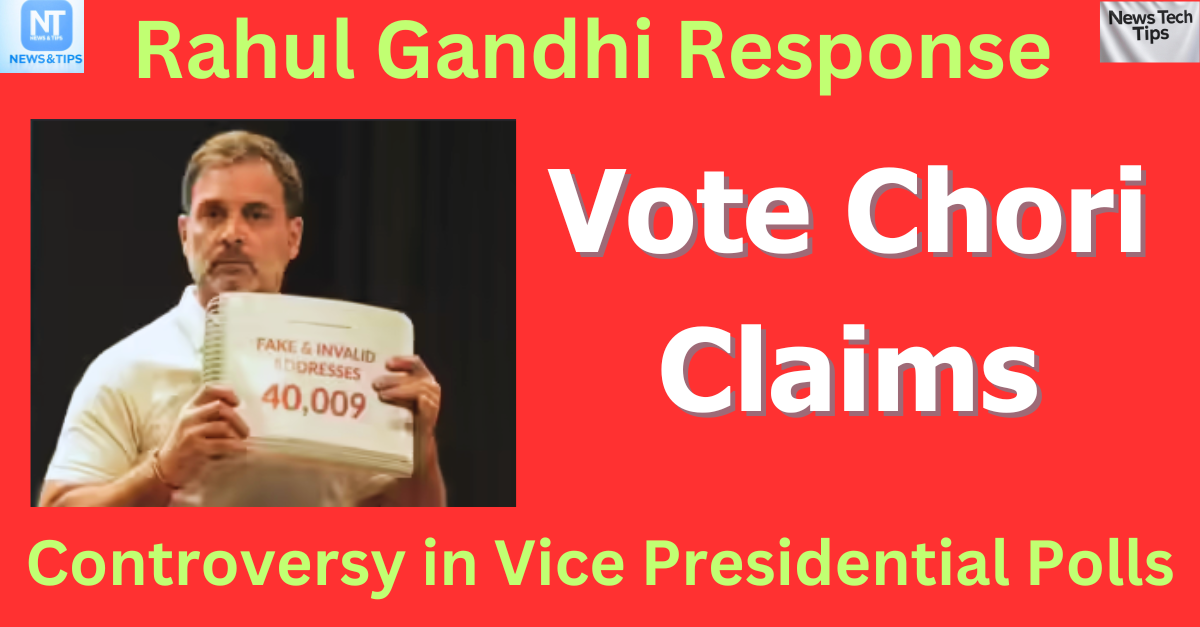 Rahul Gandhi Response to Vote Choori Claims in Vice Presidential Polls 2025 | Times Now Exclusive
Estimated reading time: 14 minutes
Thank you for reading this post, don't forget to subscribe!Rahul Gandhi Breaks Silence on ‘Vote Chori’ Allegations in Vice Presidential Polls (Times Now Exclusive)
Tensions have been running high ever since the ‘vote chori’ (vote theft) accusations surfaced during the Vice Presidential polls. Claims of mishandling and irregularities have gripped political circles, grabbing headlines across the country.
Rahul Gandhi, one of Congress’s most recognized voices, sat down with Times Now to address these explosive claims head-on. His remarks come at a time when every statement seems to shape public trust and political strategy.
Gandhi’s response matters because it helps clear the air, gives the Congress party’s side, and sets the stage for what comes next in this heated debate. This interview quickly became a focus point for both party supporters and critics, adding real weight to the ongoing conversation.
Background: The ‘Vote Chori’ Controversy in Vice Presidential Polls
Whispers of “vote chori” (vote theft) started swirling almost as soon as the polling booths for the Vice Presidential election closed. Discontent turned public with videos, statements, and open accusations. What unfolded next was a political storm that grew with every passing hour, drawing in leaders, parties, and the Election Commission.
How the Vice Presidential Election Works
The Vice Presidential polls in India are unique. Only Members of Parliament (both Lok Sabha and Rajya Sabha) get a vote. Unlike the general elections, the public does not vote directly. Each MP casts a secret ballot, usually under the watchful eyes of officials and party whips.
- Election is held by secret ballot
- Members of both houses vote; the general public does not participate
- Simple majority decides the winner
- Cross-voting is not unheard of, but parties closely monitor turnout and voting patterns
Despite these controls, there’s always the possibility of doubts when results surprise one side or seem at odds with expected numbers.
What Triggered the ‘Vote Chori’ Allegations
The first ripples came late on polling day. Leaders from the Congress and INDIA bloc voiced public shock at the margin by which the NDA-backed candidate floated ahead. Allegations spread that some ballots had been mishandled, and votes cast for the opposition’s nominee were somehow nullified or shifted. The phrase “vote chori” started trending on social media and found its way onto the lips of Opposition stalwarts.
Key moments that sparked the controversy:
- Exit polls and initial counts didn’t match final numbers
- Opposition members claimed party MPs were strong in presence, but vote totals didn’t reflect it
- Leaked videos and statements from inside the chamber painted a picture of confusion and alleged tampering
- Rahul Gandhi and others began speaking out, demanding answers from authorities
Political Parties at the Center of the Storm
The controversy was far from an isolated outcry. Several opposition parties, including the Congress and allies in the INDIA bloc, rallied around the claim of “vote theft.” Their leaders raised these issues at press conferences, on social platforms, and with the Election Commission. The BJP and its partners firmly denied all accusations, standing by the official results.
A quick snapshot of how different players reacted:
| Party/Coalition | Stance on ‘Vote Chori’ Claims |
|---|---|
| Congress/INDIA | Demanded probe, cited “irregularities” |
| BJP/NDA | Rejected all allegations, called them baseless |
| Election Commission | Issued clarifications, defended procedures |
Timeline: From Polling Booth to Rahul Gandhi’s Interview
Let’s break down the sequence that brought us to Rahul Gandhi’s interview with Times Now:
- Polling Day: MPs cast their votes for Vice President. Atmosphere tense but procedural.
- Results Announced: NDA-backed candidate declared winner by a surprising margin.
- Allegations Surface: Opposition leaders raise doubts about the process and turnout.
- Social Media Erupts: Hashtags like #VoteChori trend. Videos and images leak online.
- Opposition Presses for Answers: Public statements fly from Congress, Trinamool, and other INDIA partners.
- EC Responds: Election Commission issues statements and is urged to clarify the process (Election Commission’s clarification).
- Rahul Gandhi’s Interview: In a Times Now exclusive, Gandhi speaks publicly, giving the opposition’s side of the story and leveling direct criticism at the BJP and EC.
The “vote chori” episode underscores just how quickly a contested election result can shift from whispers in the corridors of power to dominating headlines and sparking a fierce public debate.
Rahul Gandhi’s First Official Reaction: Times Now Exclusive
Rahul Gandhi’s first official response to the “vote chori” allegations in the Vice Presidential polls was highly anticipated. His interview with Times Now became a cornerstone event, especially with the public eager to hear how the Congress leader would address claims of irregularities. The studio setting brought the conversation front and center, spotlighting Gandhi’s stance and letting his words reach a nationwide audience.
Gandhi’s Direct Stand on the ‘Vote Chori’ Claims
During the interview, Rahul Gandhi did not hold back his criticism. He doubled down on the accusations, stating that the BJP was guilty of a “nationwide vote chori.” He repeated the phrase, “Vote chor, gaddi chhod,” which means “Vote thieves, leave the seat.” His words were pointed and his delivery clear, reflecting the seriousness with which he viewed the allegations.
Gandhi described these claims not as isolated whispers, but as part of a larger attack on democratic values. He expressed strong doubts about the credibility of the polling process, arguing that the results did not match what Congress expected based on MP attendance and party strength. Gandhi remarked in the interview, “There’s only one reason results like these happen—it is manipulation.”
For additional insights and the full interview summary, visit this Times Now exclusive report.
Concerns Over Process Credibility and Institutional Trust
A core part of Gandhi’s message was about trust. He said that faith in institutions like the Election Commission had been “shaken deeply.” His criticism wasn’t just aimed at election officials, but also implicated the ruling BJP, arguing that such irregularities would not occur without political cover.
He pointed to results, personal accounts from MPs, and leaked materials as proof that warranted a full investigation. According to Gandhi, “If the public can’t trust that their vote counts exactly as cast, what’s left of democracy?”
Gandhi’s Tone and Approach on Times Now
Those who watched the interview noticed Gandhi’s steady, unflinching tone. He balanced direct accusation with calls for constitutional values. He kept his answers pointed yet avoided personal bitterness. Instead, he framed the controversy as about all citizens’ rights, not just partisan loss.
The interview felt combative yet focused on facts and principles. Gandhi challenged not only numbers, but the fairness of the process itself, saying, “We’ll keep fighting until every single vote means what it’s supposed to. This isn’t just politics for us. This is accountability.”
Key Takeaways from the Exclusive Interview
Here’s a quick summary of Gandhi’s main points:
- Open accusation against the BJP for orchestrating vote theft.
- Challenge to the Election Commission to restore trust and transparency.
- Emphasis on voter rights and the principle that every vote counts.
- Call for accountability and investigation into irregularities.
- Firm yet measured tone—less about blame, more about defending democratic norms.
Gandhi’s remarks on Times Now became the centerpiece for the opposition’s push for electoral accountability, marking a new phase in the debate on the Vice Presidential poll controversy. For ongoing updates and reactions from multiple parties, consider following Times Now’s X handle.
Political Reactions and Public Response
The aftermath of Rahul Gandhi’s explosive interview on Times Now didn’t just stir debate within Parliament walls. It kicked off waves of reaction from every corner of the political spectrum and set social media abuzz. Supporters cheered Gandhi for his strong stand. Critics questioned his allegations and timing. On the streets and online, the phrase “vote chori” became a rallying cry and a flashpoint.
How Political Opponents and Allies Responded
Reactions from political leaders landed quickly. The Congress and its INDIA bloc allies amplified Gandhi’s message, demanding transparency and swift action from the Election Commission. Key leaders held press conferences, shared posts online, and pushed for a full probe.
- Support from Congress and Allies: Senior Congress leaders echoed Gandhi’s charge. They rallied MPs and supporters, arguing that the “vote chori” claims were not isolated but reflected a pattern across elections. Allies in parties like Trinamool Congress, DMK, and AAP repeated the demand for an independent investigation.
- Ruling Party’s Defense: BJP leaders dismissed the accusations as a political stunt. They called the allegations “baseless” and accused Gandhi of trying to stir doubt for electoral gain. Party spokespersons pointed to the smooth conduct of the polls and stressed that the opposition was simply unable to accept defeat.
- Election Commission’s Firm Stand: The Election Commission answered with a strong rebuttal, saying the allegations lacked proof and the election was run with complete transparency. Their statement, widely shared in the media, called the process “fair, free, and credible,” seeking to calm nerves and push back on criticism. For coverage of the EC’s public statement, see this detailed breakdown by Times of India.
Social Media and Public Sentiment
Outrage and support were quick to surface on X (formerly Twitter), Facebook, WhatsApp groups, and Instagram Stories. The hashtag #VoteChori trended within hours. Videos from Gandhi’s Times Now interview, along with memes and sharp commentary, filled timelines.
- Youth Engagement: Many young voters and first-time participants used their platforms to express concern, with some shifting the discussion from just party politics to issues of electoral trust and reform.
- Split Opinions: While Congress supporters shared clips and graphics backing Gandhi, critics made their own memes questioning both the claim and the strategy behind going public.
A quick glance at the reaction:
| Group | Common Sentiment | Example Action |
|---|---|---|
| Congress & Allies | Outrage, call for probe | Protest rallies, posts |
| BJP & Partners | Dismissal, call for calm | Counter-statements, media |
| Youth & Unaffiliated | Increased concern, civic conversation | Hashtag trends, debates |
| Media & Press | Nerve center for coverage, fact-checks | Panel discussions, op-eds |
For a more in-depth look at the statements and real-time reactions, see the original Times Now report.
Public Rallies and On-Ground Mobilization
Offline, the “vote chori” claims quickly shifted from studio talk to rally slogans. Congress units in several cities staged protests at Election Commission offices and district headquarters. Slogans were chanted, and placards were waved. Opposition leaders addressed crowds, linking the Vice Presidential poll issue to a broader fight for electoral transparency in India.
Key Takeaways from Political and Public Response
- Rahul Gandhi’s remarks shifted the discussion from parliament to public spaces.
- Opposition parties tried to use the controversy to energize their base and question ruling party credibility.
- Social media played a big role in spreading outrage and rallying support for both sides.
- The Election Commission’s official response sought to quiet fears and restore faith in the process.
Every reaction, from angry tweets to street rallies, now forms the backdrop to what’s quickly become a national debate about trust in electoral democracy.
What Happens Next: Implications for Indian Democracy
The “vote chori” claims linked to the Vice Presidential polls have stirred more than just political noise—they are posing serious questions about the future of Indian democracy. Rahul Gandhi’s strong reaction has opened a discussion that goes beyond a single election, touching on trust in institutions, election fairness, and the demand for reforms.
This controversy highlights the fragile balance between public confidence and political accountability. Whatever unfolds next will shape how Indians view the integrity of their voting process and the role of key bodies like the Election Commission.
Impact on Public Trust and Political Climate
Public trust takes a hit when allegations of vote theft surface. Gandhi’s accusations, amplified in the media and social networks, have deepened skepticism about whether every vote truly counts. Citizens naturally expect transparency and correctness from electoral bodies, and when doubts linger, democracy itself feels on shaky ground.
- Eroding Faith: If votes are perceived as stolen or manipulated, voter enthusiasm can wane, potentially lowering turnout in future polls.
- Polarization Boost: Claims like these tend to divide the political landscape further, energizing supporters of those raising alarms while hardening resistance among opponents.
- Political Weaponization: Opposing parties often use such controversies to question each other’s legitimacy, which can make objective scrutiny more difficult.
The trust deficit isn’t just political rhetoric. It influences how everyday voters engage with democracy and shapes the expectations they have from their representatives.
Calls for Reforms and Election Commission Actions
Following the controversy, there are growing calls for the Election Commission to take steps to rebuild credibility and boost transparency. These include:
- Stricter Oversight: Demands for stronger supervision during voting and counting, especially for indirect elections like the Vice Presidential poll.
- Improved Voter Roll Accuracy: Ensuring electoral rolls and attendance logs match precisely to prevent confusion or fraud claims.
- Clearer Communication: Transparent and timely information releases by the Election Commission to minimize rumors and misinformation.
- Investigations and Accountability: Calls for independent probes into the allegations, holding any wrongdoers accountable to restore faith.
The Election Commission has acknowledged the situation, denying irregularities while emphasizing election fairness. It has invited evidence and assured the public of its commitment to impartiality, though critics argue that stronger reforms and openness are needed. The controversy has pushed the poll body into the spotlight more than ever before. For insights into the ongoing tussle between Rahul Gandhi and the Election Commission, check this Times of India exclusive.

Historical Ripple Effects on Indian Democracy
Election controversies often become turning points. India has faced election disputes before, but each time the system’s resilience was tested. The current “vote chori” episode could:
- Trigger stronger dialogues on how India manages indirect elections, which receive less public attention but are no less critical.
- Lead to more active civic participation demanding reforms not just during general elections but also in smaller, internal political votes.
- Influence voter behavior in future national and state elections, particularly if allegations remain unresolved or feed larger narratives of mistrust.
- Pressure political parties to unite on transparent mechanisms that discourage disputes and build collaborative rather than combative election processes.
The broader consequence could be a stronger or weaker democratic fabric. It’s a pivotal moment where all stakeholders must step up.
Road Ahead: A Test of India’s Electoral Integrity
India’s democracy is robust, but this episode poses a test. The signs to watch include:
- Whether the Election Commission takes meaningful steps to improve transparency.
- If political parties engage constructively to address electoral challenges instead of turning them into partisan battles.
- How the public reacts—will skepticism grow, or can trust be restored with clear action and honest communication?
- Media’s role in fostering informed debate without escalating divisions unnecessarily.
The stakes are high. Democracy depends on everyone’s belief that their voice counts and that the rules are fair. The “vote chori” allegations and Rahul Gandhi’s bold stand could be the catalyst for lasting change or become another flashpoint in India’s vibrant but complex political journey.
For broader perspectives on these developments, explore this in-depth NDTV report on trust deficits in election processes.

Conclusion
Rahul Gandhi’s first reaction to the ‘vote chori’ claims in the Vice Presidential polls marks a clear, uncompromising stand on election integrity. By publicly accusing the BJP and questioning the Election Commission’s transparency, he has positioned himself as a key voice demanding accountability. This bold approach strengthens his image as a leader willing to challenge the status quo and fight for voters’ rights.
As the controversy unfolds, staying updated on electoral reforms and official responses is essential. Gandhi’s ongoing campaign highlights deep concerns about trust in India’s voting system. For readers and citizens alike, following these developments will be critical to understanding the future of Indian democracy and the efforts to safeguard every vote.