



Putin Warning as US Weighs Tomahawk Missiles for Ukraine.
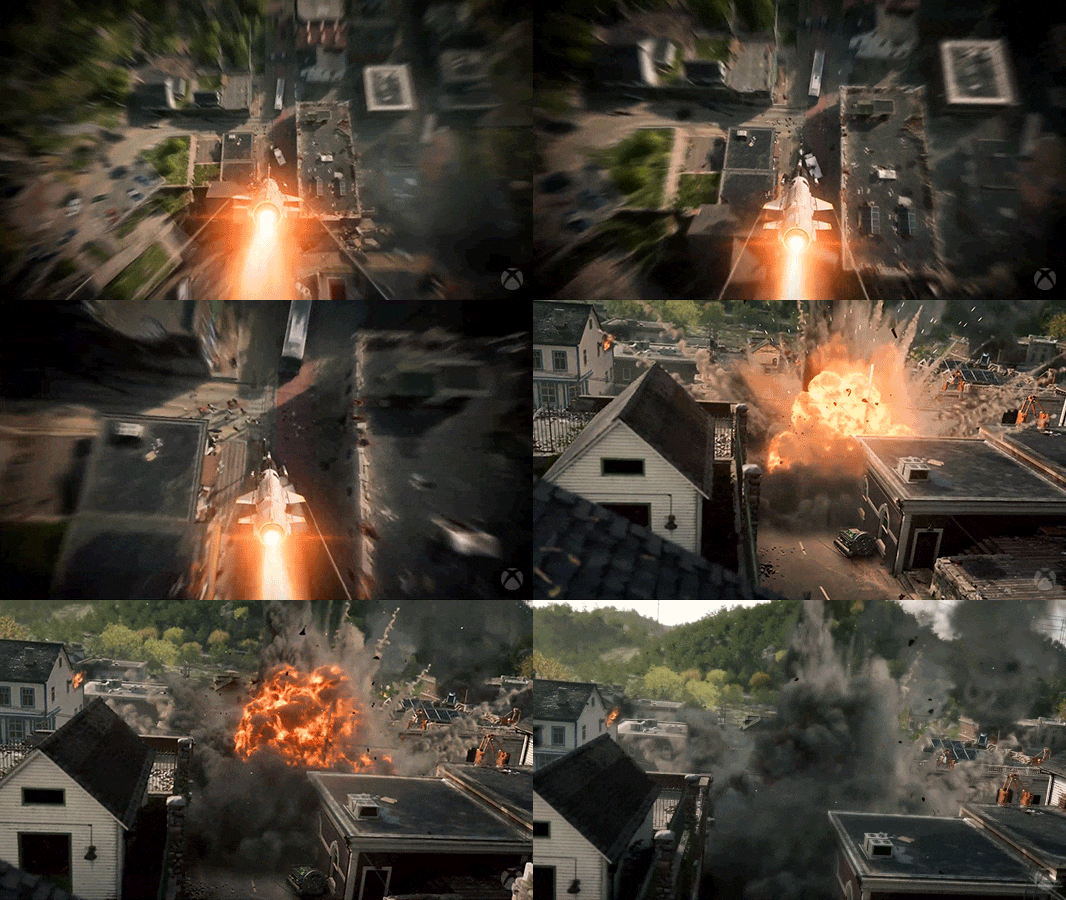 Putin Warning as US Weighs Tomahawk Missiles for Ukraine 2025
Estimated reading time: 12 minutes
Thank you for reading this post, don't forget to subscribe!Putin Warning as US Eyes Tomahawk Missiles for Ukraine
Tension just spiked in the Russia-Ukraine war. Washington is weighing whether to send long-range Tomahawk missiles to Kyiv, weapons that can fly about 1,550 miles and reach Moscow. The Kremlin answered with a sharp Putin warning Tomahawk missiles Ukraine, calling the idea a red line and a risk of severe escalation.
Here is the basic picture. Russia invaded Ukraine in 2022, and the fighting has ground on with strikes, drones, and artillery across the front. The U.S. and Europe have supplied weapons for Ukraine’s defense, but long-range strike options have been limited by policy. Tomahawks would change that, since they can hit deep inside Russia.
Why does this matter now? Moscow wants to know who would operate and target these missiles, Ukrainians or Americans. Kyiv signals it wants the range to stop Russian attacks at the source. Washington has not made a final decision, but even the discussion is shaping the battlefield and the diplomacy.
This news is alarming because it widens the stakes. Long-range strikes raise the chance of miscalculation, new red lines, and fast-moving retaliation. At the same time, Ukraine argues that only reach can deter repeat attacks on cities and power grids.
In this post, you will get clear context on the weapons, the politics behind the decision, and what escalation could look like. You will also see what each side stands to gain or lose, and the scenarios to watch next.
What Are Tomahawk Missiles and Why Do They Scare Russia?
Tomahawks are long-range, precision cruise missiles that fly low, steer around defenses, and hit with high accuracy. If the U.S. supplies them to Ukraine, the range alone would shift what Kyiv can threaten inside Russia. Moscow calls this a red line for a reason.
The Power and Range of Tomahawk Missiles
Tomahawks are U.S. sea-launched cruise missiles with a range of about 1,550 miles, or roughly 2,500 km. They are fired from ships or submarines, fly at subsonic speed, and hug the terrain to stay out of radar sight. They guide using GPS and onboard mapping, which lets them strike fixed targets with high precision. For baseline specs from the manufacturer, see the Raytheon Tomahawk page. For range history, including 2,500 km variants, see CSIS Missile Threat.
How does that compare with what Ukraine has now? ATACMS, the U.S. ballistic missile already sent in limited numbers, tops out at roughly 190 miles. Storm Shadow/SCALP can reach about 155 to 180 miles. Tomahawks multiply that reach many times over.
A quick side-by-side makes the leap clear:
| System | Type | Approx. Range | Flight Profile | Typical Launch |
|---|---|---|---|---|
| Tomahawk | Cruise | ~1,550 miles (2,500 km) | Low, terrain-following, subsonic | Ships, submarines |
| ATACMS | Ballistic | ~190 miles (300 km) | High-arc ballistic | Ground launchers |
Tomahawks have a long record in U.S. operations, from the Gulf War to strikes in Iraq and Syria. The pattern is consistent: launch from safe standoff, fly low under radar, hit command nodes, airfields, and fuel sites. For Ukraine, that means the ability to hit strategic targets deep inside Russia without moving the front line an inch.
What changes on the battlefield?
- Precision at distance: Fixed targets like airbases, oil depots, and rail hubs become vulnerable far beyond current reach.
- Standoff safety: Launch platforms remain outside Russian ground fires.
- Air defense stress: Low-altitude routes can bypass radar, soaking up interceptors and attention.
Russian officials argue Tomahawks would not change the war much but would mark direct U.S. involvement. The counterpoint is simple: range changes target sets, and target sets drive strategy.
How These Missiles Could Target Moscow and Beyond
From western or central Ukraine, Tomahawks could reach Moscow, St. Petersburg, and key military hubs across central and western Russia. That includes airbases feeding strikes, Black Sea and Baltic support nodes, oil infrastructure, and rail chokepoints that sustain Russian logistics. Reporting on the U.S. debate underscores how the range puts Moscow within reach and why the Kremlin is warning hard against it. See coverage of the red line claims and Zelensky’s messaging in Al Jazeera’s explainer.
Russia’s air defenses face clear challenges against cruise missiles:
- Radar horizon: Low-flying missiles can hide in terrain and curve around known sensors.
- Complex routing: Waypoints let missiles avoid strong air defense belts and approach from unexpected angles.
- Interceptor demand: Defending dozens of sites, night after night, strains stockpiles and crews.
Even if Russia intercepts some, the cost and attention required are huge. That is why range and persistence matter more than a single strike.
Zelensky has warned Moscow that Ukraine will hold the sources of attacks at risk. With Tomahawks in the toolkit, that warning lands with more weight. The possibility of strikes on power nodes or command centers near the capital alters risk calculations at the top. Leaders start thinking about bunker routines, relocation plans, and political blowback. That psychological pressure is part of the weapon.
Key takeaways for Ukraine:
- Reach: Moscow and other deep targets fall within a single-country launch envelope.
- Options: Airbases, oil and gas sites, rail yards, and command hubs become fair game.
- Deterrence: The threat alone can disrupt planning and slow Russian operations.
For Russia, the fear is not just damage. It is losing sanctuary, seeing the war reach into core territory, and facing choices it cannot control. That is why Tomahawks draw such a sharp response.
Breaking Down Putin’s Defiant Response to the Missile Threat
The Kremlin is messaging two lines at once. Publicly, it projects calm and confidence. Privately, it signals that Tomahawk deliveries would cross a red line. The words are deliberate, meant to warn Washington while steadying Russian audiences at home.
Key Quotes and Messages from Putin
Putin and his spokesmen frame possible Tomahawk transfers as interference by the United States. The core claim is steady: if missiles strike deep inside Russia, especially near Moscow, the United States is directly involved in target selection and support. This is why Russian officials keep asking who would control the missiles and provide the data. See the latest warnings in Reuters’ reporting on Moscow’s escalation concerns.
You also hear a second theme. The Kremlin says long-range missiles will not change the war’s outcome. Officials call them “no panacea” for Kyiv and argue Russian defenses and industry can adapt. That line appeared again as US debate over Tomahawks gained pace, summed up in Newsweek’s coverage of the Kremlin reaction.
At the same time, Moscow says it is watching every US signal. Putin has vowed that Russia will prevail regardless of Western supplies, a defiant note that fits the larger narrative of endurance. Sky News captured that tone in its piece on Putin’s message as Kyiv waits on a US decision, including the point that missiles could reach Moscow if approved. Read more in Sky News’ summary of the latest statements.
Key points from the messaging:
- Direct role claim: Strikes deep in Russia would prove US involvement, not just support.
- Monitoring: Russian agencies are tracking US deliberations and signaling consequences.
- No battlefield shift: The Kremlin says Tomahawks will not change the strategic picture.
Why Russia Sees This as a Dangerous Escalation
For Russia, Tomahawks are not only about range. They raise the risk of a NATO-Russia confrontation if Washington is seen as guiding targets or operating systems. This is why officials question launch control, data feeds, and basing. The fog over how Ukraine would launch Tomahawks, given they are usually sea-based, feeds that concern.
Russian warnings outline a menu of responses. The list includes:
- Reciprocity with more advanced weapons: Moscow could expand strikes against Ukrainian infrastructure or deploy new systems on the front.
- Signals tied to nuclear doctrine: Not a direct threat, but a reminder of thresholds and declared policy.
- Broader target lists: Russian officials have hinted at striking military sites in countries that enable attacks, depending on how the weapons are used. Reuters has noted these warnings in its recent coverage of the debate, including the right to retaliate if foreign involvement is proven. See Reuters’ account of the red line language.
This fits earlier red lines in the war. Each new capability, from HIMARS to ATACMS, drew threats and pushed the boundary a step further. Tomahawks sit higher on that ladder because of their reach and the perception of US control.
Two uncertainties make escalation more likely:
- Launch method: Would Ukraine receive a workable ground launcher, or would external platforms be involved in any way?
- Targeting: If US data or personnel support is confirmed, Moscow says the United States becomes a party to the conflict.
In short, Russia argues Tomahawks would not flip the battlefield, but they could flip the risk. That is the crux of the current warning cycle.
Ukraine and US Perspectives: Hope for a Turning Point?
Kyiv sees long-range strike power as the missing piece. Washington wants to help without crossing a line it cannot control. Tomahawks sit right in the middle of that tension, promising reach and pressure, but also risk.
Zelensky’s Push and US Decision Factors
President Zelensky has pressed for long-range missiles to hit airbases, depots, and command hubs that feed strikes into Ukraine. His team argues that only deep strikes can slow attacks on cities and the grid. According to reporting, Ukraine has asked the United States to sell Tomahawks to European partners who could then transfer them to Kyiv, a move designed to keep support flowing while managing politics in Washington. See the latest on the request and the pitch to allies in Reuters’ update on the Tomahawk debate.
The Trump White House is weighing the request. Vice President JD Vance said the United States is “looking at” supplying Tomahawks, and he stressed that the President would make the final call. The framing matters: Vance described a sale, not a gift, a signal that the administration wants to show support while keeping tighter control over terms and use. You can read the core U.S. position in BBC’s coverage of the decision process and Vance’s comments in CBS News’ report.
Three U.S. filters shape the decision:
- Support without direct entry: Help Ukraine strike back, avoid any step that looks like U.S. trigger-pulling.
- Escalation risk: Keep options open but reduce chances of rapid Russian retaliation.
- Aid politics: Fit any move into ongoing debates over cost, oversight, and end goals of support.
This is why you hear careful language about ownership, targeting, and control. It ties straight into the broader fight over aid levels and timelines, where hawks push for reach and skeptics ask how each new system changes the war at a sustainable price.
What Changes Could These Missiles Bring to the Battlefield?
Tomahawks would expand Ukraine’s target set far beyond current limits. That means:
- Supply lines under pressure: Rail hubs, fuel depots, and bridges deep in Russia become harder to defend or repair.
- Command disruption: Headquarters and airbases that support strikes on Ukraine could face sudden, precise hits.
- Air defense overload: Low-flying routes force Russia to stretch sensors and interceptors across a huge area.
These are the gains Ukraine wants. They boost morale at home, complicate Russian planning, and may deter some attacks if commanders feel exposed. For a concise overview of what Tomahawks would add, see Reuters’ explainer on why Ukraine wants them.
Russia counters that the effect would be limited. Officials say defenses can adapt, and they frame any deep strike as proof of U.S. involvement. Moscow has also warned that new weapons will not decide the war on their own. Those claims track with past responses to HIMARS and ATACMS. Even so, range and persistence tend to matter over time; they force choices on logistics, basing, and tempo.
Practical hurdles still apply:
- Targeting data: Ukraine would likely need high-quality geolocation, routing, and battle damage assessment. The U.S. has been cautious about how much targeting support it provides.
- Launch solutions: Tomahawks are typically sea-launched. Any ground-launch workaround, integration, or partner-based transfer adds complexity and time. Some analysts also question stocks and delivery paths, a point raised in debate coverage at Responsible Statecraft.
If approved, Tomahawks would not flip the war overnight. They would, however, change which assets Russia must defend every day. That steady pressure could shape the next phase, whether it nudges both sides toward talks or hardens a long stalemate waiting for the next move.
Conclusion
Tomahawks change what Ukraine can threaten, not the nature of the war. Their long reach, low flight, and precise routing put Moscow and key hubs at risk, which is why Putin is warning so loudly. Washington is weighing the gains against the risk of fast escalation, especially if targeting support or launch control raises questions about direct U.S. involvement. Kyiv sees a path to deter strikes on cities and the grid by holding airbases, depots, and command nodes at risk.
The stakes are clear. Russia wants to keep sanctuary, Ukraine wants to strip it away, and the United States wants to help without tripping into the fight. Any decision will ripple through air defense stockpiles, logistics plans, and diplomacy, and it will shape the next phase more than a single strike ever could.
What keeps the balance safer, tighter controls and limits, or broader reach that deters? Can long-range pressure shorten the war, or does it push both sides to dig in? Follow our updates on the Russia-Ukraine war, share your take, and watch how this choice could influence global security in the months ahead.