

Breaking News India 28 August 2025: Himachal Rains, Court Verdicts, Fuel Prices Update
 Breaking News India 28 August 2025: Himachal Rains, Court Verdicts, Fuel Prices Update
Estimated reading time: 19 minutes
Thank you for reading this post, don't forget to subscribe!Breaking News 28 August 2025: Heavy Rains in Himachal, Court Verdicts, Fuel Prices and More
As the day unfolds on 28 August 2025, here’s a clear and concise roundup of the top headlines that matter. From heavy rains drenching Himachal Pradesh to important court verdicts shaking legal circles, you’ll find a vivid snapshot of today’s key events. Fuel prices, government updates, shifts in the economy, and notes from international and cultural spheres all make the list, capturing the pulse of current affairs in one place.
You don’t have to wade through endless articles to stay informed. This summary keeps news sharp and trustworthy, inviting you to catch every major point quickly. Whether you want to know about weather disruptions, legal developments, or economic changes, this briefing gives you what you need to stay ahead and aware in just a few moments. Keep scrolling for fresh insights and the day’s must-know stories.
Watch a quick video summary here for today’s top headlines in Hindi by DLS News.
Weather and Travel Disruptions in Himachal Pradesh
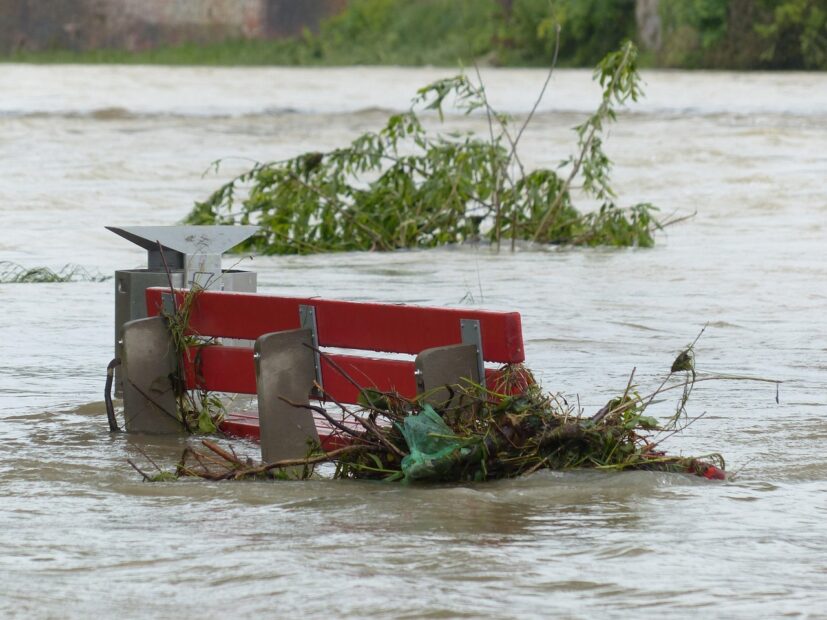
The heavy monsoon rains have once again laid siege to the hills of Himachal Pradesh, triggering landslides and flooding that have brought traffic to a standstill and caused widespread anxiety. Patli-Kuhal in the Kullu district, a usually tranquil stretch on the Chandigarh-Manali National Highway, now struggles under dark, swollen skies. The downpour has swollen streams into raging torrents, washing mud and debris onto the roads. These conditions are not just inconvenient—they pose serious safety risks to residents and travellers alike.
Heavy rains and landslides in Patli-Kuhal
The sky hung heavy with brooding clouds as rain lashed down relentlessly over Patli-Kuhal. What was once a smooth stretch of the National Highway turned into a perilous path, choked with thick mud and slush. Streams that normally trickle peacefully raced violently downhill, bursting their banks to flood the adjacent fields and roadsides. The earth, saturated and unstable, gave way repeatedly, sending landslides tumbling onto the highway.
This stretch faced complete blockage as cascades of soil and rocks covered the surface, making travel impossible. Vehicles inching past were met with slippery slopes and sharp drops where carriageways eroded. The danger was real—any attempt to cross could trigger further slides or leave travellers stranded without help. Rescue teams scrambled to clear debris while warning locals to avoid travel until the situation stabilised.
Stranded fruit traders from Satna
Among the stranded are three fruit traders from Satna, caught in limbo for over 15 days. These traders, who regularly transport fresh produce to Himachal’s bustling markets, have seen their livelihoods crumble as their goods sit boxed up in trucks, waiting for the road to reopen. The fruit supplies—apples, pears, and plums—are perishable, and prolonged delays risk severe spoilage.
For these traders, the blocked highway is more than just a road closure—it is a threat to their earnings and the trust built with buyers. Without timely delivery, fruit prices drop sharply, and their reputation takes a hit. The men, juggling hope and despair, have been forced to camp nearby, anxiously watching the skies and waiting for any sign of relief.
Impact on families and local economy
The effect of these disruptions reaches far beyond the immediate inconvenience. Families anxiously await news of their loved ones stranded on the road, worry etched deeply on faces back home. The fruit traders’ families share this anxiety, uncertain about future income and the mounting losses.
Local markets, already strained, ripple under the weight of supply shortages. The halt in fruit deliveries causes price fluctuations and affects traders, shopkeepers, and customers alike. Transport services suffer delays, forcing many daily commuters to find alternate routes or put plans on hold. The region’s economy, heavily reliant on smooth transport of goods and people, feels the pinch deeply in these rain-soaked weeks.
The recent events vividly show how fragile mountain transportation remains during the monsoon, especially in places like Patli-Kuhal. The challenges here underline the urgent need for better road maintenance and early warning systems to protect lives and livelihoods in Himachal Pradesh.
For updates on weather and traffic conditions in Himachal Pradesh, see the Hindustan Times coverage of Kullu’s road closures.
Crime and Legal Updates
Today’s headlines also bring critical developments from the law-and-order front. These stories are more than isolated incidents; they reflect the ongoing challenges of justice and public safety. From courtroom decisions that send strong messages against violence, to street-level enforcement cracking down on petty crime, and raids cutting into illegal gambling rings, the law remains a key player in community stability. Here’s a clear look at the latest updates shaping our sense of security and lawfulness.
Sentencing in a decade-old police firing case
The court has finally delivered a verdict in a police firing case that had remained unresolved for over ten years. The judgement handed down a six-year prison sentence and a fine—punishments directed at those responsible for the excessive use of force. The charges stem from an incident where police opened fire on a group suspected of criminal gang activities, resulting in multiple injuries and public outcry.
This decision serves as a powerful reminder that no one is above the law, not even law enforcement. The court made it clear that violent excesses will face consequences, reinforcing the principle that justice must be balanced and thoughtful, not rushed or reckless. The ruling sends a message to criminal gangs and authorities alike: unlawful violence, whether from criminals or those meant to enforce the law, will be met with accountability.
This case has lingered in public memory because of its implications for police conduct and civil rights, bringing up questions about oversight and transparency. Now, with this verdict, there is hope for renewed trust in the legal system and its capacity to protect citizens fairly and firmly.
Shoplifting arrests in Kolgawan
In Kolgawan, two women were caught in the act after spending a suspicious amount of time lingering inside several textile shops. Their behaviour raised alarms with shopkeepers, who alerted the police once the women left with unpaid goods. Acting swiftly, authorities intercepted and arrested the pair.
Local residents have expressed relief over the police response, praising swift action to keep retail areas safe from theft. Shoplifting, often dismissed as a minor crime, can ripple through communities by pushing up prices or damaging trust between shoppers and sellers. These arrests underline that such crimes are taken seriously, with authorities committed to maintaining public order.
Police reports suggest the women were part of a small ring targeting local textile shops, though investigations continue to confirm if others are involved. Community members are hopeful this crackdown will deter future attempts, bolstering a sense of security in markets and shopping streets.
Gambling raid in Rewa – cash and assets seized
In Rewa, police executed a raid on an illegal gambling operation, detaining three suspects and seizing ₹45,000 in cash along with a car and several mobile phones used for coordination. Despite the arrests, the key organisers behind this operation managed to evade capture, slipping away amidst the chaos.
Gambling, though illegal without licences, continues to draw many into risky behaviours that often trigger broader social problems. Raids like this disrupt such networks and recover significant assets tied to unlawful earnings. Authorities emphasise their ongoing effort to track and dismantle these setups to protect community welfare.
This case also highlights the challenges law enforcement faces when organisers use multiple layers of communication and mobility to avoid detection. Local officials urge the public to report suspicious activities, reinforcing cooperation as essential in uprooting illegal trading and protecting neighbourhoods.
With these updates, the landscape of law enforcement and justice remains active and evolving. Each case underlines how rules and penalties work in practice, shaping safer environments in different corners of the state.
For those interested in broader context on the changes in Indian criminal law recently, a detailed look at Recent Amendments And Trends In Indian Criminal Law provides insightful analysis on how legislation is adapting to new challenges and societal needs.
Government Service Irregularities: Cleansing Data for Better Welfare Delivery
Cases of outdated or inaccurate government records create serious obstacles when it comes to serving vulnerable families. Recent efforts to clean up irregularities linked to ration cards and beneficiary databases reveal how these errors not only waste resources but also harm those depending on public support. Let’s explore some key instances uncovered in this ongoing correction process.
Ration cards tied to deceased individuals
Imagine a subsidy programme that keeps sending benefits to people who have long passed away. This was the situation when government audits found countless ration cards still linked to deceased persons. Outdated records meant that subsidised food grains and supplies were being drawn against these inactive accounts. Such lapses divert crucial resources away from currently needy families.
Updating this data matters because ration cards are lifelines for many low-income households, helping them access affordable essentials. When cards tied to the deceased are not removed, it weakens the fairness of distribution, allowing fraud and duplication to creep in. This is more than just a paperwork issue; it affects real lives and vulnerabilities.
To address this, several states have begun deleting names of deceased holders after thorough verification. For example, BS governments have deleted lakhs of such entries following official directives to clean ration databases by September 2025. The goal is to ensure that subsidies reach only genuine beneficiaries, strengthening social safety nets. This step also brings transparency and accountability to government schemes.
e‑KYC audit and removal of 32,138 names
Alongside manual checks, technology steps in to identify irregularities with greater precision. The electronic Know Your Customer (e-KYC) audit has become a vital tool for verifying beneficiaries across welfare programmes. Through biometric and identity verification linked to Aadhaar, officials weed out duplicate or invalid entries.
Recently, a large-scale cleanup using e-KYC removed over 32,000 names from state subsidy rolls. This exercise flagged beneficiaries who did not meet eligibility criteria or whose information did not match government records. The sheer scale of this audit demonstrates a firm move towards data accuracy and integrity.
Removing these names is expected to save significant public funds previously flowing to ineligible recipients. It also reduces leakages and misuse of subsidies, making welfare programmes more financially sustainable. Equally important, beneficiaries who remain on the rolls can feel assured their access to benefits is secure and correctly maintained.
Implications for welfare distribution
Correcting these irregularities is more than a bureaucratic task; it transforms the way welfare reaches those in need. By weeding out ghost entries and outdated data, government efforts restore fairness and equity in subsidy distribution. This not only protects state resources but also restores public confidence in social programmes.
When citizens see that benefits are targeted correctly without waste or fraud, trust in government initiatives strengthens. This trust encourages greater participation and adherence to scheme guidelines, improving overall welfare delivery. More equitable distribution also means the truly vulnerable receive their due support without hindrance.
In essence, data cleansing and e-KYC audits help build a welfare system that is accountable, transparent, and responsive. These steps reduce errors, cut costs, and uphold the dignity of beneficiaries by ensuring they receive exactly what they deserve. For a detailed look at the Centre’s directive on ration card data cleansing, you can read about the government’s initiative to remove ineligible ration card holders by MSN Money’s report on subsidy reforms.
Such government actions signal an important shift towards stronger governance and better service delivery for millions relying on welfare support daily.
Fuel Prices and Economic Snapshot
Fuel prices are a key barometer for the daily cost of living and business operations, particularly in a state like Madhya Pradesh where both urban and rural populations depend heavily on road transport. The latest figures reveal a landscape of steady prices, providing a sense of relief amid broader economic shifts. Understanding these prices helps us see how small changes, or the lack of them, ripple through households and industries alike.
Diesel price stability in Madhya Pradesh
Diesel prices in Madhya Pradesh currently hold steady at an average of ₹92.73 per litre. This figure remains unchanged from the previous day, signalling a pause in any upward or downward movement. For a product so integral to freight transport, agriculture, and everyday goods delivery, this predictability offers a welcome break from the usual volatility seen in fuel markets. Diesel’s steadiness reflects broader market forces such as stable crude oil prices and government tax policies that aim to balance revenue needs with public affordability.
Petrol price unchanged
Similarly, petrol prices show no change, maintaining an average price of ₹107.39 per litre. Petrol, often influencing personal transport costs, affects the daily commute of millions. This price consistency means motorists and everyday consumers can avoid sudden wallet shocks when filling up their vehicles. It also hints at a market equilibrium where demand and supply are in balance, maintaining price stability despite fluctuations seen in other sectors.
How price steadiness affects commuters
This price steadiness is a quiet boon for commuters and businesses. For daily travellers on buses, auto-rickshaws, or personal bikes, stable fuel prices ease budgeting pressures. It’s like holding onto a familiar path when the economic weather feels uncertain. Transport costs for goods also remain modest, which can help keep prices of essentials steady in local markets. While the impact may seem small on an individual scale, when multiplied across millions of trips and tonnes of freight, steady fuel prices prevent cost spirals that could disrupt the economy.
In such times, consistent fuel costs provide a grounding effect, helping families and businesses plan ahead without fear of sudden hikes. Stability can also cushion inflationary trends, contributing to a calmer economic atmosphere in Madhya Pradesh’s daily life.
For further info on current fuel prices in Madhya Pradesh, you can check the latest rates at NDTV’s fuel price page for Madhya Pradesh.
International and Geopolitical News
Amid the global flow of events, major diplomatic movements are capturing attention once again. One such development is North Korean leader Kim Jong-un’s invitation to a significant Chinese event. This gesture, set against the backdrop of broader geopolitical interests, highlights the subtle shifts in alliances and history’s role in modern politics. Understanding the details, significance, and regional reactions offers a window into the complex nature of international relations today.
Kim Jong‑un’s invitation to China’s parade
Chinese President Xi Jinping has officially invited Kim Jong-un to attend the forthcoming military parade in Beijing. This event, scheduled for 3 September 2025, commemorates the 80th anniversary of the end of World War II. It marks a momentous occasion for China as it remembers the conclusion of the conflict and its victory over Japanese forces.
Kim’s acceptance of this invitation is notable, as it signals North Korea’s continued alignment with China at a time when global tensions remain high. His attendance will be a rare public international appearance, underscoring the diplomatic importance China places on this anniversary. Alongside other invited leaders, such as Russia’s Vladimir Putin, this gathering presents a united front among key powers wishing to project strength and solidarity.
Significance of the 80th anniversary celebrations
China marks 3 September as ‘National Victory Day’, a day to honour the defeat of Japan in 1945 and to pay tribute to those who suffered during the war. For China, this parade is more than just a military show; it is a vivid reminder of resilience and national pride. The elaborate ceremony serves as a moment to reinforce historical memory across generations, ensuring that the sacrifices and stories of World War II are never forgotten.
The anniversary carries deep meaning in Chinese society. It reflects decades of struggle, reunification, and the emergence of China as a major power. The parade itself exemplifies this narrative by displaying advanced military hardware, marching troops, and carefully orchestrated symbolism designed to inspire patriotism. In addition, it sends a message both internally and abroad: China remains proud of its history and vigilant about its future security.
Regional reactions and security considerations
Neighbouring countries watch the parade and the accompanying diplomatic gestures with mixed feelings. Japan, still sensitive about wartime history, views such events with suspicion, seeing them as reminders of past conflicts that sometimes revive old wounds. Meanwhile, South Korea and other Asian neighbours assess the parade through the lens of current security dynamics, especially concerned by North Korea’s presence and military posturing.
The invitation to Kim Jong-un also carries diplomatic weight. It suggests a deliberate show of solidarity among nations often at odds with Western powers. This gathering allows China to strengthen ties with key allies and sends a subtle message about the global balance of influence. For regional security, it raises questions about future cooperation or tension, as the countries involved balance respect for history with present-day strategic interests.
In a world that keeps shifting, the 80th anniversary parade in Beijing is more than a simple commemoration. It is a stage for historical reflection, diplomatic signalling, and geopolitical calculation all at once.
For more detailed coverage on Kim Jong-un’s participation and China’s parade, you can visit the BBC’s report on Kim’s attendance at China’s Victory Day and the Reuters article on Putin and Kim Jong-un attending the parade.
Cultural and Historical Reflections
In today’s fast-moving world, it’s refreshing to pause and appreciate how elements from India’s rich cultural past continue to influence the present. The vibrant stories tied to historic festivals, unique regional traditions, and the spirit of protest are woven into current events and public life. This section explores how these cultural markers, from the fragrance of Chhindwara soil making its way overseas to the enduring legacy of Bal Gangadhar Tilak’s festival strategy, still resonate deeply in modern times.
Chhindwara soil fragrance reaching Britain
Imagine the scent of earth after a fresh monsoon rain, a distinct, moist aroma filled with life and nature’s promise. This fragrance, known locally as Mitti ki Khushboo, has become a symbol of Indian heritage far beyond the country’s borders. Particularly from Chhindwara, a district famous for its fertile soils and natural aroma, this “fragrance of the soil” has carved a niche overseas, notably reaching Britain’s diverse communities.
The journey of this scent is more than just a natural phenomenon; it is a cultural bridge. Indian expatriates often carry an invisible but powerful connection to their homeland through this subtle reminder of home. Vendors in Britain have begun selling attar and incense perfumes inspired by the earthiness of Chhindwara’s soil, blending traditional musk and floral notes with the unique ‘Mitti ki Khushboo.’ These products remind people of home, of rainy afternoons, and the comforting aroma of soil that nurtures life.
This spread of Chhindwara’s soil fragrance overseas echoes a larger trend: cultural memories travel with people and products, carrying stories of India’s land and legacy to new corners of the world. It is a fragrant thread tying generations and geographies, a sensory heritage that keeps Indian identity alive beyond physical boundaries. For more on India’s rich tradition in fragrances, you can explore this piece on Indian perfumed heritage.
Bal Gangadhar Tilak’s 1893 Ganesh festival legacy
Bal Gangadhar Tilak, a prominent freedom fighter, knew the power of culture and tradition long before social media made mass communication easy. In 1893, he transformed the Ganesh festival from a private family occasion into a public event aimed at uniting Indians against British rule.
This act was more than religious; it was deeply political. By bringing people of different communities together under the banner of Ganesh Chaturthi celebrations, Tilak fostered a sense of collective identity and purpose. The celebrations included speeches, patriotic songs, and gatherings which sparked nationalist fervour and created a platform for discussion and mobilization against colonial authorities.
Today, Ganesh festival celebrations still carry that spirit of unity and pride. The splendour of the Pandal decorations, the drumbeats, and the mass processions are not just joyful events but reminders of a time when cultural festivals became a tool for social resistance. The legacy of Tilak reminds us how traditions shape social movements and continue to inspire civic pride and togetherness across generations.
Modern resonance of historic protest
The echoes of past protests can be seen clearly in the waves of public gatherings and civic actions that sweep across India today. Whether it is a demonstration against governmental policies or environmental activism, the spirit kindled by historic protests lives on.
Recent news reports highlight how citizens gather in large numbers to voice their concerns, drawing from the legacy of collective action seen during India’s struggle for independence. These modern movements, though equipped with social media and technology, rely on the timeless principles of solidarity, persistence, and public presence.
Protests today share a kinship with those from the past in their ability to bring communities together, create visibility for their causes, and demand accountability. This continuity of public engagement enriches India’s democratic fabric, proving that history’s lessons still fuel the drive for justice and reform in contemporary society.
Conclusion
Staying informed about today’s range of news—from the relentless monsoon rains in Himachal Pradesh to significant court rulings, fuel price stability, and cultural echoes—gives us a fuller picture of life’s complexities across India. These stories show how weather, justice, government action, economics, and heritage all connect to shape daily experiences and future outcomes.
The challenges faced by communities and traders in the rain-hit hills remind us of the delicate balance between nature and infrastructure. Legal updates reinforce the role of fairness and accountability. Economic steadiness in fuel prices offers a quiet reassurance amid uncertainty. Meanwhile, cultural traditions and historical reflections keep identity and unity alive.
By following diverse news, you gain insight into how different forces influence society. Keep watching for developments and consider how each thread in this vibrant tapestry matters to people across the country. Your awareness makes you part of a more informed and engaged citizenry, ready to understand and share the stories that define India today.