

Trump’s Tariffs and Talks: How US Pressure Shaped India-Pakistan Ceasefire in 2025
Estimated reading time: 14 minutes
Thank you for reading this post, don't forget to subscribe!Trump’s Role in Calming India-Pakistan Tensions (Tariffs, Talks and Conflict Prevention in 2025)
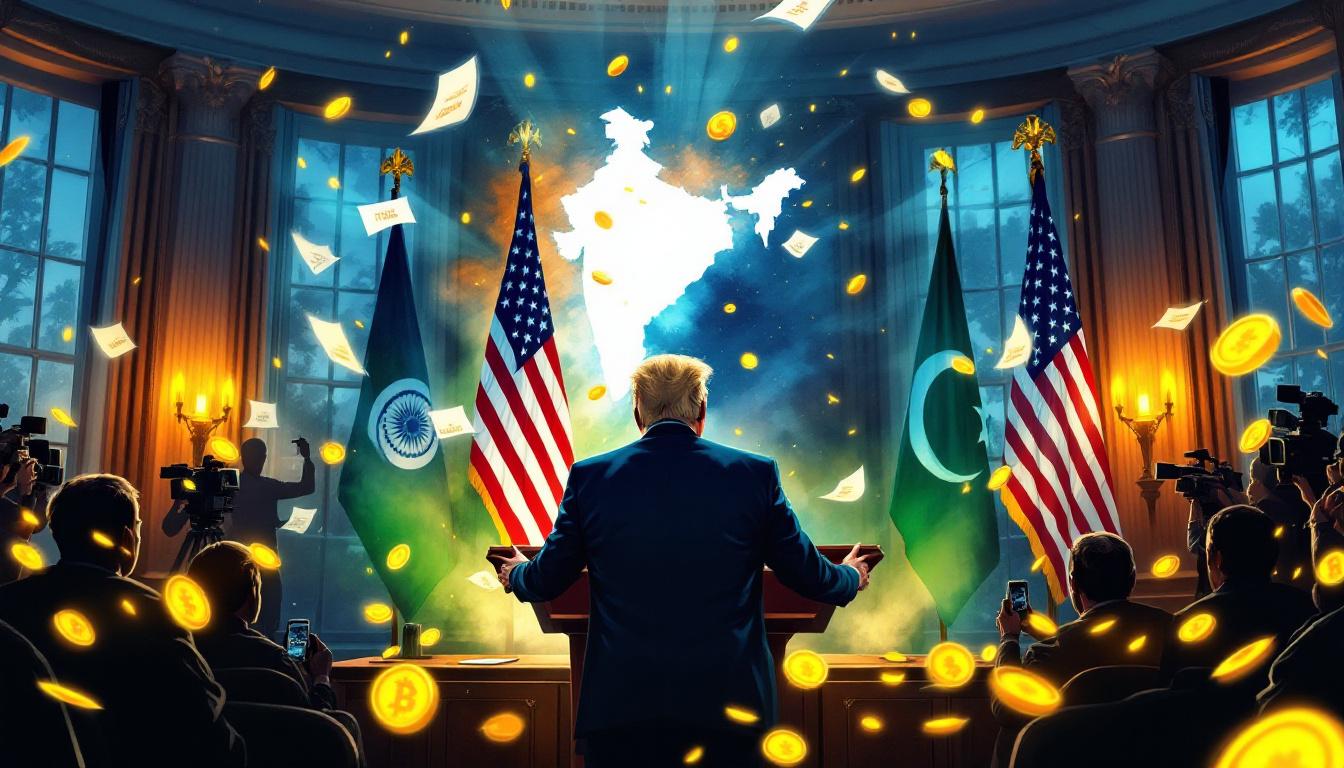
Tensions between India and Pakistan in 2025 brought the world to the brink of a serious conflict, with fears of nuclear escalation casting a dark shadow over the region. Former US President Donald Trump has once again claimed that his tough stance, including imposing high tariffs on India, played a key role in preventing the situation from spiralling out of control. By threatening severe trade penalties, Trump insists he pushed both nations towards a rapid ceasefire, highlighting the high stakes at play.
This renewed claim comes amid escalating trade disputes, with tariffs on Indian goods reaching 50 percent, targeting sectors like textiles and seafood. The diplomatic and economic pressure from the US added a complex layer to the already fragile security dynamics between India and Pakistan. Understanding these developments is crucial, as they reveal how trade policies and geopolitical threats intersect in efforts to avoid conflict.
For those following international relations and global trade, the episode shows how economic tools can influence peace efforts, even when tensions seem beyond control.
Trump’s Claims on India-Pakistan Conflict Mediation
Former US President Donald Trump has once again drawn attention to his intervention during the tense India-Pakistan standoff in 2025. He detailed his firm approach to pushing India away from its energy ties with Russia while hinting at direct threats that involved steep tariff hikes. Alongside economic pressure, he described the collision of military might, reflecting how high the stakes were in this conflict. These claims give us a unique look into how Trump says he used both economic and tactical warnings to steer the situation towards calm.
Details of the Tariff Threats
Trump’s account centres on a series of dramatic tariff threats aimed at India, designed to force a shift in its energy purchases from Russia. According to him, the US first imposed a 25 percent tariff on Indian imports as a wake-up call, telling Indian leadership, including Prime Minister Narendra Modi, that the levies were “so high your head will spin.” When the initial measure failed to change India’s course, Trump says he doubled the tariff to 50 percent, amplifying pressure with a clear message: the US would not tolerate India’s growing ties with Russia, especially when caught in the crossfire of escalating India-Pakistan tensions.
These tariffs targeted key Indian exports like textiles and seafood, aiming to strike at the heart of India’s economy without overt military engagement. The demands went beyond trade; they were a piece of a larger geopolitical chess game aimed at discouraging India from what Trump framed as risky energy partnerships that could destabilise the region. More detail on the tariff sequence and the associated diplomatic ripple effects can be found in reports like this Hindustan Times article on US tariffs and trade talks.
Alleged Military Escalations During Conflict
Trump’s story also highlights a severe escalation on the military front. He mentioned fighter jets—possibly seven—being shot down amid combat, with the implication that each aircraft carried a price tag of around $150 million. This brings into sharp focus the material cost and danger involved in the conflict.
The loss of these jets signalled to Trump just how close the region was to an even bigger clash. It’s a stark reminder that beyond the tariff negotiations and diplomatic talks, real lives and high-value assets were at stake. The shooting down of high-tech fighter jets reveals both the intensity of the conflict and the substantial risks involved for India and Pakistan.
Trump portrays these moments as pivotal, framing his interventions as crucial moves to prevent the situation from spiralling into full-scale war. The military losses painted a vivid picture of the conflict’s escalation and the urgent need for rapid de-escalation efforts.
Together, these economic and military elements weave a story of high-tension brinkmanship where tariffs hit the economy and jets fell from the skies, all part of what Trump claims was a forceful diplomatic push for peace. To understand the wider impact on international relations, this BBC report on growing tensions and tariffs offers additional context on how tariff steps correlated with renewed diplomatic efforts during this period.
Contrasting Views: India’s Official Position on Conflict Resolution
When tensions flare between India and Pakistan, it’s easy to assume that external mediation plays the crucial role in cooling tempers. But India’s official stance on the recent ceasefire challenges that narrative. Behind the scenes, Indian leadership insists that the resolution came from direct military communication between the two countries, not from foreign intervention. This approach stems from a firm belief in sovereignty, responsibility, and a clear-eyed commitment to counter-terrorism.
India-Pakistan Direct Military Communication
The ceasefire following the Pahalgam terror attack was a complex moment charged with emotion and strategic calculation. On 22 April 2025, terrorists attacked tourists in Pahalgam, Jammu and Kashmir, killing 26 civilians. This brutal assault was the spark that ignited subsequent military responses. Instead of waiting for outside actors to step in, the generals of India and Pakistan engaged directly through established hotline protocols to manage and de-escalate the conflict.
India’s Defence Minister Rajnath Singh and Foreign Minister S. Jaishankar have repeatedly stressed that no external mediator was required to cool down tensions. Instead, the communication channel between the military chiefs of both nations was activated to prevent further escalation. Within days, this direct dialogue helped both sides agree on a ceasefire, showing that even amid animosity, practical cooperation is possible.
In parliament, Prime Minister Narendra Modi made it clear that the ceasefire was “completely India’s call” and that no third-party influence or pressure shaped this decision. His message reaffirmed a long-standing Indian policy: bilateral conflicts must be resolved through direct contact, without interference, particularly in sensitive matters concerning national security.
India’s stance also underscores its expectation for Pakistan to take responsibility for terrorism emanating from its soil. Jaishankar has criticisied Pakistan’s refusal to condemn terror groups like Lashkar-e-Taiba (LeT), which Indian authorities hold responsible for the Pahalgam attack. For India, peace cannot exist without counter-terrorism cooperation, a point made explicitly through their official statements.
The core elements of this official position include:
- Direct military channel communications to coordinate ceasefire terms immediately after hostilities.
- A refusal to endorse third-party mediation calls, regarded as external interference.
- Linking any progress in dialogue to Pakistan’s genuine action against terrorist groups.
- Framing counter-terrorism cooperation as non-negotiable for lasting peace.
This approach reflects India’s belief that sovereignty and accountability take precedence in managing conflict. Foreign pressure or trade-linked tactics, however forceful, cannot replace the practical work done through face-to-face—or rather, general-to-general—dialogue.
For further insight on India’s diplomatic and military responses following the Pahalgam attack, including Prime Minister Modi and Foreign Minister Jaishankar’s statements, you can explore The Hindu’s coverage on Operation Sindoor and the ceasefire. Also, detailed reporting on Jaishankar’s remarks about rejecting third-party intervention highlights India’s firm line on this issue, as seen in this piece from The News Now.
In summary, India’s official word presents a clear image: conflict resolution rests on bilateral military communication and a robust stance on terrorism, while outside mediation remains unwelcome. This position challenges some external narratives about how peace in South Asia can best be maintained.
The Impact of US Tariffs on India
The decision by the US to impose steep tariffs on India is far more than a trade dispute; it reflects a web of geopolitical tension and economic strategy. At the centre lies the US concern about India’s continuing energy trade with Russia, a relationship seen as undermining global efforts to curb Russia’s economic power. India’s response, meanwhile, signals a determined effort to protect its economic self-reliance and resist external pressure through bolstering domestic consumption and diplomacy.
Rationale Behind US Tariffs
The US government’s rationale for imposing tariffs on Indian goods boils down to one central issue: India’s energy imports from Russia. The US sees India’s purchase of Russian oil as indirectly funding a nation under heavy Western sanctions due to its actions in global conflicts.
Officials argue that tariffs are a form of economic pressure to coerce India into cutting ties with Russia’s energy sector. The idea is clear—by penalising a significant portion of Indian exports through tariffs (which escalated from 25% to 50%), the US aims to diminish Russia’s access to hard currency gained through its oil sales.
This strategy ties into broader geopolitical objectives to isolate Russia financially. The tariffs extend beyond just punishment; they are a tactical move meant to realign India with Western economic and political interests. In Washington’s view, every trade dollar India pays for Russian energy is a dollar that keeps Russia stable in a fragile global environment.
Affected Indian exports include textiles, gems and jewellery, seafood and machinery—sectors that form critical parts of India’s trade profile with the US.
Despite these measures, Indian refineries have largely continued their Russian oil imports, driven by economics and national energy needs. Sources report that India’s stance is rooted in prioritising “country first, commerce later” amid the trade tussle. This stance challenges the effectiveness of tariffs, highlighting how complex energy politics influence trade relations (source).
India’s Diplomatic and Economic Response
India’s reaction to these tariffs has not been one of quiet submission. Prime Minister Narendra Modi and other officials have called on citizens and businesses to ramp up consumption of ‘Made in India’ products. This push serves multiple purposes:
- Strengthening internal markets to lessen dependence on foreign trade.
- Encouraging innovation and production within India’s borders.
- Signalling resilience against external economic pressure.
This strategy goes beyond economic survival; it is a statement of political will. By urging citizens to support domestic industries, Modi appeals to national pride and economic sovereignty. It’s a way of turning the economic squeeze into an opportunity to build a more self-sufficient economy.
Diplomatically, India maintains a composed but firm stance. Officials have reiterated that trade decisions should not become tools for coercion in geopolitical disputes. India insists on managing its foreign relations independently, reflecting the balancing act required when maintaining ties both with Russia and the US.
The government has also doubled down on plans to diversify India’s trade partners and energy sources over time, but immediate national interests remain the priority. Among talks in Indian business chambers and policy circles, the message is clear: tough tariffs will slow trade but not break India’s resolve.
This robust response reflects a mature approach to external shocks in global trade, with economic nationalism running hand in hand with diplomatic caution. For more on India’s economic resilience and internal market boost, see coverage from The Times of India.
Together, the US tariff measures and India’s responses paint a vivid picture of high-stakes economic diplomacy. Here, trade policy becomes a lever not only of profit but political influence, with India seeking to safeguard its interests while navigating the pressures of a shifting world order.
Support and Reactions from Other World Leaders
Former President Donald Trump’s claims about influencing the India-Pakistan standoff with tariff threats and diplomatic pressure did not go unnoticed on the global stage. The international community’s response has been a mix of cautious support, diplomatic observation, and recognition of India’s ability to manage the crisis amid economic and geopolitical strain. As tensions simmered, the voices of various world leaders added layers of understanding and solidarity to the unfolding story, reflecting the delicate balancing act involved in such a volatile situation.
Fiji’s Prime Minister Sitiveni Rabuka’s Acknowledgement
One of the more notable voices came from the Pacific, where Fiji’s Prime Minister Sitiveni Rabuka publicly voiced support for India and its leadership during this testing period. Rabuka pointedly remarked that “somebody is not very happy with you,” nodding to the pressure India faced under the sweeping 50 percent tariffs imposed by the US. Yet, he expressed confidence in India’s resilience, emphasising that Prime Minister Narendra Modi was “big enough to weather any discomforts.”
Rabuka’s comments highlight an important international perspective: while the economic pressure was intense, there is respect for India’s sovereign decisions and its ability to stand firm in the face of adversity. As a leader from a smaller nation with strategic interests in regional stability, Rabuka’s words carry weight in underlining a common view among many countries that India’s strength lies in its internal cohesion and diplomatic steadiness.
His statement was more than mere diplomatic politeness. It underscored a shared understanding that external pressures—be they tariffs or diplomatic manoeuvres—aren’t enough to shake India’s resolve or derail its strategic pathways. This backing provides moral support at a time when India’s actions around the conflict and economic self-sufficiency were under intense international scrutiny. You can find coverage of Rabuka’s remarks in India Today’s report on Fiji PM’s support.
Global Perspectives on Trump’s Approach
Beyond the Pacific, world leaders and international observers tended to view Trump’s tactics with a mix of intrigue and caution. The use of sharp tariffs against India—one of the world’s largest economies and a key global player—was seen as a bold move, but it raised questions about the long-term impact on international relations and regional stability.
Some expressed concern that economic pressure might backfire, hardening India’s resolve rather than opening the door to cooperation. Others recognised the tariffs as one piece of a wider diplomatic puzzle where signaling strength was necessary to prevent further escalation between India and Pakistan. What many agree on is that any intervention in such a complex conflict must be paired with a broader effort to foster direct communication and mutual trust.
In forums like the United Nations and the G20, voices called for restraint, urging both India and Pakistan to commit to peaceful dialogue and condemning any actions that might escalate hostilities. The focus remained on finding lasting solutions through diplomacy, highlighting the limitations of unilateral pressure tactics.
European Union and Western Allies’ Measured Response
The European Union and several Western allies approached the situation with careful diplomacy. They welcomed any steps toward de-escalation, noting that peace between India and Pakistan is crucial not just for South Asia but for global security and economic stability.
While some EU officials acknowledged the US’s tough stance as understandable given the geopolitical context, most urged reliance on dialogue and pointedly avoided endorsing aggressive economic measures. The consensus leaned toward cautious engagement, aiming to support both nations in navigating tensions without damaging vital economic ties.
This balanced approach reflects a strategic consideration: maintaining alliances and partnerships with India while also promoting stability in a region that often finds itself at the heart of broader global power struggles.
Summing Up International Reactions
The diplomatic chorus around Trump’s claims and the 2025 India-Pakistan crisis reveals a world watching closely, with varied opinions but a shared hope for peace.
- Fiji’s Prime Minister Rabuka stands out for his direct support of India, praising its leadership’s strength.
- Global leaders largely welcomed the ceasefire but expressed doubts about the effectiveness of tariff-driven pressure.
- The EU and Western allies advocated engagement and dialogue over economic or political coercion.
This mix of support and scepticism paints a picture of a region held in uneasy balance, where leaders recognise the complexity beyond headlines and tariffs. They remind us that true resolution requires more than high stakes and hard lines—it calls for steady hands and open lines of communication.
For additional insights into the international reactions and Trump’s renewed claims, see reports such as NDTV’s coverage of Trump’s statements on tariffs.
Conclusion
The complex interplay of US tariffs, Trump’s claims, and India-Pakistan tensions in 2025 highlights the tangled nature of modern diplomacy. While Trump stresses his trade threats as key to halting conflict, India firmly credits direct military dialogue for the ceasefire, reflecting contrasting accounts of how peace was achieved.
This episode reveals how economic tools and military communication coexist in efforts to keep regional stability, with neither approach providing a full answer alone. The steep tariffs underscore the geopolitical contest behind trade, while India’s stance reasserts sovereignty and the importance of bilateral engagement.
As the world watches these developments, it is clear that lasting peace between India and Pakistan demands more than pressure and claims. It requires steady dialogue, mutual respect, and a careful balance of economic and diplomatic actions. The story remains open, with future efforts needing to bridge divides beyond tariffs and headlines.