




Top US-India Trade Deals 2025: Tech, Energy, Healthcare, and Agriculture Insights
 Top US-India Trade Deals 2025: Tech, Energy, Healthcare, and
Estimated reading time: 13 minutes
Thank you for reading this post, don't forget to subscribe!Top US-India Trade Deals to Watch in 2025 (Technology, Energy, Healthcare, and Agriculture)
The US-India economic partnership is becoming increasingly important as 2025 shapes up to be a crucial year for trade agreements between the two nations. Recent developments include steep tariffs imposed by the US on Indian goods, sparking tensions but also ongoing negotiations aimed at reducing trade barriers. These talks are influenced not only by economic factors but also by broader geopolitical issues, such as India’s energy trade and its strategic balancing between global powers. Despite challenges, both countries remain committed to deepening cooperation, especially in technology, energy, healthcare, and agriculture sectors, making the upcoming deals worth watching closely for their impact on global trade and regional dynamics.
Watch this overview video on US-India trade deals in 2025
Major Technology and Innovation Trade Deals
Tech and innovation form the heart of the US-India trade relationship in 2025. Both countries are locking arms to boost tech manufacturing and software services, building on their strengths to create win-win deals. We’ll take a closer look at two top areas where these efforts are making waves: semiconductor supply chain collaboration and partnerships in artificial intelligence (AI) and software services. These deals signal faster manufacturing, smarter AI solutions, and closer cooperation that could reshape markets in both countries.
Semiconductor Supply Chain Collaboration
Strengthening semiconductor supply chains is a top priority for the US and India. Recent initiatives focus on ramping up India’s chip manufacturing capabilities with financial help and expertise from the US, making supply chains more secure and less reliant on a few global hubs.
The US CHIPS Act plays a crucial role here, offering incentives and support to build new fabrication plants (“fabs”) in India and foster innovation in semiconductor technology. This law encourages both governments and private companies to team up on areas like advanced chip design, new materials, and manufacturing techniques.
Here are some key elements to watch:
- Expansion of fabs in India: US firms are investing in new or upgraded chip manufacturing plants, creating jobs and tech hubs within India.
- Research and development partnerships: Collaborative projects focus on improving chip performance and production efficiency, including work on lithography and chip packaging.
- Supply chain diversification: Efforts aim to spread out chip design, testing, and production across both countries to avoid disruption from localized risks.
These moves will reinforce supply chains, reduce costs, and speed up delivery times. Indian companies could also gain from closer ties with US tech firms, accessing new markets and advanced manufacturing know-how. For detailed information about related policies and initiatives, check out official resources like the CHIPS Act overview and US government semiconductor strategies at the National Institute of Standards and Technology (NIST).
Artificial Intelligence and Software Services Partnerships
On the software front, AI partnerships between US companies and Indian service providers are growing steadily. These fields benefit from India’s pool of tech talent and lower costs, while American firms bring capital, cutting-edge applications, and large-scale customer needs.
Expect 2025 to see new contracts and collaborations focused on:
- AI model development: Joint work on creating and refining AI models for sectors like healthcare, finance, and manufacturing.
- Software exports and delivery: Indian firms expanding their software service offerings, including cloud solutions and data analytics, tailored for US clients.
- Joint ventures: Combining US innovation with Indian engineering to build platforms that scale AI and software quickly and efficiently.
These partnerships help Indian firms tap into bigger markets and keep pace with evolving technology. Meanwhile, US companies gain access to flexible, skilled teams capable of accelerating digital transformation projects. For an overview of this growing field, visit resources such as the International Association for Artificial Intelligence and market reports on software exports from RBR.
Energy and Climate-Focused Trade Agreements
Energy and climate cooperation is shaping up to be a vital pillar in the US-India trade relationship for 2025. Both countries are advancing ambitious deals focused on renewable energy development, clean technology transfer, and climate resilience. These agreements are designed not only to boost economic ties but also to support global efforts to reduce carbon emissions while ensuring reliable energy access for India’s growing population.
Renewable Energy Projects and Green Technology Transfer
The US and India are stepping up collaboration on large-scale solar and wind energy projects, backed by both private firms and government grants. This cooperation targets the rapid expansion of India’s renewable infrastructure, leveraging American technology and investment capital to accelerate clean energy generation.
A recent push includes support for solar parks across multiple Indian states and offshore wind farms that tap into the country’s vast coastline. US companies are playing a key role by providing advanced solar panels, wind turbines, and grid integration technology. These partnerships often come with financial incentives and risk-sharing frameworks, making projects more feasible and attractive.
By 2025, these renewable energy deals expect to:
- Enable gigawatts of new solar capacity, significantly expanding India’s clean power output.
- Accelerate wind energy projects by deploying US-made turbine technology with higher efficiency.
- Facilitate transfer of proven green manufacturing know-how to Indian firms, helping build local expertise.
- Attract over $1 billion in US investments aimed at renewable energy infrastructure and equipment, part of a broader $1.1 trillion market opportunity in India’s energy transition (source).
This scale of cooperation is helping India meet its ambitious climate targets, reduce dependence on coal, and offer cleaner power options to millions. Meanwhile, US firms gain access to one of the fastest expanding renewable markets globally and establish strong footholds in green tech manufacturing.
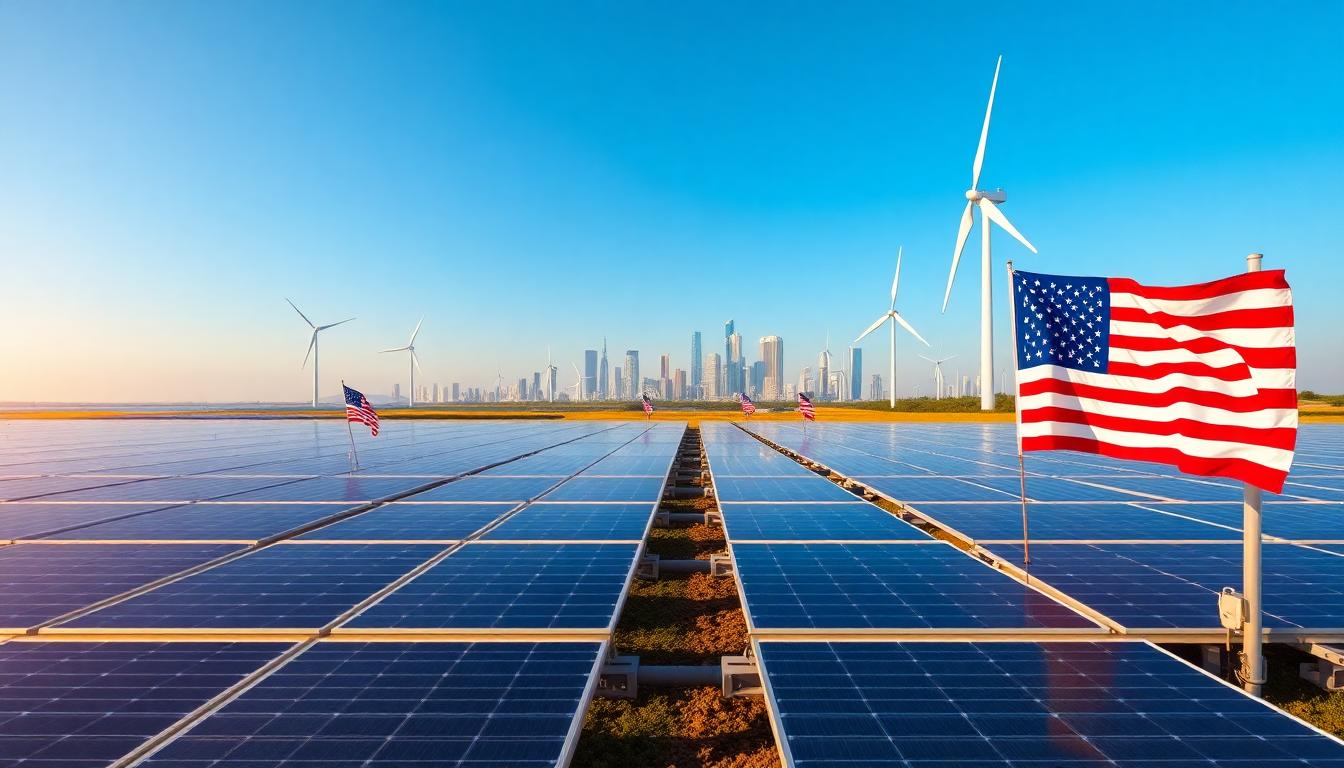
Image generated by AI — Solar and wind energy projects symbolizing US-India collaboration
Electric Vehicle and Battery Manufacturing Collaborations
Electric vehicles (EVs) and battery manufacturing are another major focus of US-India trade deals in 2025. Both countries recognize the strategic importance of building a robust EV ecosystem, aligned with global moves to clean transportation and energy storage technologies.
Joint ventures and partnerships are emerging that cover a full spectrum of EV-related activities. This includes:
- Manufacturing of electric vehicles in India with US technology, tapping into local talent and cost advantages.
- Integration of battery supply chains, including sourcing critical raw materials and advanced cell production.
- Development of EV charging infrastructure to support mass adoption across Indian cities.
- Co-investment in next-generation battery technologies aimed at longer range and faster charging capabilities.
US firms bring expertise in battery technology and manufacturing equipment, while India offers a growing market and manufacturing base. This combination is critical to reducing supply chain dependencies and creating competitive advantages for both.
A $1 billion US-India initiative launched recently focuses on expanding clean energy supply chains, with battery and EV sectors as core pillars to create high-quality jobs and innovation hubs (source). This will accelerate electric mobility adoption in India while enabling US manufacturers to diversify and expand global production footprints.
Together, these energy and climate-focused trade deals represent more than just business growth. They cement a strategic partnership dedicated to building cleaner, more sustainable energy and transportation systems for the future. For businesses and policymakers, these deals offer a roadmap for cooperation that balances economic development with environmental responsibility.
Healthcare and Pharmaceutical Trade Developments
Healthcare and pharmaceuticals continue to drive significant activity in the US-India trade relationship for 2025. Despite some tariff hurdles, the two countries are forming new partnerships that aim to boost drug manufacturing, vaccine production, and medical technology exchange. These deals build on India’s strengths as a global supplier of affordable medicines and its fast-growing medical device sector. Let’s break down the most important areas to watch.
Pharmaceutical Manufacturing and Export Agreements
India’s reputation as the “pharmacy of the world” remains strong, with a focus on producing generics, vaccines, and biologics for international markets. For decades, the US absorbed over 30% of India’s pharma exports, especially generic drugs; this partnership continues evolving in 2025 despite tariff challenges.
New agreements aim to:
- Expand production of generics and biosimilars: India’s manufacturers, known for cost-effective quality, are increasing output to meet rising global demand, especially in the US.
- Boost vaccine manufacturing capacity: Following the COVID-19 pandemic, collaborations are growing for vaccine production and distribution, addressing global health emergencies faster.
- Develop biologics and advanced therapies: Partnerships focus on innovation in biologics, combining Indian manufacturing scale with US R&D expertise.
- Promote export diversification: Alongside the US, India targets emerging markets in Africa, Latin America, and Southeast Asia, ensuring market access beyond traditional partners.
These deals help fill supply chain gaps impacting drug affordability and availability globally. However, navigating tariffs remains a challenge. India has offered tariff cuts on some US pharmaceutical imports, signaling cooperation despite tensions. Both sides pursue ways to streamline regulatory processes and protect intellectual property rights, which are key for sustained innovation and trade.
For more insight into current trends in this sector, check the analysis on What US-India Trade Deal Will Mean For Indian Pharma.
Medical Device and Health Technology Exchanges
The medical devices and health IT sector is witnessing major trade developments driven by innovation and market growth on both sides.
Key highlights include:
- Rising Indian MedTech market: Now estimated around $12 billion and growing fast, India’s medical device industry offers new opportunities for US companies to supply cutting-edge equipment.
- Trade of diagnostic and therapeutic devices: Agreements promote the export and import of cost-efficient devices such as imaging machines, surgical supplies, and home-health monitors.
- Health technology solutions: Collaboration is expanding beyond hardware to include digital health innovations — telemedicine platforms, AI diagnostics, and electronic health records — connecting the two countries’ healthcare ecosystems.
- Startups and investment flow: Indian healthtech startups attracted over $800 million in funding in H1 2025, many with ties to US investors, which fuels joint ventures and technology transfers.
- Addressing regulatory challenges: Deals focus on harmonizing standards and pricing structures to smooth trade and adoption of products in both markets.
These exchanges enhance healthcare delivery and open new channels for US firms seeking growth. India benefits from access to advanced technology and smart health solutions tailored to its large population. The US gains from expanding markets and innovation partnerships focused on affordability and accessibility.
To dive deeper into India’s medical device market outlook, India Medical Devices provides a detailed perspective.
Together, pharmaceutical manufacturing agreements and health tech exchanges underscore the growing complexity and promise of healthcare trade between the US and India. These deals contribute to more reliable supply chains, better access to medicines and devices, and encourage innovation that benefits millions worldwide.
Agriculture and Food Product Trade Deals
Trade in agricultural and food products between the US and India is set to intensify in 2025. Both countries are aiming to reduce tariffs and improve trade facilitation to boost the flow of commodities and specialty foods. These developments offer promising opportunities for farmers, exporters, and consumers on both sides. Relaxed tariffs and better quality standards agreements are paving the way for deeper cooperation that goes beyond basic commodity trade.
US Agricultural Exports to India
One of the most exciting trends in US-India trade for 2025 is the expected rise in US agricultural exports to India. After years of tariff challenges, recent trade talks are easing restrictions on several key products. Pulses like lentils and chickpeas, which enjoy steady demand in India, are now more competitive thanks to exemptions from retaliatory tariffs through early 2025. This is a game changer for American farmers wanting to tap into India’s growing market.
The US also exports tree nuts such as almonds and pistachios, plus specialty grains including quinoa and millet. These products benefit from India’s expanding middle class and growing interest in diverse, health-focused foods.
Several factors support this trend:
- Eased tariff barriers on pulses and specialty grains allow lower prices.
- Improved bilateral cooperation on quality standards simplifies imports.
- India’s increased appetite for protein-rich, non-traditional crops helps diversify consumer choices.
With India ranking as one of the top foreign markets for US agricultural exports, expected trade volumes could rise sharply, increasing US export values over the next year. This growth is supported by ongoing dialogue aimed at cutting trade barriers while fostering compliance with food safety standards.
For a detailed look at export opportunities, you can review the latest report from the USDA Foreign Agricultural Service on U.S. Agricultural Products in India.
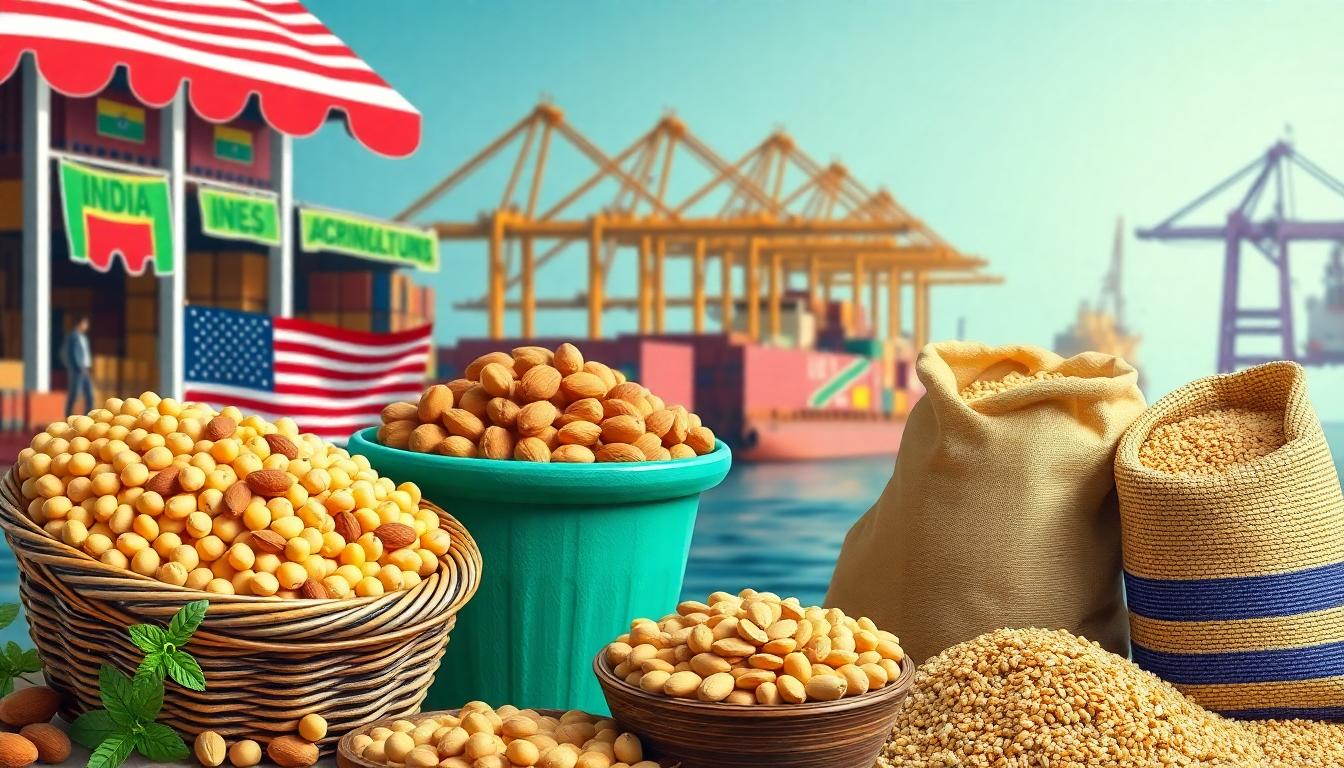
Image created with AI — US agricultural products such as pulses and nuts symbolizing trade to India
Indian Food Products Entering US Markets
While the US boosts agricultural exports to India, Indian food products are making stronger inroads into US retail and wholesale channels. Spices remain the flagship category, driven by the growing popularity of Indian and South Asian cuisines across the US. Efforts to boost trade are focusing on more than just volume—there is an emphasis on improving quality standards and streamlining import procedures for Indian specialty foods.
Tea is another area gaining momentum. Indian tea producers are expanding their reach in the US market with new distribution agreements and marketing efforts. Additionally, processed items like ready-to-eat snacks, pickles, and sweets are finding audiences among consumers who seek authentic flavors and ethnic food choices.
Key elements pushing this expansion include:
- Trade agreements focusing on easier access and lower tariffs on spices and specialty food items.
- Collaborations on food safety and quality inspection standards that satisfy US regulations.
- Growing demand for authentic, health-conscious Indian food products in specialty stores and mainstream outlets.
These advances provide US consumers with a richer variety of Indian flavors while supporting Indian exporters who benefit from wider market reach.
For insights on how India is expanding food product exports, check out the Exporter Guide Annual report for India.
Conclusion
The US-India trade deals unfolding in 2025 will shape a crucial phase of this economic partnership, aiming to expand trade to new heights while managing significant challenges. The focus sectors—technology, energy, healthcare, and agriculture—offer strong growth opportunities but will test how both countries balance mutual benefits against tariff conflicts and geopolitical pressures.
For businesses, these deals represent chances to tap into large markets and innovate through cooperation, especially in semiconductor manufacturing, clean energy, and pharmaceuticals. Policymakers face the challenge of navigating complex trade barriers and competing interests, while working toward a stable and fair agreement. The near-final mini trade agreement shows promise but also underscores the need for continued dialogue to reduce tariffs and protect key industries on both sides.
Ultimately, the success of these trade deals will depend on sustained commitment to negotiation and strategic partnership, how well risks are managed, and the willingness to adapt to changing global and domestic priorities. Both nations stand to gain from deeper cooperation, making 2025 a pivotal year to watch for long-term economic ties between the US and India.