

Taliban Minister Visit to Deoband: Uttar Pradesh Politics, Yogi 2025
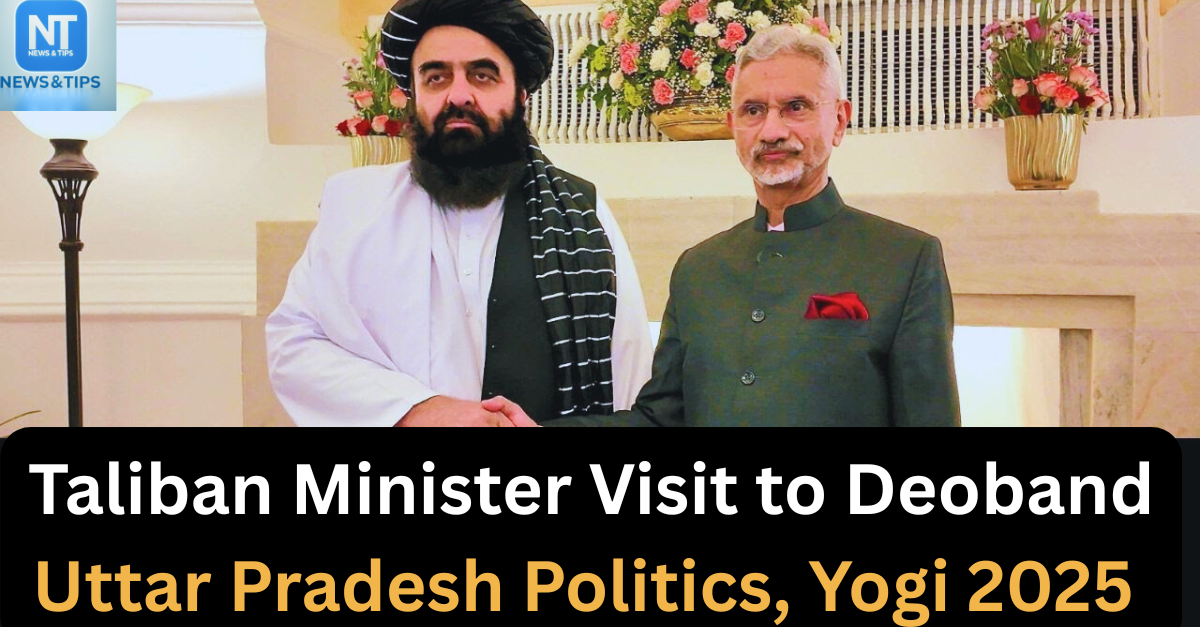 Taliban Minister Visit to Deoband Uttar Pradesh Politics, Yogi 2025
Estimated reading time: 7 minutes
Thank you for reading this post, don't forget to subscribe!Yogi, Taliban, and Deoband: The Visit Stirring a Storm in Uttar Pradesh
What happens when international diplomacy meets local politics? A planned visit by Afghanistan’s Taliban foreign minister to Uttar Pradesh has set off sharp reactions, emotional appeals, and familiar fault lines. At the center of it all are three words charged with history and emotion: Taliban, Deoband, and Yogi.
This post breaks down what’s happening, why it matters, and how it ties into domestic politics, media narratives, and India’s engagement with Afghanistan since 2021. For your first review.
The Big Development: A Taliban Minister in India
Afghanistan’s acting foreign minister, Amir Khan Muttaqi, is visiting India for talks that observers view as a major diplomatic shift. This visit marks a new peak in engagement since the Taliban took control of Kabul in 2021. Multiple reports confirm the trip, note extended meetings in New Delhi, and point to a broader shift in India’s outreach to Afghanistan’s current rulers.
- For a straight summary of the trip and its significance, see the BBC’s report on the Taliban foreign minister’s visit to India.
- For what India’s strategy might look like, The Indian Express has context on why New Delhi is increasing engagement.
Why Deoband Is at the Heart of the Controversy
The minister’s itinerary reportedly includes a visit to Darul Uloom Deoband in Saharanpur district, one of the most influential Islamic seminaries in South Asia. That single stop has supercharged the political heat.
- Darul Uloom Deoband is often described by supporters as a center of scholarship and spirituality.
- Critics at home argue that a Taliban official visiting an Indian seminary sends the wrong message, especially given the Taliban’s record in Afghanistan.
- Supporters counter that engagement builds influence and clarity, and that India’s outreach should not be held hostage to TV hashtags.
Hindustan Times reported that the visit includes both the Taj Mahal and Deoband, bringing the symbolism squarely into Uttar Pradesh’s political theater. Read more in their coverage on Amir Khan Muttaqi’s plan to visit the Taj Mahal and Deoband.
India’s Evolving Approach to the Taliban
Since closing the embassy in Kabul in 2021, India has cautiously kept a “technical mission” on the ground while delivering humanitarian support. The new round of talks is being seen as a step up. Reports and commentary highlight:
- A push to upgrade engagement and improve operational channels in Kabul.
- India’s efforts to protect interests in Afghanistan, including development projects and regional security.
- A clear line that formal recognition and engagement are not the same thing.
For a quick overview of the visit’s tone and the messages sent on both sides, The Hindu outlines the reception and significance in its piece on Muttaqi’s India visit and meetings. For a strategic angle that looks beyond Pakistan’s shadow, Moneycontrol explores how the Taliban is turning to India.
The UP Angle: Yogi Adityanath’s Record and Rising Heat
The controversy in Uttar Pradesh is not only about a visit. It is also about a long-running political narrative. Chief Minister Yogi Adityanath’s critics point to years of biting remarks about Muslims and madrasas, court challenges over religious institutions, and slogans that blur the line between policy and polarization.
Several past episodes are highlighted:
- Comments linking madrasa education to extremism, along with efforts to curtail or reform madrasas in UP that sparked backlash and litigation.
- Remarks about demographics and religious festivals that drew national headlines.
- Tough talk following violent incidents in Bareilly and other places, paired with bulldozer actions that critics say target Muslim homes and shops.
The counterview argues that law and order has improved under his administration and that demolitions follow due process. The core criticism in this moment, however, is about contrast. The charge is simple: why the welcome for foreign leaders from a hardline regime while domestic rhetoric toward Indian Muslims remains harsh?
Deoband as a Symbol
For many Muslims, Darul Uloom Deoband symbolizes learning, history, and cultural continuity. For many of its critics, it symbolizes a brand of conservatism they reject. That clash is not new, but a Taliban minister’s visit magnifies every edge of that debate.
In this moment, emotions run high for three reasons:
- Symbolic power: A visit to Deoband carries more emotional weight than a meeting in a government building in Delhi.
- Timing: Relations between India and Pakistan remain tense, so India’s outreach to Kabul is read by some as a strategic pivot.
- Messaging: What leaders say about Indian Muslims at home gets contrasted with what leaders do with foreign Muslim actors abroad.
TV Reactions and Calls to Block the Visit
Some TV outlets and commentators have called for blocking the Taliban minister from visiting Deoband. The rhetoric is blunt and accusatory. The argument is that the Taliban destroyed heritage, targeted minorities, and cannot be allowed to visit a major religious seminary in India.
Opponents of this line say the government is engaging Kabul as a sovereign choice, that engagement can serve India’s interests, and that sensational coverage undercuts diplomacy by stoking anger and suspicion.
Two things can be true at once. Media should ask hard questions about the Taliban’s record. Media should also avoid fueling communal fault lines at home that could have real-world effects on ordinary people.
The Double Standard Argument
This is the heart of the viral debate. Many critics argue that Indian Muslims face routine profiling, policy overreach, and public humiliation in debates and prime-time shows, while foreign Muslim leaders can be treated with warmth if it suits diplomatic goals. The reference points include:
- Bulldozer actions after communal flare-ups in states like Uttar Pradesh and Gujarat.
- Policing and arrests in the aftermath of local clashes.
- The framing of madrasas and seminaries in public conversation.
The opposing claim is that diplomacy is separate from domestic politics. Governments engage with reality to protect national interests, not to legitimize or bless a regime’s ideology. Even if that is true, the optics still matter, especially when political leaders inside the country are seen to single out Muslim citizens with hostile language.
What This Visit Could Change
Engagement with Kabul can reshape several areas:
- Consular services and visas, if India upgrades presence on the ground.
- Humanitarian projects that stalled after 2021.
- Counterterrorism coordination and regional security dialogue.
- Economic links, trade routes, and connectivity via Central Asia.
If the Deoband visit happens, expect it to keep the domestic conversation boiling. It will likely be used by all sides to reinforce existing positions. For the government, the balancing act will be clear: keep strategic engagement on track, manage public optics, and avoid inflaming tensions in UP.
Key Takeaways
- A high-profile visit by Afghanistan’s acting foreign minister to India has sparked intense debate.
- A planned stop at Darul Uloom Deoband draws the spotlight to Uttar Pradesh and Chief Minister Yogi Adityanath’s track record on Muslim issues.
- India’s Afghanistan policy is moving from minimal contact to deeper engagement, even without formal recognition.
- Media narratives are amplifying both security concerns and communal tensions.
- The core public question is about consistency: how India treats Muslim citizens at home, compared with how it treats foreign Muslim leaders in diplomacy.
What to Watch Next
- Whether India upgrades its presence in Kabul from a technical mission to a fuller diplomatic footprint, and how that is framed.
- Whether the Deoband visit goes ahead, and how authorities in UP handle security and optics.
- How media coverage shapes public sentiment in the days ahead.
- Any government statements that draw a clearer line between diplomatic outreach and domestic policy.
Conclusion
This moment sits at the intersection of diplomacy, religion, and domestic politics. India needs a coherent Afghanistan policy that serves its interests and values. It also needs a public conversation at home that is fair, calm, and consistent. If a Taliban minister does visit Deoband, the real test is not whether TV studios can shout louder, but whether leaders can lower the temperature, protect social peace, and keep India’s long-term interests front and center. What do you think this visit will change, if anything, on the ground?